
What are weighted blankets good for? They may provide a comforting, steady-pressure sensation that helps some adults feel calmer, settle at bedtime, or sleep better. Research is most encouraging for short-term anxiety reduction and for insomnia in certain adult psychiatric populations, but the evidence base is still small and inconsistent. Results in children are mixed, and weighted blankets are not proven treatments for autism, ADHD, depression, chronic pain, or other medical conditions. They should never be used for infant sleep.
A weighted blanket can be a comfort tool, a sensory preference, or an add-on to an established sleep routine. It should not be presented as a cure, a substitute for medical care, or a guaranteed way to increase serotonin, melatonin, dopamine, immunity, or “nervous-system regulation.” The most useful question is not whether weighted blankets work for everyone, but whether a specific person finds one comfortable, safe, and helpful enough to keep using.
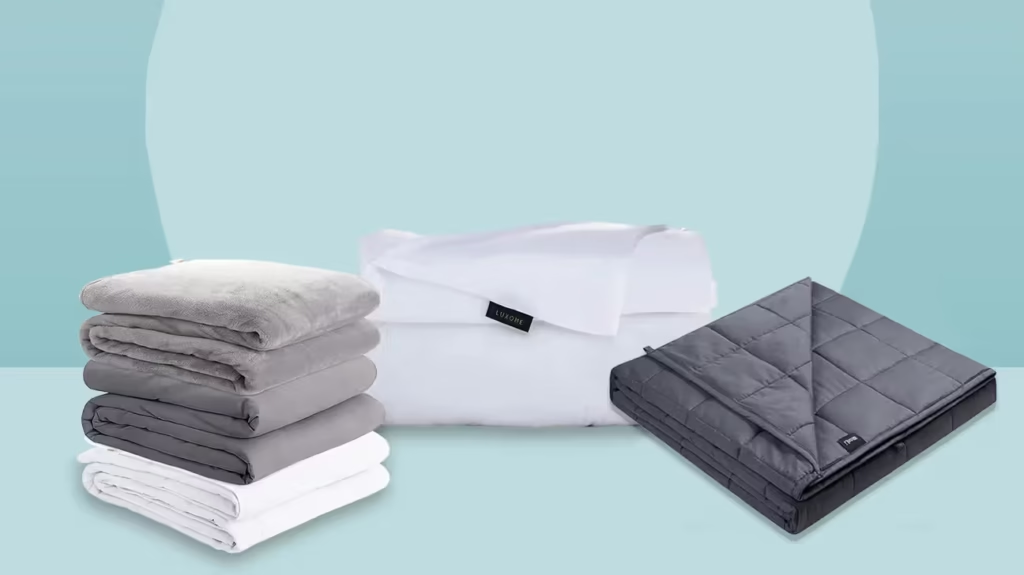
What Are Weighted Blankets Good For According to Research?
The evidence is promising in narrow settings, not universal. A 2024 meta-analysis of eight randomized trials involving 426 patients found a small reduction in anxiety, while the pooled insomnia result was not statistically significant until a sensitivity analysis removed one heterogeneous study. The authors emphasized small samples, substantial variation among studies, and the need for better objective measures. Read the 2024 systematic review and meta-analysis.
Short-term calm and anxiety relief
Some adults report feeling less anxious while using a weighted blanket, and pooled clinical findings suggest a modest effect. This does not mean it treats an anxiety disorder.
Sleep and insomnia
Several adult studies are positive, but reviews find variable methods and results. Pediatric sleep findings are less consistent.
Pain, mood, focus, and daily function
Early studies report possible benefits in selected groups, but evidence is too limited for broad therapeutic claims.
| Claim or use | Current evidence | What can reasonably be said | What should not be promised |
|---|---|---|---|
| Relaxation or comfort | PROMISING | Many people prefer the steady pressure and describe it as calming or grounding. | Guaranteed nervous-system regulation or immediate relief for everyone. |
| Anxiety symptoms | MODEST EVIDENCE | May reduce short-term anxiety in some clinical settings and psychiatric populations. | Treatment or cure for anxiety disorders, panic attacks, PTSD, or depression. |
| Adult insomnia | MIXED BUT ENCOURAGING | Some adults with psychiatric diagnoses reported lower insomnia severity in trials. | Guaranteed faster sleep, deeper sleep, or medication replacement. |
| Autistic children’s sleep | MIXED | Some children and parents prefer the blanket, even when objective sleep does not improve. | Improved autism symptoms, fewer meltdowns, or proven sleep treatment. |
| ADHD and pediatric sleep | EARLY EVIDENCE | A small crossover trial suggests possible sleep benefits in selected children with ADHD. | Improved grades, focus, behavior, or daily function for all children with ADHD. |
| Chronic pain | PRELIMINARY | One randomized trial found improvement in broad pain impact, particularly among highly anxious adults. | Reduced pain intensity, healing, inflammation control, or replacement for pain care. |
| Serotonin, dopamine, cortisol, or immunity | NOT ESTABLISHED | The pressure sensation may feel soothing, but the biological mechanism remains uncertain. | Specific hormone changes, immune improvement, detoxification, or faster recovery. |
How Might a Weighted Blanket Feel Calming?
Weighted blankets distribute pressure across the body through sewn pockets, dense knit construction, beads, pellets, or another approved fill. Researchers often discuss this as deep-pressure stimulation, but the precise pathway from pressure to relaxation or sleep is not fully established.
Popular articles often state that weighted blankets automatically raise serotonin, dopamine, or melatonin and lower cortisol. Current clinical evidence does not justify presenting those changes as a proven mechanism for ordinary home use.
Can Weighted Blankets Help Adults Sleep?
Possibly, especially for some adults with insomnia and psychiatric diagnoses. A 2020 randomized trial assigned 120 adults with major depressive disorder, bipolar disorder, generalized anxiety disorder, or ADHD to a weighted metal-chain blanket or a lighter control blanket for four weeks. The weighted group reported substantially better insomnia scores and several daytime improvements, although some objective sleep measures did not show the same degree of change. Read the adult randomized trial.
That study is encouraging, but it does not prove the same result for every adult, every type of insomnia, or every consumer weighted blanket. A 2024 scoping review found more positive evidence in adults than in children, while also noting variable study quality and a lack of standardized implementation guidance. Read the sleep-intervention scoping review.
A weighted blanket does not replace evidence-based insomnia treatment. Keep the room comfortable, maintain a consistent schedule, and seek clinical care when sleep problems persist or affect safety and daytime function.
Are Weighted Blankets Good for Anxiety or Stress?
They may help some people feel calmer in the moment. Two 2024 systematic reviews concluded that weighted blankets may produce a modest reduction in anxiety symptoms among psychiatric or clinical populations, but the studies were small, varied widely, and often relied on self-report. See the psychiatric-setting meta-analysis.
Use the blanket as an optional comfort tool rather than as emergency treatment. During severe panic, breathing difficulty, chest pain, fainting, confusion, or thoughts of self-harm, seek appropriate urgent help rather than adding more weight or pressure.
- Useful framing: “This pressure feels comforting while I read or wind down.”
- Unhelpful framing: “This blanket treats my anxiety disorder.”
- Track the response: Notice comfort, heat, ability to move, sleep quality, and whether symptoms improve beyond expectation.
- Stop when it worsens distress: Claustrophobia, trapped feelings, overheating, numbness, pain, or breathing discomfort are reasons to remove it.
What About Autism, ADHD, and Children’s Sleep?
Evidence in children is mixed and safety requires more caution. In a randomized crossover trial of 67 autistic children with severe sleep problems, a weighted blanket did not increase total sleep time, shorten sleep onset, reduce awakenings, or improve behavior compared with a control blanket. Children and parents nevertheless preferred it, showing that comfort and measurable sleep improvement are not the same outcome. Read the autism sleep trial.
A later randomized crossover study in children with ADHD reported possible sleep improvements, but the overall pediatric evidence remains limited. Parents should not use a diagnosis such as autism, ADHD, anxiety, or sensory processing differences as proof that a weighted blanket will work or be safe.
The American Academy of Pediatrics recommends that weighted blankets, weighted sleepers, weighted swaddles, and other weighted objects not be placed on or near a sleeping infant. Infant sleep spaces should remain firm, flat, and free of loose or weighted bedding. Read the AAP safe-sleep recommendation.
For older children, use pediatric and occupational-therapy guidance rather than a generic body-weight formula. The child must be able to remove the blanket independently, the head and neck must remain uncovered, and product recalls must be checked. See our dedicated guide: Are Weighted Blankets Safe for Kids?.
Can Weighted Blankets Help Chronic Pain?
A 2022 randomized trial compared a 15-pound blanket with a 5-pound blanket in 94 adults with chronic pain. The heavier blanket improved broad ratings of pain impact more than the lighter blanket, particularly among participants with higher trait anxiety, but it did not change daily pain intensity. This suggests a possible effect on the emotional or functional experience of pain rather than direct treatment of the underlying condition. Read the chronic-pain randomized trial.
Do not place weight over an injury, surgical area, painful joint, impaired sensation, or circulation problem without professional guidance. Stop immediately if pressure increases pain, numbness, tingling, swelling, or difficulty moving.
What Weighted Blankets Are Not Proven to Do
- Cure insomnia, anxiety, depression, autism, ADHD, PTSD, fibromyalgia, arthritis, or chronic pain.
- Replace therapy, medication, sleep-apnea evaluation, physical therapy, or other prescribed care.
- Increase serotonin, dopamine, melatonin, endorphins, immunity, or healing in a predictable clinically meaningful way.
- Improve focus, grades, behavior, productivity, or emotional regulation for every user.
- Provide the same effect across different weights, fills, constructions, ages, or medical conditions.
- Remain safe merely because the blanket follows a “10% of body weight” rule.
How to Try a Weighted Blanket Safely
- Start with purpose. Decide whether the goal is comfort while reading, winding down, resting on the couch, or testing sleep—not treating a diagnosis.
- Read the age, size, weight, and use instructions. Do not rely on a universal percentage formula.
- Choose easy removal. The user should be able to push the blanket away without assistance and should never feel trapped.
- Begin while awake. Try a short supervised session before considering overnight use.
- Keep the face and neck uncovered. Place the blanket over the body as directed and avoid wrapping or fastening it around the person.
- Check heat and pressure. Stop for overheating, breathing discomfort, pain, numbness, panic, dizziness, or restricted movement.
- Evaluate results realistically. Compare comfort and sleep over several uses rather than assuming one good or bad night proves effectiveness.
- Check recalls and construction. Stop using a product with damaged seams, escaping fill, unsafe closures, or an active recall.
The U.S. Consumer Product Safety Commission recalled certain children’s Pillowfort weighted blankets after entrapment incidents and two deaths. Product design matters in addition to blanket weight. Review the CPSC recall notice.
Who Should Use Extra Caution?
Infants
Do not use weighted blankets, weighted swaddles, weighted sleepers, or other weighted objects in an infant sleep space.
Anyone unable to remove it independently
A blanket should not restrain a child or adult or depend on another person for routine removal.
Breathing, circulation, mobility, or sensory limitations
Ask a qualified clinician before use when pressure, heat, reduced movement, or impaired sensation could create risk.
Recent surgery, injury, swelling, or acute pain
Avoid pressure over affected areas until a clinician confirms it is appropriate.
Claustrophobia or trauma-related distress
Maintain full control and stop immediately if the blanket creates trapped, panicked, or unsafe feelings.
Hot sleepers or warm rooms
Choose breathable construction, monitor temperature, and remove the blanket if overheating interferes with sleep or comfort.
Persistent insomnia, loud snoring, witnessed breathing pauses, unusual movements, severe daytime sleepiness, or worsening mood deserve clinical assessment rather than repeated product changes.
Care and Maintenance Affect Comfort
A dirty, uneven, damaged, or damp weighted blanket may feel less comfortable and can create new safety problems. Use a removable washable cover when appropriate, inspect pockets and seams, and follow the exact cleaning instructions for the fill and shell.
Read How to Wash Weighted Blankets Safely before cleaning the filled layer. Never assume a washable cover means the weighted insert can go in a home washer.
Build a Complete Sleep Setup
A weighted blanket changes pressure and warmth, while a sleep pillow supports the head and neck. These are different functions. For nighttime pillow support, compare Pallas Cozy’s current options and review the care instructions on each product page.
SLEEP SUPPORT
Contour Relief Pillow
View the current construction, dimensions, and care information.
SLEEP SUPPORT
Ultra Contour Relief Pillow
Compare the current model details and product care guidance.
Frequently Asked Questions
What are weighted blankets mainly used for?
Most people use them for comfort, relaxation, sensory preference, or as part of a bedtime routine. Research is most encouraging for short-term anxiety relief and some adult insomnia outcomes.
Do weighted blankets really help anxiety?
They may reduce short-term anxiety for some people, but the average effect in recent reviews is modest and the studies are limited. They are not a treatment replacement.
Can a weighted blanket help insomnia?
Some adult trials report lower insomnia severity, especially in selected psychiatric populations. Reviews still describe the overall evidence as limited and variable.
Do weighted blankets increase serotonin or melatonin?
That mechanism is often repeated online, but current evidence does not establish predictable clinically meaningful hormone changes from ordinary weighted-blanket use.
Are weighted blankets good for autism?
Some autistic people enjoy the sensory pressure, but a controlled trial in autistic children found no objective sleep improvement compared with a regular blanket.
Are weighted blankets good for ADHD?
Early pediatric research suggests possible sleep benefits in selected children with ADHD, but evidence is not strong enough to promise better focus, behavior, or daily function.
Can weighted blankets reduce pain?
One randomized adult trial found improvement in the broad impact of chronic pain but not pain intensity. A weighted blanket should not replace diagnosis or pain treatment.
How heavy should a weighted blanket be?
Follow the product’s age, size, and weight instructions and prioritize easy independent removal. The common 10% rule is a shopping convention, not a universal safety guarantee.
Who should not use a weighted blanket?
Infants must not use weighted sleep products. Anyone who cannot remove the blanket independently or has a condition affected by pressure, heat, breathing, circulation, sensation, or mobility should seek professional guidance.
How quickly should a weighted blanket work?
Comfort may be noticeable immediately, while sleep outcomes require repeated observation. There is no evidence-based promise that benefits appear within a fixed number of days or weeks.
Related Pallas Cozy Guides
Sources and Further Reading
- 2024 systematic review and meta-analysis of randomized trials
- 2024 meta-analysis in psychiatric settings
- 2024 scoping review of weighted blankets as a sleep intervention
- 2020 adult insomnia randomized trial
- 2014 autism sleep randomized trial
- 2022 chronic-pain randomized trial
- American Academy of Pediatrics infant safe-sleep recommendations
- CPSC weighted-blanket recall notice
Editorial note: This article summarizes current research for general education and does not provide medical advice. A weighted blanket is a comfort product, not a treatment or cure. Product instructions and qualified clinical guidance take priority.
