
How to wash weighted blankets safely: read the care label, remove and wash the cover separately, confirm the blanket and its wet weight fit your washer, repair weak seams, and machine-wash only when the manufacturer permits it. Use the labeled water temperature and cycle with a small amount of mild detergent. Avoid bleach and fabric softener unless specifically approved. Air-dry flat or use low or no heat only when the label allows, and do not use the blanket until every section is completely dry.
Weighted blankets are harder to clean than ordinary throws because the fill adds load, stresses seams, and can make the blanket much heavier when wet. Fill material alone does not determine washability: the shell fabric, stitching, pocket construction, trim, removable cover, and appliance capacity all matter.
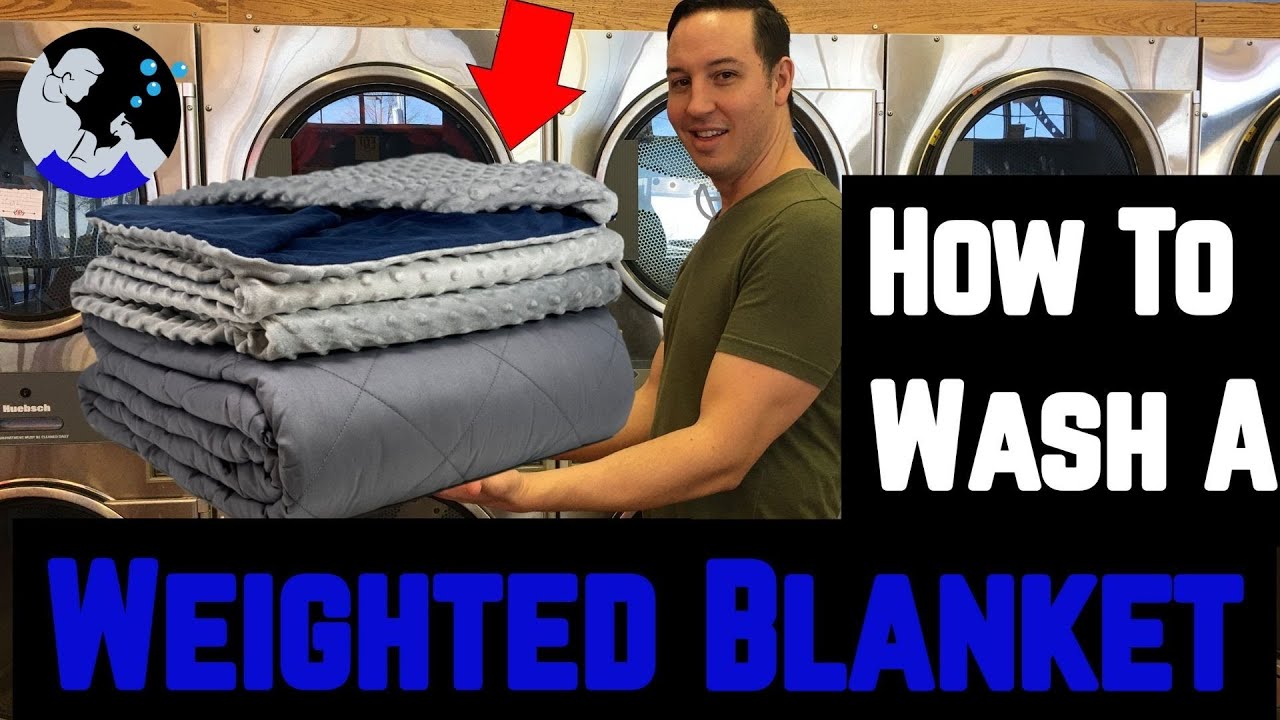
Are Weighted Blankets Washable?
Many weighted blankets are washable, but there is no universal method. Whirlpool and Maytag both advise checking the individual care tag first and generally recommend a large-capacity or commercial machine for washable weighted blankets. They also emphasize gentle washing, cold water, mild detergent, balanced loading, and low-heat or air drying only when approved. Read Whirlpool’s guide and Maytag’s guide.
Label says machine washable
The blanket fits loosely in an approved-capacity washer, seams are intact, and the fill and cover can tolerate the specified cycle.
Label limits machine washing
Use hand washing only when the manufacturer allows it and the wet blanket can be handled safely. Otherwise spot-clean or use professional care.
Unknown, damaged, or restricted
Stop when the label says dry clean only, the fill is unknown, seams are leaking, electronics are present, or no safe drying plan exists.
Water retained by the shell and fill increases the load during washing and extraction.
Check the washer and dryer manuals for bulky-item limits, drum space, and load-balancing requirements. A blanket that technically fits inside may still be too heavy or too tightly packed to clean and rinse correctly. Use a suitable commercial machine or professional cleaner when the manufacturer recommends it.
Weighted Blanket Washing Guide by Fill and Construction
| Blanket type | Typical route | Washing caution | Drying caution |
|---|---|---|---|
| Glass-bead weighted blanket | OFTEN WASHABLE Only when the finished product label allows it | Check seam strength, machine capacity, shell fabric, and removable-cover instructions | Air-dry or use approved low heat; keep the fill distributed |
| Plastic poly-pellet blanket | CHECK LABEL Some are machine washable | Use only the temperature and detergent permitted for the exact product | Avoid unapproved heat that could affect pellets, shell, or stitching |
| Metal or steel-shot fill | CAPACITY CRITICAL Product-specific | Dense fill creates a demanding load even when the fabric itself is washable | Confirm dryer capacity or use supported flat drying |
| Rice, beans, corn, sand, or other organic fill | DO NOT SATURATE Usually spot or professional care | Natural fill can retain water, swell, spoil, or become difficult to dry | Keep the interior dry unless the manufacturer gives explicit instructions |
| Chunky knit weighted blanket without loose fill | FIBER-SPECIFIC Follow the knit and fiber instructions | Heavy wet knit can stretch; machine agitation may distort loops | Support the full weight and reshape while drying |
| Weighted blanket with removable duvet cover | COVER SEPARATELY Inner layer has its own label | Remove ties and close zippers as directed; do not assume both layers share one method | Dry both pieces fully before reconnecting ties or closures |
| Heated, electronic, or powered weighted blanket | MANUAL ONLY Do not use a generic weighted-blanket method | Follow the exact electrical product instructions and detach controls only as directed | Never reconnect or power the item before it is fully dry and cleared for use |
| Unknown fill or damaged pocket construction | STOP Verify or seek professional care | Washing may release fill into the appliance or worsen internal damage | Replacement may be more practical when contamination is deep |
For example, Baloo says its own cotton weighted blankets are machine washable by themselves in cold water on a gentle cycle and dryer-safe on low heat, while larger sizes should use a commercial washer. Do not transfer those directions to another blanket with different fill, stitching, or shell fabric. See Baloo’s current care instructions.
Pre-Wash Inspection Checklist
- Photograph the care label: Keep the wash, dry, bleach, and professional-care instructions available.
- Remove the cover: Detach the duvet cover and ties only as the manufacturer directs.
- Inspect every edge and pocket: Repair loose seams before washing so beads or pellets cannot escape.
- Check for electronics or rigid components: Do not assume a powered or specialty blanket uses ordinary weighted-blanket care.
- Identify stains: Pretreat only with a product compatible with the shell fabric.
- Verify appliance capacity: Check the owner’s manual for bulky items and the blanket maker’s recommendation.
- Plan the transfer: A wet weighted blanket may be difficult to lift. Arrange help or use a method that avoids unsafe handling.
- Prepare the drying area: Use a clean flat surface or sturdy rack capable of supporting the distributed wet weight.
How to Wash Weighted Blankets in a Washing Machine
Use this route only when the weighted layer’s own label confirms machine washing and the washer is suitable for the load.
- Remove and wash the duvet cover separately. Follow the cover’s own care label, close its zipper, and secure loose ties as directed.
- Pretreat visible stains. Blot the stain and use a compatible treatment; avoid saturating a wide area unnecessarily.
- Repair weak seams. Do not place a leaking pocket or torn edge in the washer.
- Load the weighted layer evenly. Do not ball it tightly or force it into a drum with too little space.
- Add a modest dose of mild detergent. Excess detergent can remain trapped in quilting and fill pockets.
- Select the labeled cycle and temperature. Gentle and cold are common recommendations, but the product instructions take priority.
- Monitor the first extraction phase. Stop and redistribute the blanket when the appliance struggles or becomes violently unbalanced.
- Rinse as needed. The blanket should not feel slippery, stiff, heavily scented, or soapy after washing.
- Transfer with full support. Lift from underneath rather than pulling one wet corner or seam.
A commercial washer solves a capacity problem, not a care-label restriction. A blanket labeled spot clean or dry clean only remains unsuitable for ordinary machine washing.
How to Hand Wash a Weighted Blanket
Hand washing is not automatically gentler or safer. A saturated blanket can become extremely difficult to move, press, and dry. Use this method only when the manufacturer permits immersion and you can handle the wet weight without straining yourself or damaging the blanket.
- The label explicitly permits it.
- The fill can tolerate saturation.
- The tub or basin is clean and large enough.
- You have safe support for draining and transferring the blanket.
- A flat, load-bearing drying area is ready.
- The fill is organic or unknown.
- The blanket contains electronics or rigid components.
- The label says dry clean or spot clean only.
- You would need to lift the saturated blanket alone unsafely.
- The blanket cannot be dried fully and promptly.
- Fill the clean tub or basin with the temperature stated on the care label.
- Dissolve a small amount of mild detergent before adding the blanket.
- Lower the blanket with support and gently press water through it.
- Avoid twisting, wringing, aggressive scrubbing, and pulling on one section.
- Drain the wash water and refill with clean water until detergent is removed.
- Press the blanket against the tub surface or between towels when appropriate.
- Move it using full underneath support and assistance when necessary.
- Spread it evenly for the approved drying method.
How to Dry a Weighted Blanket
Whirlpool recommends air drying weighted blankets and allows low or no heat only when the individual care instructions permit dryer use. If air drying, distribute the weight evenly over a heavy-duty rack or lay the blanket flat. Review Whirlpool’s drying guidance.
- Do not hang a saturated blanket from one corner or a weak clothesline.
- Do not use high heat unless the exact manufacturer explicitly permits it.
- Do not iron a filled weighted blanket unless its instructions allow it.
- Do not reconnect a removable cover while either layer is damp.
- Do not store the blanket in a closed container until it is completely dry.
Spot-Clean Stains Between Full Washes
Food and drinks
Lift solids and blot liquid immediately. Use a compatible prewash product or mild detergent on the shell fabric.
Body oil and sweat
Blot and pretreat the washable cover first. Avoid pushing a large volume of solution through the weighted layer.
Pet accidents
Use an enzyme cleaner only when its label and the blanket care instructions permit it. Deep contamination in non-washable fill may justify professional assessment or replacement.
Ink or dye transfer
Do not spread it with excess water. Test a hidden area and use a fabric-specific treatment or professional cleaner.
For removable covers, the American Cleaning Institute recommends identifying and pretreating stains before laundering and checking the fabric again before dryer heat sets remaining soil. See ACI’s stain-removal guide.
Do not combine chlorine bleach with ammonia, vinegar, acids, or unknown stain products. Use only products approved for the blanket, one at a time, according to their labels.
How Often Should You Wash a Weighted Blanket?
Use condition and exposure rather than a rigid schedule. A removable cover that touches the body can usually be washed more often than the weighted insert, while frequent full washing can add wear to seams and pockets.
- Wash or replace the cover when: it is visibly soiled, smells stale, has absorbed a spill, or is due according to your normal bedding routine.
- Wash the inner blanket when: its label permits it and it has body soil, odor, a spill, or other contamination that spot cleaning cannot resolve.
- Spot-clean when: the mark is small and limited to the shell.
- Use professional care when: the label requires it, the fill is organic or unknown, or the construction is too large or delicate for home equipment.
- Do not postpone drying: any blanket exposed to water should be opened, separated, and dried promptly according to its instructions.
A duvet cover can reduce how often the filled layer needs a complete wash, but it does not protect against every spill or contamination. Inspect both layers regularly.
Troubleshooting After Washing
The washer is banging
Pause the cycle and follow the appliance instructions for an unbalanced load. Do not continue violent extraction that may damage the washer or blanket.
Detergent remains
Use another rinse only if the care label permits it. Reduce detergent next time and avoid adding softener to disguise residue.
Fill has shifted
Lay the blanket flat and gently redistribute approved fill through intact pockets. Persistent unevenness may indicate broken internal stitching.
The blanket smells musty
Separate the cover, increase airflow, and continue drying. Stop using it if the interior remains damp or odor persists after complete drying.
A seam opened
Stop washing or drying, contain loose fill, and repair the pocket securely before further use.
The shell feels stiff
Detergent residue, heat, or coating damage may be responsible. Follow the manufacturer’s troubleshooting guidance rather than adding more products.
When to Replace Rather Than Rewash
- Multiple pockets or seams repeatedly open.
- The fill remains severely uneven after careful redistribution.
- Persistent odor returns after complete drying.
- Organic fill became wet or contaminated.
- The shell, coating, zipper, or ties are no longer structurally sound.
- The blanket was exposed to contaminated water and cannot be cleaned according to its label.
- The weight or size can no longer be handled safely by available equipment.
Complete Your Sleep Setup
A weighted blanket provides a different type of comfort from a dedicated sleep pillow. For nighttime head and neck positioning, compare Pallas Cozy’s current pillow options and follow the individual care instructions shown on each product page.
SLEEP SUPPORT
Contour Relief Pillow
View the current construction, dimensions, and care information.
SLEEP SUPPORT
Ultra Contour Relief Pillow
Compare the current model details and product care guidance.
Frequently Asked Questions
Can you put a weighted blanket in the washing machine?
Yes, when the weighted layer’s care label says machine washable and the washer is suitable for the dry and wet load. Use the specified cycle and temperature and stop if the machine becomes violently unbalanced.
Are weighted blankets washable when they contain glass beads?
Many glass-bead blankets are washable, but the shell, stitching, weight, and manufacturer instructions still determine the method. Do not rely on the fill alone.
Can a weighted blanket be washed in a regular home washer?
Only when both the blanket manufacturer and appliance manual permit the load. Large or heavy blankets may need a suitable commercial machine or professional cleaner.
Can I hand wash a weighted blanket in a bathtub?
Only when immersion is approved and you can safely handle and dry the saturated blanket. Organic, electronic, unknown, and dry-clean-only constructions should not use this generic method.
What detergent should I use?
Use the mild detergent specified or permitted by the care label, measured conservatively. Avoid bleach and fabric softener unless the exact product instructions approve them.
Can I put a weighted blanket in the dryer?
Use a dryer only when the label permits it and the appliance can handle the load. Low or no heat is commonly recommended; otherwise dry flat or over a sturdy rack with evenly distributed weight.
How do I know when the blanket is fully dry?
Check every pocket, seam, and thick area. Continue drying if any section feels cool, damp, heavy, clumped, or musty.
Should I wash the removable cover and weighted insert together?
No. Remove and clean them separately because the cover and inner layer may have different cycles, temperatures, and drying instructions.
How often should I wash the weighted insert?
Wash based on soil, odor, spills, skin contact, use of a cover, and the product’s instructions. Spot cleaning and a washable cover can reduce unnecessary full washes.
What if the care label is missing?
Search for the exact brand and model or contact the manufacturer. Until verified, avoid saturating an unknown fill or placing a heavy blanket in a washer or dryer.
Related Pallas Cozy Guides
Sources and Further Reading
Editorial note: This article provides general care information. The instructions for the exact weighted blanket, removable cover, washer, dryer, detergent, and stain product take priority.
