
Quick answer
Yes, many polyester, microfiber, down-alternative, down, and feather pillows can be machine washed—but only when the care label allows it. Solid memory foam, most latex pillows, buckwheat hulls, and pillows with electronic, gel, or glued components usually should not go in a washer. Check the label first, use a small amount of detergent, select a gentle cycle, rinse thoroughly, and dry the pillow completely before sleeping on it.
The phrase “washable pillow” can be misleading because the outer cover, inner liner, and fill may have different care requirements. This guide helps you decide what can go into the washing machine, what needs surface cleaning, and how to avoid the most common problems: torn foam, clumped fill, detergent residue, musty odor, and a pillow that stays damp inside.
Does the label approve washing the whole pillow?
A washable cover does not automatically mean the insert is washable.
Is the fill compatible with agitation and water?
Solid foam, latex, buckwheat, electronics, and glued layers usually stay out.
Can you dry the center completely?
If the interior stays damp, washing can create a bigger problem than the original soil.
Can You Machine Wash Pillows? Decision Chart
| Pillow type | Machine wash? | Best general approach |
|---|---|---|
| Polyester or down-alternative | Often yes | Follow the label; gentle cycle, modest detergent, thorough rinse, complete drying |
| Microfiber | Often yes | Use the label-approved cycle and avoid excessive heat |
| Down or feather | Sometimes | Wash only when the manufacturer permits; use little detergent and dry very thoroughly |
| Cotton-filled | Sometimes | Check for shrinkage and clumping warnings on the label |
| Solid memory foam | Usually no | Wash the removable cover; vacuum and spot-clean the foam |
| Shredded memory foam | Depends on the model | Do not assume it is washable; follow the manufacturer’s exact directions |
| Latex foam | Usually no | Clean the cover and spot-clean the latex with minimal moisture |
| Buckwheat hull | No for the hulls | Remove the dry hulls and wash only the empty cover if permitted |
| Gel, cooling, cervical, or contoured | Depends on construction | Check whether the label refers to the cover, insert, or entire pillow |
| Decorative or throw pillow | Depends | Inspect trim, dyes, seams, and removable inserts before washing |
Whirlpool and Maytag both advise checking the pillow’s care tag before washing because the correct cycle and drying method depend on the fill and construction. Whirlpool’s pillow-care guide and Maytag’s pillow-care guide provide manufacturer-level washing-machine guidance.
How to Read the Pillow Care Label
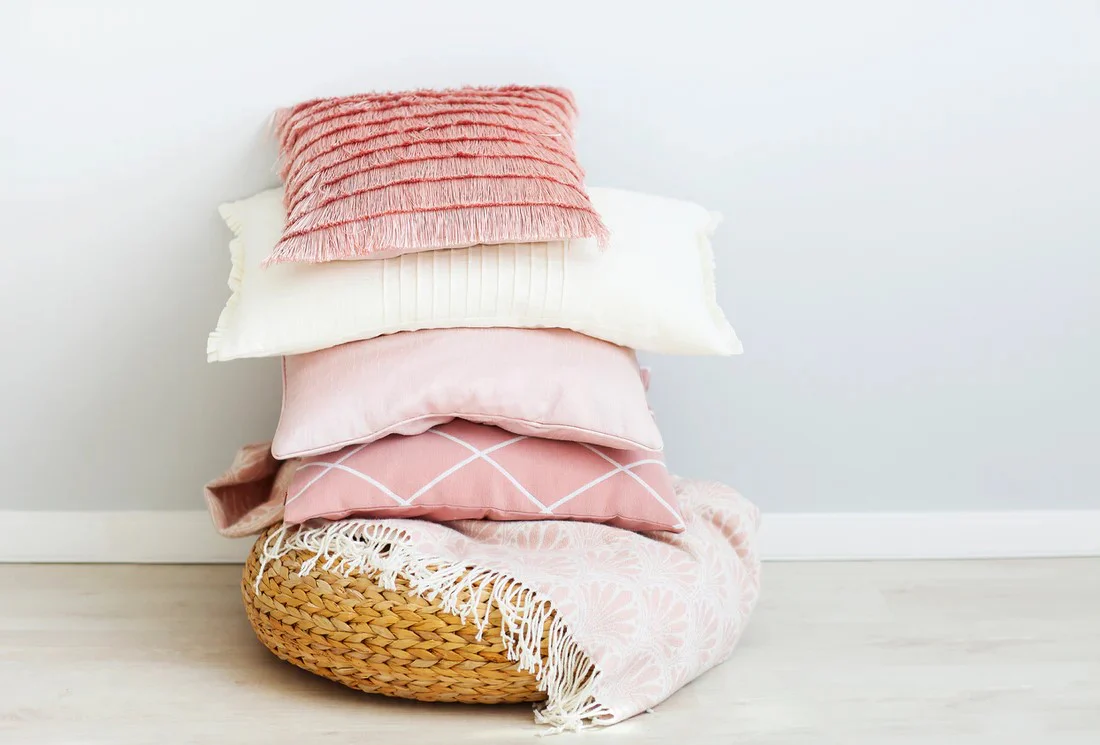
Before adding detergent or water, identify exactly what the instructions apply to. Some labels describe only the removable cover. Others apply to the complete pillow. If the original label is missing, search the manufacturer’s website using the model name or product code.
Look for these instructions
- Machine wash: The label should also indicate water temperature and cycle.
- Hand wash: Do not substitute a regular machine cycle unless the manufacturer says you can.
- Spot clean only: Treat only the affected surface and minimize moisture.
- Do not wash: Usually means the insert could be damaged by water or agitation.
- Tumble dry low, no heat, or air dry: Drying instructions are as important as washing instructions.
- Professional clean: The materials or construction may need specialist handling.
Foam and specialty pillows often have a removable, washable cover over an insert that must stay dry. Tempur-Pedic, for example, advises washing removable covers separately and not washing or submerging the insert unless the care instructions specifically permit it. See Tempur-Pedic’s official care guidance.
Which Pillows Can Usually Go in the Washing Machine?
Polyester and down-alternative pillows
These are among the most commonly machine-washable pillow types. However, “polyester” describes a broad category, so the care label still matters. Some inexpensive pillows may clump or lose loft if washed too aggressively, while better-constructed inserts may tolerate repeated gentle washing.
Use a gentle cycle, a small amount of liquid detergent, and the warmest water permitted by the label. An extra rinse can help remove detergent from thick fill. Do not use a large dose of detergent simply because the pillow is bulky; excessive suds are difficult to rinse from the center.
Microfiber pillows
Many microfiber-filled pillows can be washed similarly to polyester pillows. Protect the shell by checking seams and pretreating only visible stains. High dryer heat may damage synthetic fibers or cause uneven clumping, so follow the drying instructions carefully.
Down and feather pillows
Some down and feather pillows are machine washable, but others are labeled for professional cleaning or a different method. Follow the individual product’s instructions rather than relying on a universal rule.
When washing is permitted, use very little detergent, select a gentle cycle, and rinse thoroughly. Drying is the critical step: damp down can clump and develop a persistent odor. Whirlpool recommends low heat for synthetic pillows and a no-heat or air-fluff setting for down and feather, while emphasizing that the care label takes priority.
Cotton-filled pillows
Some cotton-filled pillows can be machine washed, but dense cotton may hold water, shrink, or form firm lumps. A pillow labeled “spot clean only” should not be machine washed simply because the shell looks like ordinary cotton fabric.
Which Pillows Should Usually Stay Out of the Washer?
Solid memory foam pillows
The washer’s movement can split, crumble, or permanently deform solid foam. Water can also penetrate deeply and take a long time to escape. Clean the removable cover separately, vacuum the foam, and spot-clean stains with a barely damp cloth.
Use the complete process in our memory foam pillow cleaning guide.
Shredded memory foam pillows
Some shredded-foam designs have a washable outer shell but a non-washable inner liner. A smaller number of products allow the complete insert to be washed. Check the exact product instructions; shredded foam is not automatically washer-safe.
Latex pillows
Latex can tear, crumble, or become distorted when exposed to machine agitation. Unless the label explicitly permits washing, remove the cover and surface-clean the latex with minimal moisture. Avoid wringing and high heat.
Buckwheat pillows
Buckwheat hulls should remain dry. If the pillow is designed with a zippered shell, transfer the hulls into a clean, dry container, wash the empty cover as directed, and return the hulls only after the fabric is completely dry.
Gel, cooling, cervical, and specialty pillows
These terms describe features rather than one specific material. A “cooling pillow” might contain washable fiberfill, solid foam with a gel surface, or several glued layers. A cervical pillow may be polyester, memory foam, latex, or a hybrid. Read the component-specific instructions before washing.
Pillows with electronics or built-in hardware
Do not machine wash pillows containing speakers, heating elements, massage components, batteries, rigid supports, or electronic controls unless the manufacturer supplies an explicit washable configuration and removal procedure.
How to Machine Wash Pillows Step by Step
Use this procedure only after confirming that the complete pillow—not just its cover—is machine washable.
- Remove all outer layers. Take off the pillowcase, protector, and any removable cover. Wash those pieces according to their own labels.
- Inspect the pillow. Look for open seams, loose fill, cracks, glued decorations, or damaged zippers. Repair small seam openings before washing.
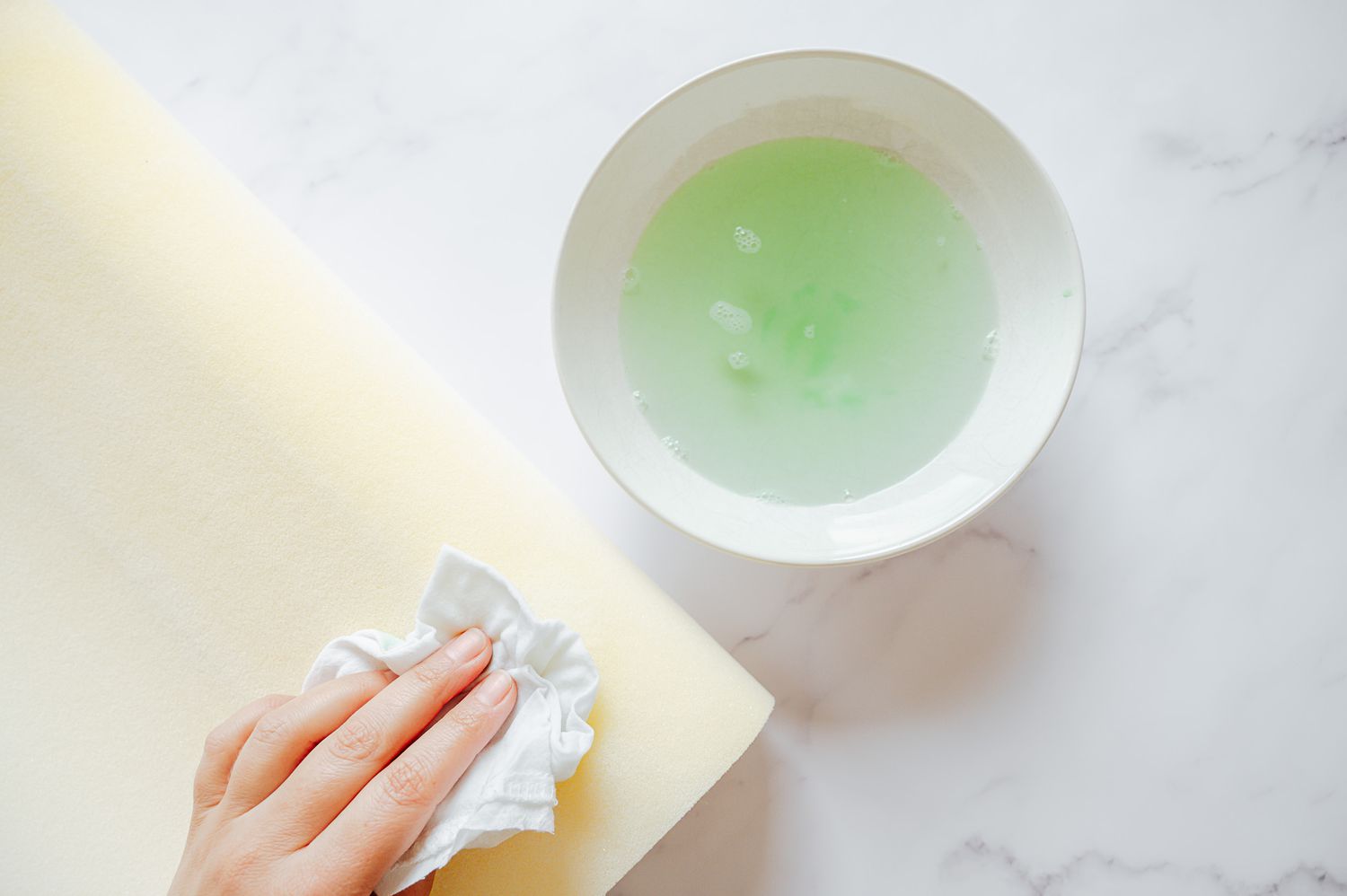
- Pretreat visible stains. Apply a small amount of liquid laundry detergent or compatible stain remover to the shell. For yellow body-soil marks, follow our guide to removing yellow pillow stains.
- Balance the load. Wash two similarly sized pillows when possible and when your washer has enough capacity. If washing one pillow, follow the washer manufacturer’s recommendations for balancing bulky items.
- Add a small amount of detergent. Liquid detergent generally disperses and rinses more easily than an excessive amount of powder. Whirlpool recommends a small amount because oversudsing can be difficult to rinse from pillows.
- Select the approved cycle. Choose the cycle and water temperature on the pillow’s care label. A gentle cycle is common, but do not override a different manufacturer instruction.
- Use an extra rinse when needed. Thick fill can hold detergent. Run an extra rinse if the pillow feels slippery, strongly scented, or soapy.
- Remove it promptly. Transfer washable pillows to the approved drying method as soon as the cycle ends. Do not leave wet pillows sitting in the washer.
Front-Load vs. Top-Load Washer: Does It Matter?
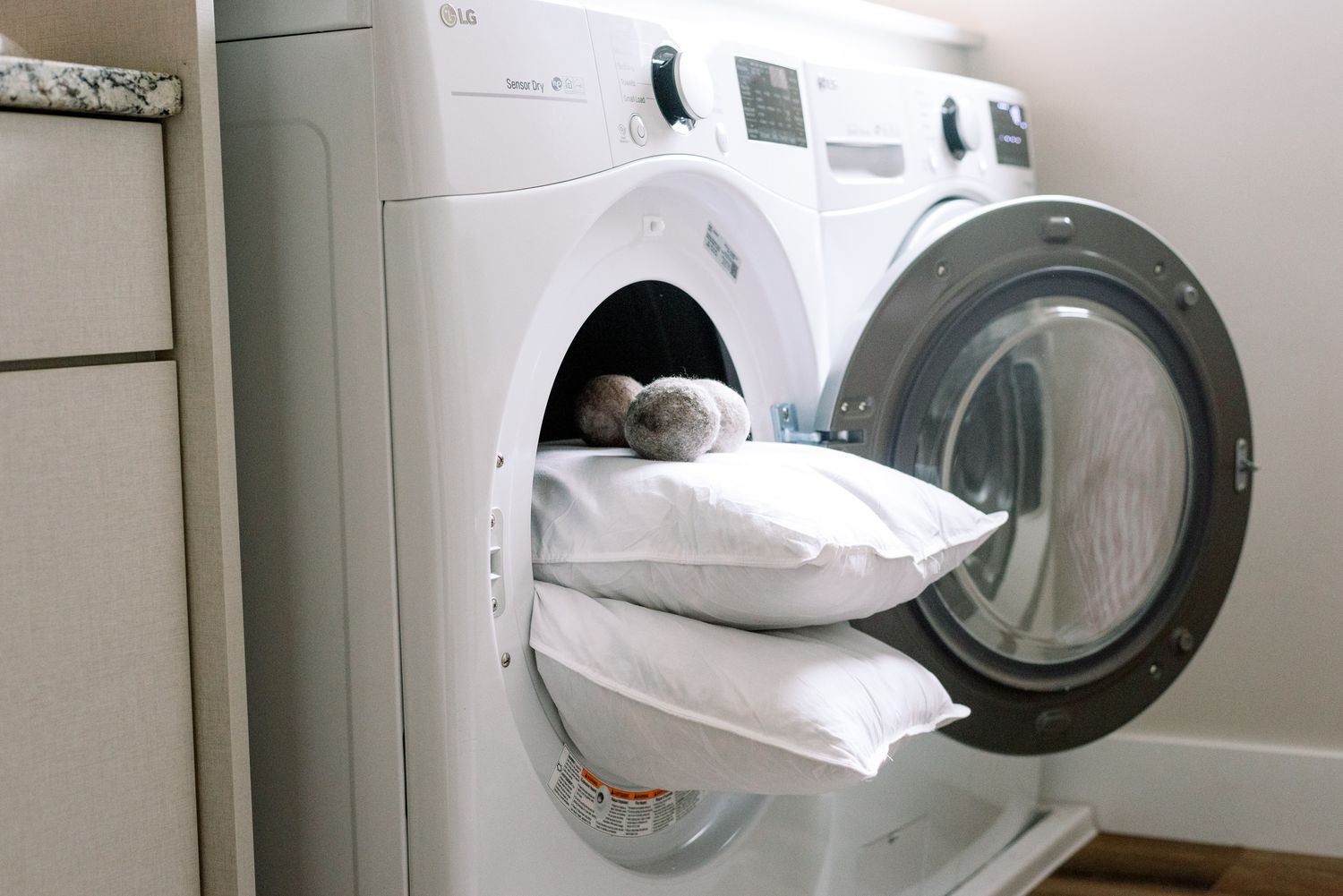
Both washer types may clean washable pillows, but capacity and load balance matter. A pillow needs enough room for water and detergent to circulate without being tightly folded or wedged into the drum.
Front-load washers
A roomy front-loader can accommodate bulky items without a center agitator. Place pillows loosely in the drum and do not exceed the machine’s capacity.
Top-load washers without a center agitator
Arrange the pillows evenly around the wash plate. Make sure the items can move freely rather than floating in a tightly packed mass.
Top-load washers with a center agitator
Place two pillows vertically on opposite sides when both items and the machine instructions allow it. Avoid wrapping or bending a pillow tightly around the agitator, which can strain seams and distort the fill.
Check your washing machine’s use-and-care guide for bulky items, load balancing, detergent type, and cycle selection. A pillow may be washable but still too large for a compact machine.
How Much Detergent Should You Use?
Use less detergent than you might instinctively pour for a bulky load. The exact amount depends on the detergent concentration, water hardness, washer type, and load size, so follow the detergent label and appliance instructions.
Too much detergent can cause:
- Excess suds and poor rinsing
- A stiff or slippery pillow shell
- Strong fragrance trapped in the fill
- Residue that attracts additional soil
- Longer drying time
Do not use dish soap in a washing machine. It creates much more foam than laundry detergent and can cause oversudsing.
How to Dry Pillows After Machine Washing
A pillow is not clean and ready to use until its center is completely dry. The outside can feel dry while the internal fill remains cool, heavy, or damp.
Follow the care label’s heat setting
Whirlpool advises low heat for synthetic pillows and no heat or air fluff for down and feather pillows, while Maytag similarly emphasizes the label-approved setting. Some pillows must air dry.
Add dryer balls when allowed
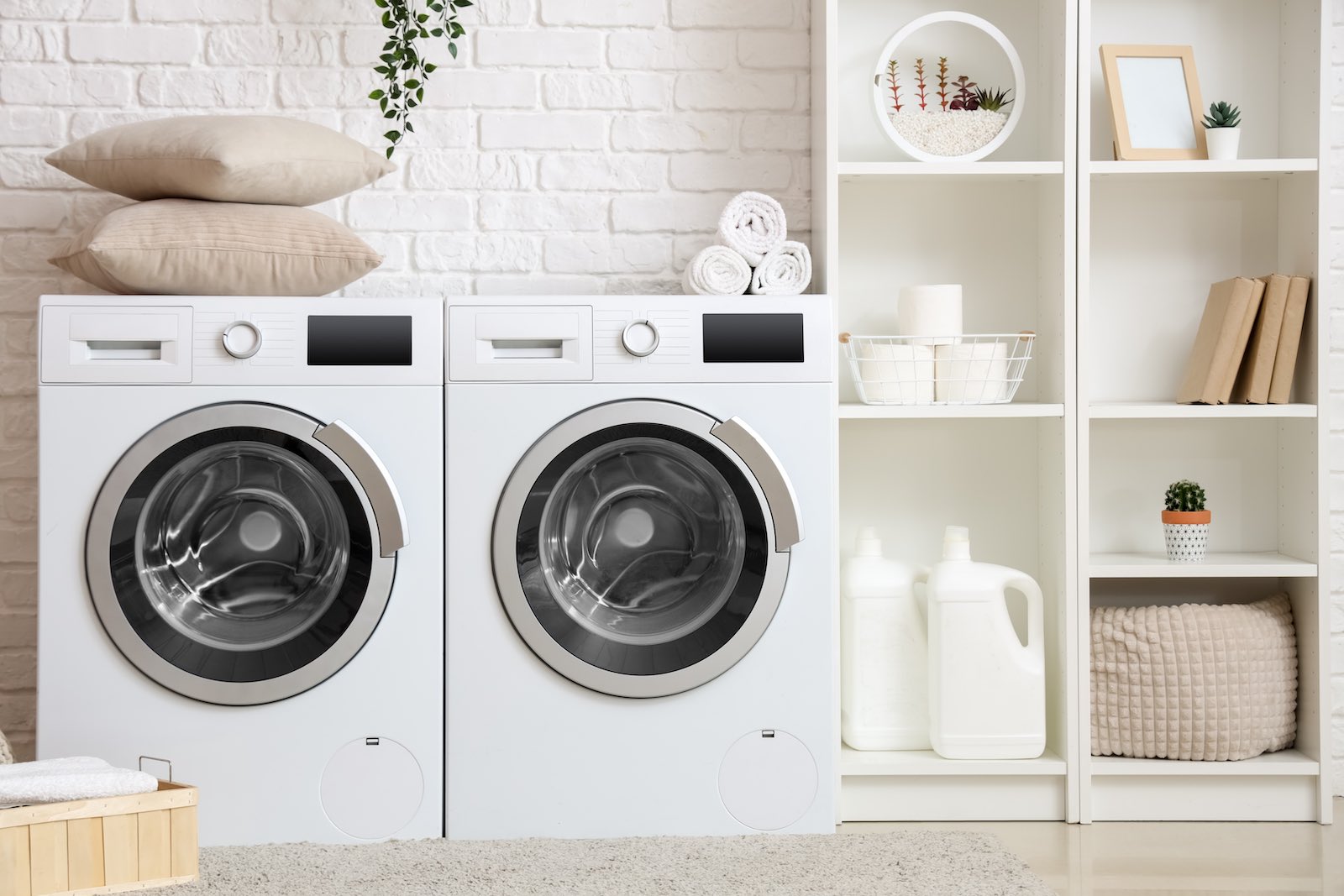
Clean dryer balls can help separate clumps and restore loft. Pause the dryer periodically, rotate the pillow, and break apart damp clusters by hand.
Check the thickest area
Press the center and corners. Continue drying if any section feels cool, damp, heavy, or compacted. A musty smell is another sign that moisture remains.
Air-dry when required
Lay the pillow flat on a clean rack in a well-ventilated room. Run a fan across it and rotate it regularly. Do not place foam or heat-sensitive fill near a radiator, heater, iron, or hot hair dryer.
Covering a damp pillow slows evaporation and can lead to odor, clumping, and microbial growth. Keep drying until the entire insert—not only the shell—is dry.
How to Hand Wash a Pillow That Is Washable but Not Machine Safe
If the label permits hand washing, use a clean basin or tub and follow the stated water temperature. Do not apply this method to solid foam or another insert labeled “spot clean only.”
- Dissolve a small amount of mild detergent in water.
- Submerge the washable pillow and press gently so the solution moves through the fill.
- Do not twist or aggressively scrub the insert.
- Drain the soapy water and rinse repeatedly until the water runs clear.
- Press between clean towels to remove moisture.
- Dry using the method and heat level stated on the label.
Whirlpool’s general pillow-care guidance includes hand-washing instructions for synthetic, down, and feather pillows, but individual product instructions can still differ.
Troubleshooting Common Pillow-Washing Problems
The pillow feels lumpy
Redistribute the fill by hand. If tumble drying is allowed, add dryer balls and continue on the label-approved setting. Persistent hard lumps may mean the fill was damaged, the detergent did not rinse out, or the pillow is still damp.
The pillow feels soapy or stiff
Run another rinse without detergent when the care label permits. Do not add fabric softener to disguise residue. The pillow should not feel slippery or heavily coated when clean.
The pillow smells worse after washing
A damp, sour, or musty smell usually indicates trapped moisture or soil that was not fully removed. Dry the pillow thoroughly. If odor remains after complete drying, wash again only when the label permits. A deeply contaminated or non-dryable pillow may need replacement.
Feathers or fill are coming out
Stop using the machine if the shell or seam has opened. Loose fill can clog the washer or dryer. Repair the casing only if it can securely contain the fill and the pillow remains structurally sound.
The pillow became flat
Dry and redistribute the fill completely before judging the result. Some temporary flattening improves as moisture leaves. If the pillow remains thin, hard, or uneven, the internal structure may have been damaged.
Yellow stains remain
Pretreat compatible washable fabric before repeating the wash. Do not keep escalating to harsher chemicals without checking the shell and fill. Old body oils and oxidation may leave permanent discoloration even after the pillow is hygienically clean.
How Often Should You Wash Pillows?
There is no schedule that fits every pillow and household. Whirlpool suggests washing washable pillows at least twice a year to address oil, dirt, and dust buildup, but the correct interval depends on the product, use, allergies, perspiration, spills, and whether you use a protector.
- Wash pillowcases as part of your normal bedding routine.
- Wash removable protectors according to their labels.
- Clean the pillow promptly after a compatible spill.
- Vacuum and spot-clean non-washable foam as needed.
- Dry every cleaned pillow completely.
- Replace damaged or contaminated inserts that cannot be restored.
For a new pillow, read whether you should wash pillows before first use. Washing is not always necessary; sometimes airing the insert and laundering only the cover is the safer choice.
When Should You Replace a Pillow Instead of Washing It?
Cleaning cannot restore broken foam, failed seams, or fill that has permanently lost support. Consider replacement when:
- The foam is cracked, crumbling, or permanently compressed.
- The fill remains hard and clumped after complete drying.
- Odor returns immediately after proper cleaning.
- There is visible mold or deep biological contamination.
- The shell cannot securely contain the fill.
- The pillow no longer supports your preferred sleep position.
Use our pillow replacement checklist to evaluate support, condition, and hygiene rather than relying on age alone.
When replacement is more practical than another wash, compare the current Contour Relief Pillow and Ultra Contour Relief Pillow. Before cleaning either product, follow the care instructions supplied with the exact model.
Frequently Asked Questions
Can all pillows go in the washing machine?
No. Many polyester, microfiber, down-alternative, down, and feather pillows may be washable, but solid memory foam, most latex, buckwheat hulls, and specialty inserts often require different care. Read the label for the entire pillow.
Can I machine wash a memory foam pillow?
Usually not. Washer agitation can tear or deform solid foam, and trapped water may be difficult to remove. Wash the removable cover, vacuum the insert, and spot-clean it with minimal moisture unless the manufacturer explicitly says otherwise.
Can I machine wash a shredded memory foam pillow?
Only when the product’s care instructions say the insert is washable. Some models have a washable cover surrounding an inner liner that must stay dry.
Can down and feather pillows be machine washed?
Some can, but not all. Follow the manufacturer’s label. When washing is allowed, use little detergent, rinse thoroughly, and dry until no damp clumps remain.
Should I wash one pillow or two at a time?
Two similarly sized washable pillows may help balance the load when the washer has sufficient capacity. Do not overload the drum or wash a second pillow whose label prohibits machine washing.
What cycle should I use for pillows?
Use the cycle stated on the care label. A gentle cycle is common for washable pillows, but the correct water temperature, spin speed, and cycle depend on the fill and construction.
Can I use fabric softener on pillows?
Do not add it unless the pillow manufacturer specifically permits it. Softener can coat some fibers, trap fragrance, and make thick fill harder to rinse.
How do I know when a pillow is completely dry?
Check the thickest sections and corners. The pillow should not feel cool, damp, unusually heavy, or clumped. It should not have a musty odor.
Can I put a pillow in the dryer?
Only when the care label allows it. Use the approved heat setting. Some synthetic pillows tolerate low heat, some down or feather pillows use air fluff or no heat, and foam pillows generally should not be tumble dried.
What happens if I wash a “spot clean only” pillow?
The fill may clump, shrink, tear, bleed dye, lose shape, or remain damp inside. If the label says spot clean only, clean the surface rather than substituting a machine cycle.
Related Pillow Care Guides
Sources and Further Reading
Editorial note: This article provides general bedding-care information. The care label and manufacturer instructions for your exact pillow and washing machine take priority.
