
Quick answer: To remove yellow stains from a pillow, first identify the fill and read the care label. If the entire pillow is machine washable, pretreat the yellow areas with a small amount of liquid laundry detergent or a fabric-safe stain remover, wash on the label-approved cycle, add an extra rinse when needed, and dry the pillow completely. If the pillow contains solid memory foam, latex, buckwheat hulls, or another non-washable fill, do not soak it—clean the removable cover and spot-treat the pillow with minimal moisture.
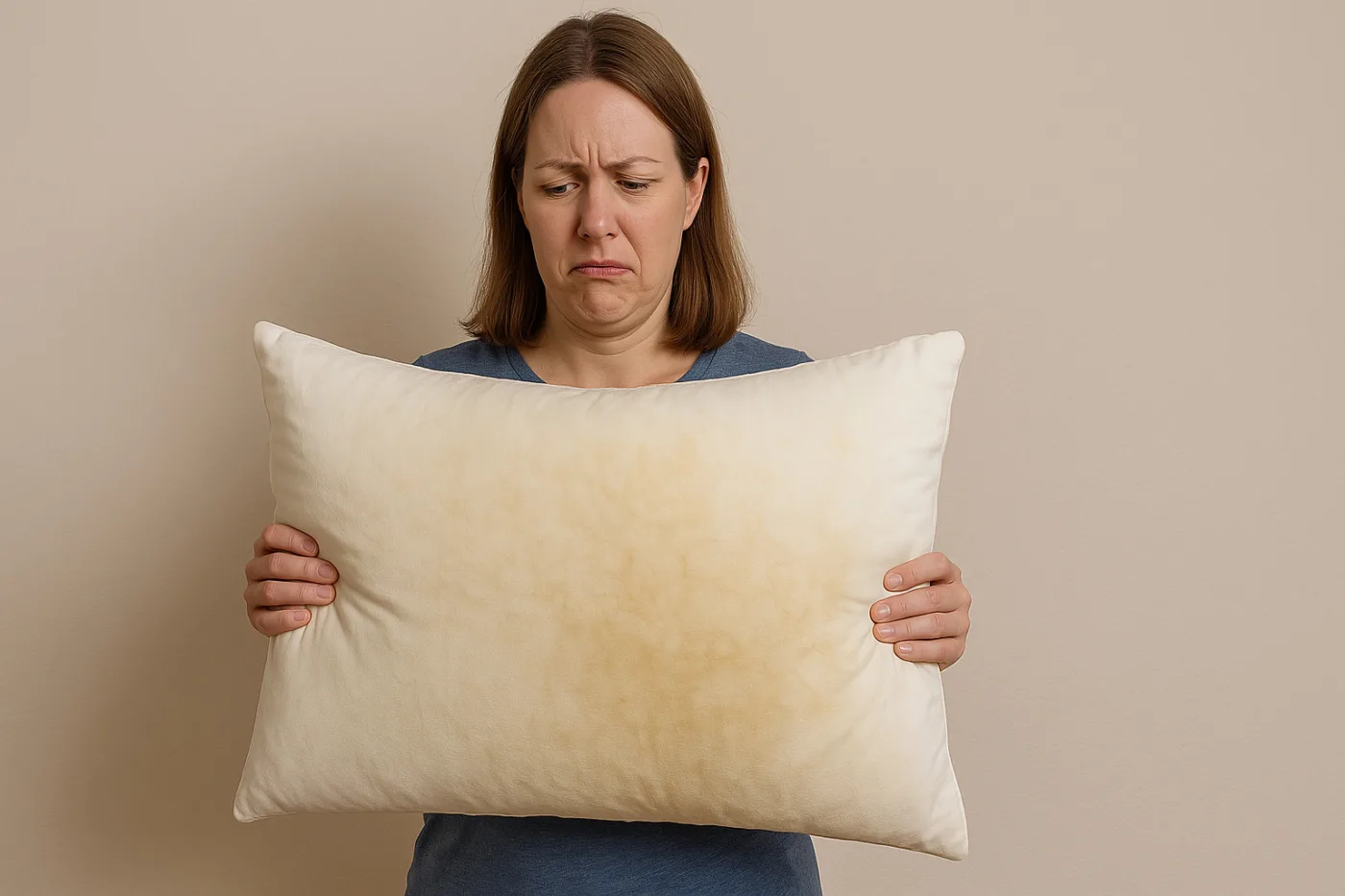
Yellowing is usually a body-soil problem rather than a single mystery stain. Sweat, skin oils, saliva, wet hair, skincare products, and makeup can slowly build up in the pillowcase, protector, outer fabric, and fill. The American Cleaning Institute lists body-soil buildup as a common cause of fabric yellowing and recommends treating stains with an appropriate pretreatment before laundering.
The correct method depends on the pillow fill, shell, and drying instructions.
Body oils and sweat usually respond better to detergent or a compatible stain remover.
Do not put a pillow back on the bed while the center still feels cool, heavy, or damp.
See the American Cleaning Institute’s laundering problems and solutions guide
.
Before You Start: Identify the Pillow Material
The safest stain-removal method depends more on the pillow’s construction than on the color of the stain. A solution that works for a washable polyester pillow may ruin a solid memory foam core or leave a down pillow clumped and damp.
| Pillow type | Usual cleaning approach | Main risk |
|---|---|---|
| Polyester or down-alternative | Often machine washable when the care label permits | Clumping, detergent residue, incomplete drying |
| Down or feather | May be washable on a gentle cycle if the label permits | Damaged quills, odor, clumping, damp fill |
| Solid memory foam | Wash the cover; vacuum and spot-clean the foam | Tearing, oversaturation, slow drying |
| Shredded memory foam | Follow the manufacturer’s instructions exactly | Assuming the fill is washable when only the cover is |
| Latex foam | Usually surface cleaning only unless the label says otherwise | Tearing, crumbling, heat damage |
| Buckwheat | Remove hulls and wash the empty cover when permitted | Getting the hulls wet |
| Decorative or specialty pillow | Spot clean, hand clean, or professionally clean as labeled | Damage to trim, dyes, embroidery, or internal structure |
Whirlpool’s pillow-washing guidance also begins with the care tag because pillow fills and covers require different cycles and drying methods.
Review Whirlpool’s pillow washing guide
.
Why Do Pillows Turn Yellow?
Sweat and skin oils
Even when you do not feel noticeably sweaty, the body releases moisture and oils during sleep. Over time, these substances pass through the pillowcase and collect in the protector or pillow shell. Because the buildup happens gradually, the pillow may look clean for months before the yellowing becomes obvious.
Drool, saliva, and wet hair
Saliva contains moisture and organic material that can leave a defined yellow patch. Sleeping with wet hair adds more moisture and can transfer conditioner, styling cream, or hair oil to the fabric.
Skincare, makeup, and hair products
Moisturizers, facial oils, self-tanner, foundation, and leave-in hair products can create oily or pigmented stains. These often require pretreatment because ordinary washing may remove surface dirt without fully breaking down the oil.
Detergent residue and incomplete rinsing
Using too much detergent can leave residue inside a thick pillow. Residue attracts soil, stiffens fabric, and may create uneven discoloration. More detergent does not necessarily mean a cleaner pillow; use the amount recommended for the product and load size.
Age, oxidation, and repeated heat exposure
Some yellowing remains after cleaning because the fabric or fill has changed color with age. Repeated high dryer heat, body oils, or previous use of incompatible cleaning products can contribute to permanent discoloration. A pillow can be clean yet retain a faint yellow cast.
What You Need
- The pillow’s sewn-in care label or manufacturer’s online instructions
- Mild liquid laundry detergent
- A fabric-safe prewash stain remover, if permitted
- Clean white cloths
- A soft-bristle brush for washable fabric only
- Clean towels
- Optional oxygen-based laundry booster for compatible washable white fabric
- Dryer balls for pillows that can be tumble dried
- A fan and a ventilated drying space for air-dry items
Avoid creating a strong homemade mixture from bleach, ammonia, vinegar, peroxide, and other cleaners. Never mix chlorine bleach with ammonia or acidic products. Use one labeled laundry product at a time and follow its directions.
How to Get Yellow Stains Out of Machine-Washable Pillows
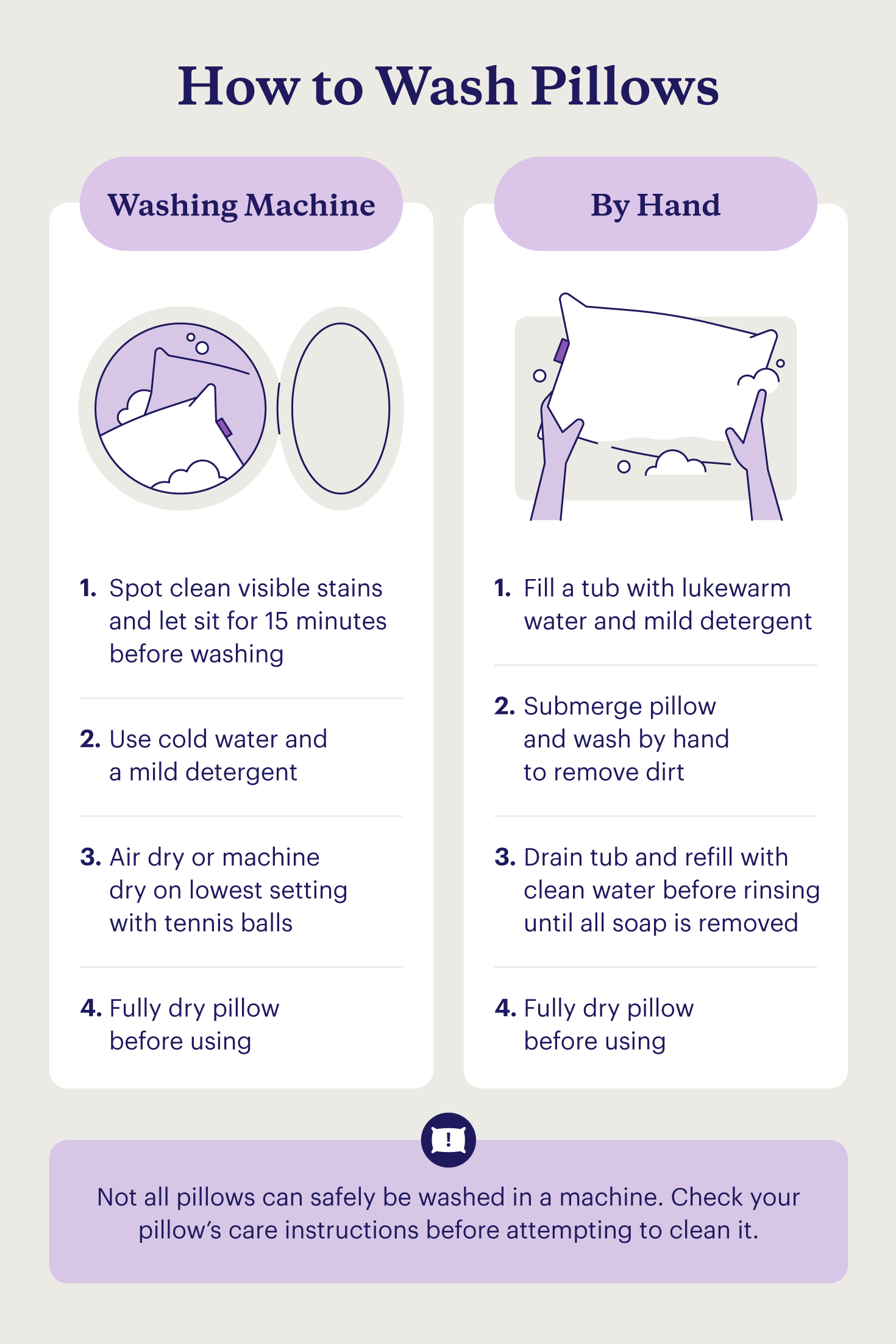
Use this method for polyester, down-alternative, and other pillows only when the care label confirms that the entire pillow can be machine washed.
Step 1: Remove the pillowcase and protector
Wash the pillowcase and removable protector separately. Treat visible stains on those layers before washing, because yellowing may be concentrated in the protector rather than the pillow itself.
Step 2: Inspect the pillow before wetting it
Check for torn seams, loose fill, foam pieces, electronics, gel inserts, decorative trim, or a “spot clean only” instruction. Repair a small seam before washing so the fill does not escape into the machine.
Step 3: Pretreat the yellow areas
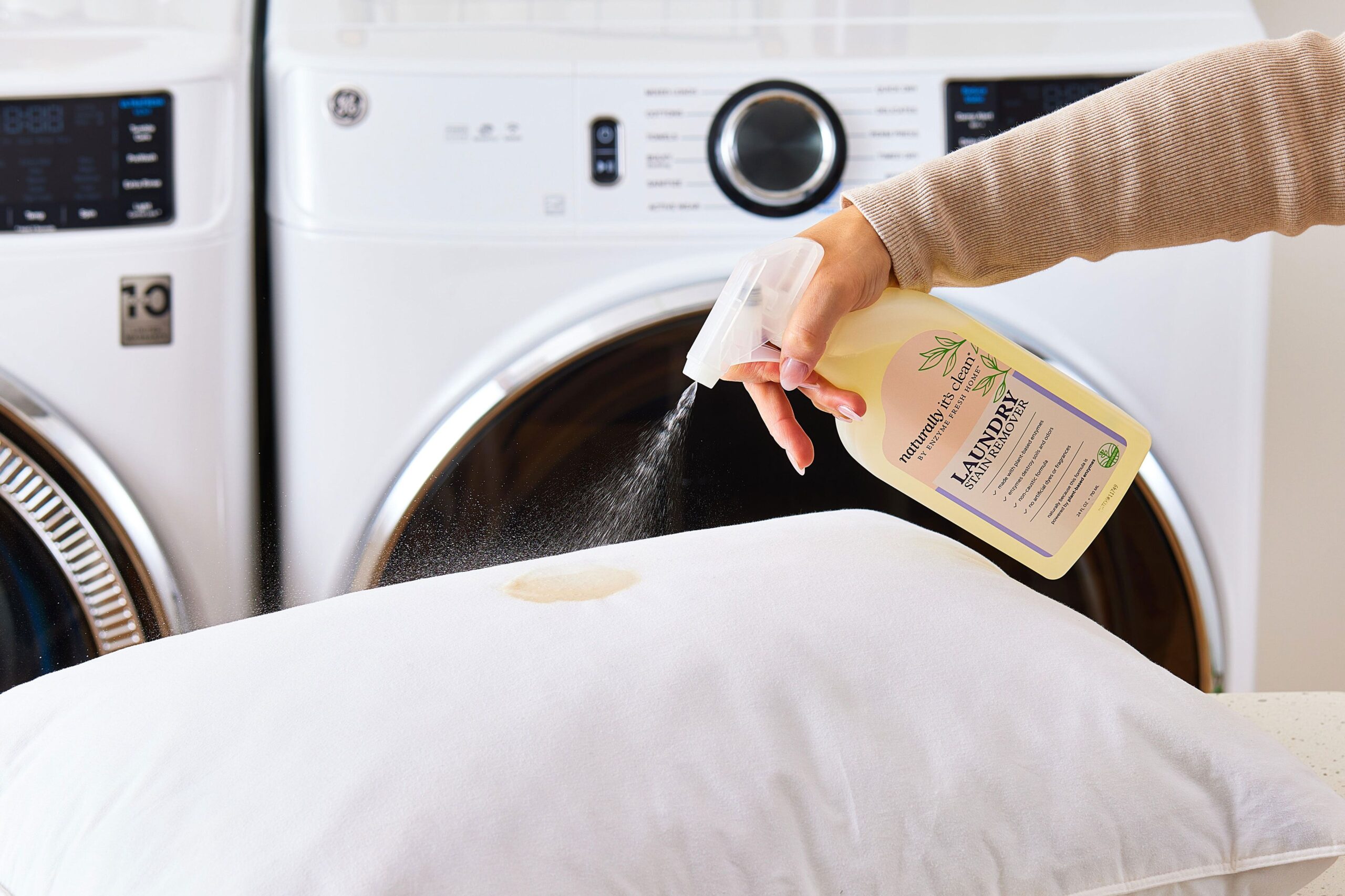
Apply a small amount of liquid laundry detergent or a compatible prewash stain remover to the yellowed fabric. Gently work it into the surface with your fingers or a soft brush. Do not aggressively scrub thin fabric or push the product deep into the fill. Let the pretreatment sit for the time stated on its label. The American Cleaning Institute recommends pretreating many body-soil and oil-based stains with liquid detergent or a stain-removal product before laundering.
.
Step 4: Load the washer correctly
Place the pillow loosely in the washer. With a traditional top-loader that has a center agitator, washing two similarly sized pillows may help balance the load, but only when both care labels allow machine washing and the washer has enough room. Do not force oversized pillows into a small drum.
Step 5: Choose the label-approved cycle
Use the water temperature and cycle specified on the care label. A gentle or bedding cycle is common for washable pillows, but the manufacturer’s instruction takes priority. Use a modest amount of mild detergent so it can rinse out of the thick fill.
Step 6: Rinse thoroughly
If the pillow still feels slippery or heavily scented after the cycle, run an extra rinse without adding more detergent. Residue trapped in the fill can attract dirt and make the pillow feel stiff.
Step 7: Check the stain before drying
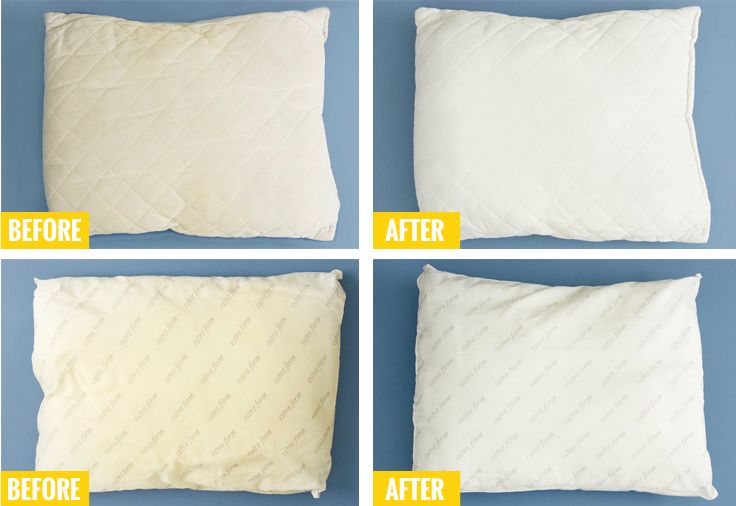
Inspect the pillow while it is still wet. If yellowing remains, repeat the pretreatment and wash process when the label allows it. The American Cleaning Institute advises repeating stain removal before putting an item in the dryer because drying can make a remaining stain harder to remove.
.
How to Treat Stubborn Yellowing on Washable White Pillows
How to Clean Yellow Stains from Down and Feather Pillows
Down and feather pillows need careful washing and especially careful drying. First confirm that the care label permits machine washing. Some pillows require professional cleaning.
- Pretreat only the stained outer fabric with a small amount of mild detergent.
- Wash on the manufacturer-approved gentle cycle and water temperature.
- Use a small amount of detergent to reduce residue in the fill.
- Add an extra rinse if the pillow feels soapy.
- Dry according to the care label, commonly on low heat.
- Add clean dryer balls when permitted to help separate clumps.
- Pause the cycle periodically, break apart damp clusters by hand, and continue drying.
A down or feather pillow may feel dry on the outside while the center is still damp. Keep drying until there are no cool, heavy, or clumped areas and no damp odor.
How to Remove Yellow Stains from Memory Foam Pillows
Do not use the machine-washing method on a solid memory foam pillow. Tempur-Pedic advises not washing or submerging a pillow insert unless the product’s care instructions specifically say it is washable.
See Tempur-Pedic’s official pillow-care guidance
.
Wash the removable cover separately
Unzip the cover and follow its label. Pretreat yellow areas on the washable cover with mild liquid detergent or a fabric-safe stain remover.
Vacuum the foam
Use a clean upholstery attachment on low suction to remove dust, hair, and loose residue from both sides, the edges, and any ventilation holes.
Spot-clean with minimal moisture
Mix a few drops of mild liquid detergent into lukewarm water. Dip a white cloth into the solution and wring it out firmly. Blot the yellow area from the outside inward without scrubbing or saturating the foam.
Remove soap residue
Use a second cloth dampened with plain water and wrung nearly dry. Blot the area several times, then press with clean towels.
Air-dry completely
Lay the pillow flat in a ventilated area and run a fan across it. Keep the cover off until the thickest part is dry. For a full material-specific procedure, follow our guide on
how to clean a memory foam pillow without damaging it
.
What About Latex, Buckwheat, and Specialty Pillows?
Latex foam
Many latex pillows are not intended for machine washing. Remove and wash the cover when permitted, then spot-clean the latex with minimal moisture. Avoid twisting, wringing, direct heat, and aggressive scrubbing.
Buckwheat pillows
Do not get the hulls wet. Empty them into a clean, dry container, wash the empty fabric shell according to its label, and return the hulls only after the cover is completely dry.
Gel, cooling, cervical, or contoured pillows
These products may combine foam, gel layers, adhesives, perforations, and specialty fabrics. Follow the exact manufacturer’s instructions rather than treating the entire pillow as ordinary polyester fill.
Decorative pillows
Check for embroidery, piping, non-colorfast dye, beads, sequins, hidden cardboard, or glued components. Spot cleaning or professional cleaning may be safer than immersion.
How to Dry Pillows After Removing Yellow Stains
A cleaned pillow is not ready to use until the interior is fully dry. Trapped moisture can create odor, clumping, and conditions that support mold growth.
For pillows that can be tumble dried
- Use the heat setting stated on the care label.
- Add dryer balls when permitted to help redistribute fill.
- Pause periodically and break apart damp clumps.
- Continue drying until the center is no longer cool, damp, or heavy.
For air-dry pillows
- Press between towels without twisting.
- Lay flat on a clean drying rack.
- Direct a fan across the pillow.
- Turn and rotate it regularly.
- Keep the cover off until the fill is fully dry.
The U.S. Environmental Protection Agency emphasizes moisture control and notes that absorbent or porous materials may need to be discarded when mold cannot be completely removed.
Read the EPA’s basic mold cleanup guidance
.
Why Yellow Stains Sometimes Do Not Come Out
- The stain has oxidized: Older body oils can permanently discolor fabric.
- The treatment did not match the stain: Oil-heavy stains need detergent or an appropriate pretreatment.
- The pillow was dried too soon: Heat may make remaining discoloration harder to remove.
- Detergent remains in the fill: Residue can leave the pillow dull or uneven.
- The fabric itself has aged: Cleaning cannot reverse every color change.
- The fill is damaged: Clumping, breakdown, or permanent odor may be a replacement issue rather than a stain issue.
Do not keep escalating to stronger chemicals simply to achieve a perfectly white appearance. A faint stain may be cosmetic. Damaged fabric, chemical residue, or an incompletely dried pillow is a worse outcome than slight discoloration.
When Should You Replace a Yellow Pillow?
Yellow color alone does not automatically make a pillow unusable. Consider replacement when the pillow also has one or more of these problems:
- Persistent odor after cleaning and complete drying
- Visible mold or repeated dampness
- Foam that is cracking, crumbling, or permanently compressed
- Down or synthetic fill that remains hard and clumped
- Torn fabric that cannot securely contain the fill
- Loss of support that affects comfort
- Biological contamination that soaked deep into a non-washable core
For a condition-based checklist, read
how long pillows last and when to replace them
. When the pillow no longer cleans or supports you properly, compare the current
and
. Always review the product’s own care instructions before cleaning the insert.
How to Prevent Yellow Pillow Stains
- Use a washable zippered pillow protector beneath the pillowcase.
- Wash pillowcases regularly and whenever visibly soiled.
- Wash protectors according to their labels before heavy buildup develops.
- Let skincare products absorb before going to bed.
- Remove makeup before sleep.
- Avoid going to bed with wet hair.
- Use the correct amount of detergent so fabric rinses clean.
- Dry pillows completely after cleaning or accidental spills.
- Treat fresh stains promptly rather than waiting for them to oxidize.
If you have just bought a pillow, our guide to
whether new pillows should be washed before use
explains when laundering, airing, or simply washing the cover is appropriate.
Frequently Asked Questions
What is the safest first treatment for yellow pillow stains?
Start with the care label, then use a small amount of liquid laundry detergent or a compatible prewash stain remover on washable fabric. This is generally safer than applying a strong homemade whitening mixture.
Can I use baking soda and vinegar together on a yellow pillow?
They are not the best universal stain treatment. When combined, they largely neutralize each other, and the added moisture may be unsuitable for foam or specialty fills. Use a labeled detergent or stain remover matched to the fabric and follow the care instructions.
Can I use hydrogen peroxide on a pillow?
Only when the pillow’s fabric and fill are compatible and the product directions allow it. Peroxide may lighten color, affect specialty finishes, or leave moisture inside non-washable fill. Patch-test first and never combine it with other cleaners.
Can chlorine bleach make a yellow pillow white again?
Sometimes it can brighten compatible washable white fabric, but it can also weaken fibers, damage fill, or cause further discoloration. Use it only when both the pillow care label and bleach label permit it.
Can every yellow pillow go in the washing machine?
No. Many polyester and down-alternative pillows are washable, but solid memory foam, many latex pillows, buckwheat fill, and specialty designs usually require different care. Read the label before washing.
How do I remove yellow stains from a memory foam pillow?
Wash the removable cover, vacuum the foam, and blot the stained area with a barely damp cloth and mild detergent. Remove residue with another barely damp cloth and air-dry completely. Do not machine wash or soak solid foam unless the manufacturer explicitly allows it.
Why is my pillow still yellow after washing?
The discoloration may be old, oxidized, heat-set, or caused by permanent fabric aging. Detergent residue or incomplete treatment can also leave uneven color. Repeat a fabric-safe pretreatment before drying, but stop if the fabric or fill begins to weaken.
Do yellow stains mean the pillow has mold?
Not usually. Yellowing is commonly linked to body soil, oils, saliva, and product residue. Mold is more likely to appear as spotting, fuzzy growth, or a persistent musty odor after the pillow has been damp. Porous pillows with mold that cannot be completely cleaned and dried may need replacement.
How can I keep a new pillow from turning yellow?
Use a washable protector, change pillowcases regularly, avoid sleeping with wet hair or makeup, treat spills quickly, and keep the pillow completely dry.
Related Pillow Care Guides
Sources and Further Reading
- American Cleaning Institute: Laundering Problems and Solutions
- American Cleaning Institute: Laundry Basics
- American Cleaning Institute: Stain Removal Guide
- American Cleaning Institute: How to Use Bleach
- Whirlpool: How to Wash Pillows
- Tempur-Pedic: How Can I Keep My Pillow Clean?
- U.S. EPA: Basic Mold Cleanup Steps
