
Quick answer: Most solid memory foam pillows should not go in a washing machine, dryer, or tub of water. Remove and wash the cover according to its care label, vacuum the foam, deodorize it with baking soda if appropriate, and spot-clean stains with a barely damp cloth and a small amount of mild detergent. Let the pillow dry completely before putting the cover back on. Only wash a shredded-memory-foam pillow when its manufacturer specifically says the insert is washable.
This guide gives you the safest general method for cleaning memory foam without crushing, tearing, oversaturating, or overheating it. Always let the care label for your exact pillow override general advice.
Agitation, soaking, and dryer heat can damage the internal structure.
Vacuum first, then blot only the affected area with a barely damp cloth.
Keep the cover off until no area feels cool, heavy, or damp.
How to Clean a Memory Foam Pillow at a Glance
| Pillow part or type | Usually safe | Usually avoid |
|---|---|---|
| Solid memory foam insert | Vacuuming, deodorizing, light spot cleaning, air drying | Machine washing, wringing, soaking, tumble drying, high heat |
| Shredded memory foam insert | Follow the care label; some models allow gentle washing | Assuming it is washable without checking the manufacturer |
| Removable pillow cover | Wash exactly as the label directs | Hot water or high heat unless the label permits it |
| Non-removable cover | Light surface cleaning with minimal moisture | Saturating the fabric or foam underneath |
Why the caution?
Foam can absorb a large amount of water, dry slowly, and become damaged by agitation or heat. Tempur-Pedic, for example, states that its foam pillows are not washable because the material is sensitive to liquids, while the removable cover may be washed separately.
See Tempur-Pedic’s official pillow-care guidance
.
Can You Wash a Memory Foam Pillow?
Solid memory foam pillows
In most cases, no. A one-piece memory foam core should not be placed in a washer or dryer unless the manufacturer explicitly says otherwise. The washer’s tumbling and spin cycles can split or crumble the foam, while trapped water may remain deep inside long after the surface feels dry. Dryer heat can also distort the pillow or weaken the foam structure. The safest routine for a solid foam pillow is:
- Wash the removable cover separately.
- Vacuum loose dust and debris from the foam.
- Use baking soda for mild odor when the care instructions allow it.
- Spot-clean only the affected area with minimal liquid.
- Air-dry completely before reuse.
Shredded memory foam pillows
Shredded foam is not automatically machine washable. Some manufacturers design the removable outer cover for washing but require the shredded fill to stay dry. Others permit a gentle wash for the entire insert. Check the sewn-in label and the manufacturer’s online care page before adding water. If the instructions are missing, treat the insert as non-washable. Spot cleaning is less risky than experimenting with a full wash that may leave the fill clumped, misshapen, or difficult to dry.
Memory foam pillow covers
Many memory foam pillows have a removable fabric cover. That cover is usually easier to clean than the foam and acts as the first barrier against sweat, skin oils, hair products, and spills. Zip it off carefully, close any zippers or fasteners, and follow its label for water temperature, detergent, and drying method. Do not assume the pillowcase, removable cover, and foam insert share the same care instructions. They are separate components and may require three different cleaning methods.
What You Need
- A vacuum with a clean upholstery attachment
- Baking soda for odor control, if allowed by the care label
- Two or three clean white microfiber cloths
- A bowl of lukewarm water
- A small amount of mild liquid laundry detergent
- Clean, absorbent towels
- A fan and a well-ventilated drying area
- Optional: a soft-bristle brush for the removable cover only
Use white cloths when possible so dye does not transfer to the pillow. Avoid strong fragrance, bleach, fabric softener, and harsh stain removers unless the manufacturer specifically approves them.
Step-by-Step: How to Clean a Memory Foam Pillow Safely
Step 1: Read the care label before adding moisture
Look for instructions such as “spot clean only,” “do not wash,” “hand wash,” or “machine washable.” Also check whether the directions apply to the cover, the insert, or both. Search the manufacturer’s website using the model name when the sewn-in label is unclear. This step matters because memory foam formulations and pillow constructions vary. A general cleaning guide cannot account for every adhesive, cooling layer, gel insert, perforated core, or fabric treatment.
Step 2: Remove the pillowcase and washable cover
Take off the regular pillowcase first. If the pillow has a zippered protector or removable cover, remove it without pulling hard on the foam. Wash each textile layer according to its own care label. While the cover is off, inspect the foam for:
- Cracks, crumbling, or torn edges
- Dark spotting or visible mold
- Deep liquid penetration
- Permanent compression or loss of shape
- A strong odor that seems to come from inside the foam
If you see widespread mold, deep contamination, or foam that is breaking apart, cleaning may not restore the pillow safely or effectively.
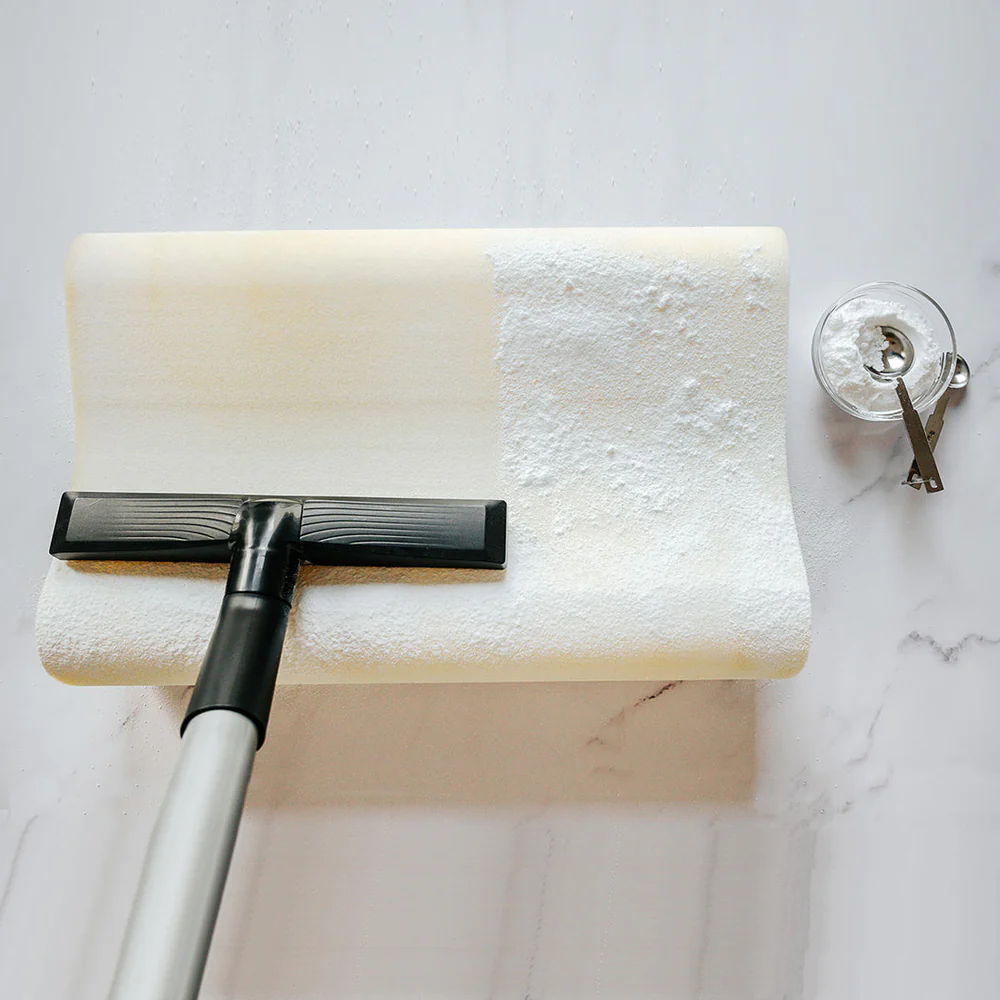
Step 3: Vacuum both sides
Place the pillow on a clean, dry surface. Using the upholstery attachment on low suction, vacuum the top, bottom, sides, seams, grooves, and ventilation holes. Support thin edges with your free hand so the vacuum does not pull or tear them. Vacuuming first removes hair, lint, dust, and loose particles that would otherwise turn into residue when they become damp.
Step 4: Deodorize with baking soda
For ordinary stale odors, sprinkle a light, even layer of baking soda over one side of the dry pillow. Let it sit for about one hour, then vacuum thoroughly. Turn the pillow over and repeat if needed. Do not mix essential oils into the baking soda. Oils can leave stains, irritate sensitive skin, add fragrance that is difficult to remove, or penetrate the foam. If the pillow has a specialty cooling surface, gel layer, or treated fabric, confirm that baking soda is allowed before using it.
Step 5: Prepare a mild spot-cleaning solution
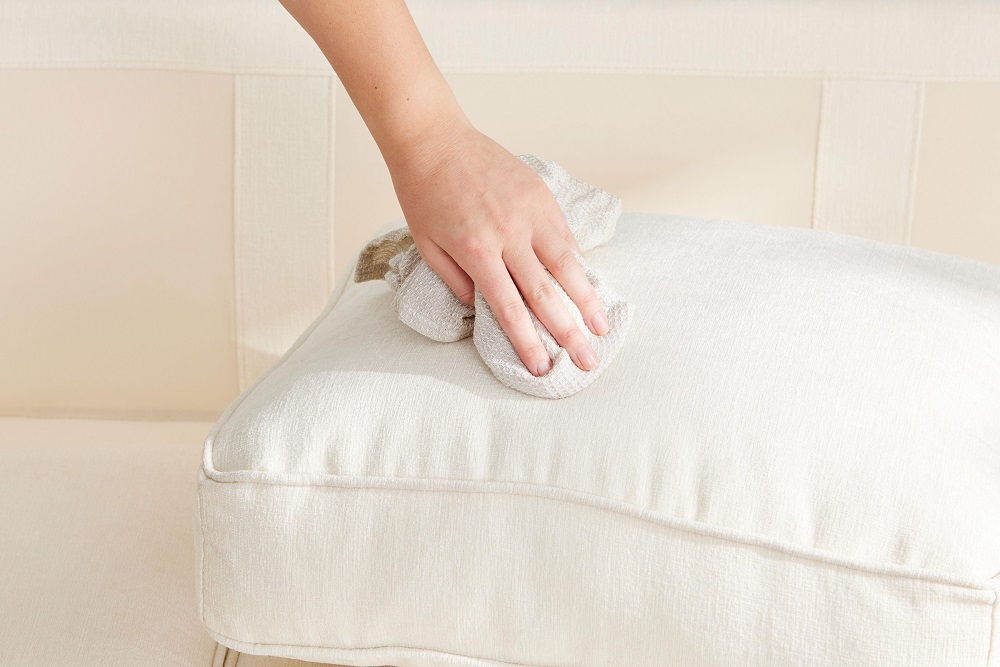
Add a few drops of mild liquid detergent to a bowl of lukewarm water and stir gently. The solution should be lightly soapy, not concentrated. Too much detergent is difficult to rinse from foam and may leave a sticky residue that attracts more dirt. Dip a clean white cloth into the solution and wring it out firmly. The cloth should feel damp, not wet enough to drip.
Step 6: Blot the stain from the outside inward
Blot the outer edge of the stain first and work toward the center. This helps reduce spreading. Do not scrub, twist, grind, or press hard into the foam. Rotate to a clean area of the cloth as soil transfers. Use several light passes rather than one heavily saturated treatment. If the stain is still visible after the area dries, repeat the process instead of pouring more liquid onto the pillow.
Step 7: Remove detergent residue
Dampen a second clean cloth with plain lukewarm water and wring it out thoroughly. Blot the treated area to pick up soap residue. Repeat with a clean section of cloth until the surface no longer feels slippery. Press a dry towel against the area to absorb surface moisture. Do not wring the pillow.
How to Remove Common Stains Without Soaking the Foam
Sweat and body-oil marks
Start with the mild detergent method above. These marks often need more than one light treatment because oils bind to fabric and foam surfaces. Let the pillow dry between attempts so you can judge the actual result. For a broader guide to different pillow materials, see
how to get yellow stains out of pillows
. Remember that methods suitable for cotton or polyester pillows may be too wet or aggressive for memory foam.
Drool or saliva spots
Blot with the mild detergent solution, then remove residue with a barely damp clean cloth. Focus on the surface and avoid pushing moisture deeper into the pillow. A washable pillow protector can make future cleanup easier.
Food and drink spills
Act quickly. Lift away solids with a spoon or dull edge, then blot liquid with a dry towel. Follow with a small amount of mild detergent solution. Avoid rubbing, which can spread pigments and oils across the foam. Dark beverages, cosmetics, and oily foods may leave a permanent shadow even after the residue is removed. A faint cosmetic stain is usually less harmful than damaging the foam through repeated aggressive cleaning.
Urine, vomit, or other biological contamination
Remove as much liquid as possible with clean towels without pressing it farther into the foam. Check the care label before using any enzyme-based cleaner, and test it on a hidden area first. Apply the cleaner to a cloth rather than pouring it directly onto the pillow. If contamination has soaked deeply into a solid foam core, if odor remains after careful surface cleaning, or if the pillow cannot be dried quickly and completely, replacement may be the more practical option.
Visible mold
Memory foam is porous. Surface wiping may not remove growth that has penetrated below the visible area. Do not sleep on a pillow that remains moldy or smells moldy after drying. The U.S. Environmental Protection Agency notes that absorbent materials with mold growth may need to be discarded when they cannot be cleaned and dried completely.
Read the EPA’s mold and moisture guidance
.
How to Dry a Memory Foam Pillow Completely
Drying is not an afterthought. It is the most important part of any cleaning method that adds moisture.
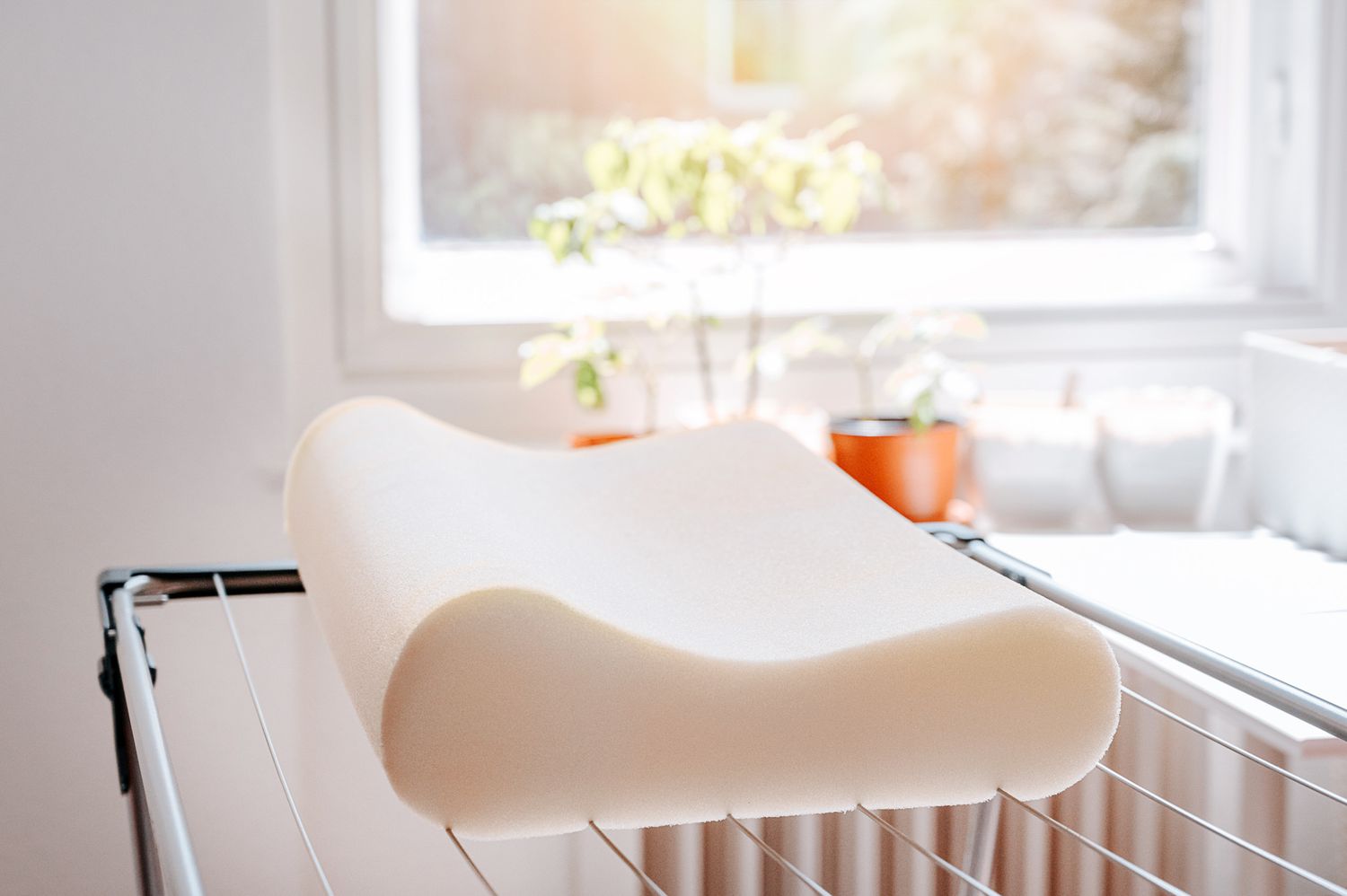
- Press the damp area between clean towels to remove surface water.
- Lay the pillow flat on a clean, breathable rack or dry towel.
- Place it in a well-ventilated room away from direct heat.
- Run a fan across the surface to improve airflow.
- Rotate and turn the pillow periodically so all sides receive air.
- Keep the cover off until the foam is completely dry throughout.
Do not judge dryness by the surface alone. Press the thickest part of the pillow and check for cool, damp, or heavy areas. Do not use the pillow until it is dry all the way through. The EPA recommends drying damp materials within 24 to 48 hours to help prevent mold growth. That is a moisture-control goal, not a promise that every wet foam pillow will dry in that time. A thick or oversaturated pillow may take longer, which is another reason to use as little liquid as possible.
See the EPA moisture-control guidance
.
What Not to Do
- Do not machine wash a solid memory foam pillow unless the manufacturer explicitly allows it.
- Do not soak or submerge the foam as a default cleaning method.
- Do not wring, twist, or fold wet foam.
- Do not use a tumble dryer, heater, iron, or hot hair dryer.
- Do not pour detergent or stain remover directly onto the pillow.
- Do not use chlorine bleach unless the care instructions specifically approve it.
- Do not cover or use the pillow while it is still damp.
- Do not mix multiple cleaning chemicals.
Sleep Foundation also advises checking the manufacturer’s instructions and generally avoiding a washer and dryer for most memory foam pillows.
Review its memory foam pillow cleaning guide
.
How Often Should You Clean a Memory Foam Pillow?
There is no single schedule for every household. Clean based on use, exposure, allergies, spills, and the manufacturer’s instructions.
- Pillowcase: Wash with your regular bedding routine.
- Removable protector or cover: Wash according to its label and whenever visibly soiled.
- Foam surface: Vacuum and spot-clean as needed.
- Odor treatment: Use baking soda only when needed and when compatible with the pillow.
- After a spill: Blot and begin drying immediately.
A breathable pillow protector reduces how often the foam itself needs attention. It is easier to wash a removable barrier than to remove oil or moisture after it has penetrated the foam.
When Cleaning Is Not Enough
Consider replacing the pillow when:
- The foam is cracked, crumbling, or tearing.
- It no longer returns to its original shape.
- Support has become uneven or permanently compressed.
- Odor returns soon after careful cleaning and complete drying.
- There is visible mold or deep liquid contamination.
- The pillow cannot be dried fully.
Age alone does not decide whether a pillow must be replaced; condition and support matter more. For a fuller checklist, read
how long pillows should last and when to replace them
. When replacement is the better option, compare the current
and
. Review each product’s care instructions before cleaning the insert.
Memory Foam Pillow Cleaning Checklist
- Check the care label.
- Remove and wash the cover separately.
- Vacuum loose debris.
- Use baking soda only for mild odor and only when appropriate.
- Spot-clean with a barely damp cloth and mild detergent.
- Blot away soap residue with minimal clean water.
- Press with towels; never wring.
- Air-dry flat with strong airflow.
- Do not re-cover or use the pillow until completely dry.
Frequently Asked Questions
Can I put a memory foam pillow in the washing machine?
Usually not. Most solid memory foam pillows can be damaged by agitation, spinning, and excess water. Wash the removable cover separately and spot-clean the foam. A shredded-memory-foam insert should only be machine washed when its care label explicitly permits it.
Can I fully submerge a memory foam pillow?
Do not submerge it unless the manufacturer specifically provides hand-washing instructions for that model. Many solid foam pillows are intended for surface cleaning only.
Can I use baking soda on memory foam?
Baking soda is commonly used to absorb mild odor from a dry pillow. Apply a light layer, let it sit, and vacuum it away. Check the care instructions first, especially when the pillow has a gel layer, cooling coating, or specialty fabric.
Can I use vinegar on a memory foam pillow?
Vinegar is not the safest universal first choice because it adds moisture and odor and may affect specialty materials. Start with mild detergent and minimal water. Use vinegar only when the manufacturer permits it and after testing a hidden area.
Can I use hydrogen peroxide or bleach on yellow stains?
Do not use either as a default treatment. Oxidizing products may discolor fabric, degrade adhesives, or damage specialty foam layers. Follow the care label or contact the manufacturer before using a stronger stain treatment.
Can I dry a memory foam pillow in the dryer?
Generally no. Tumble action and heat can damage the foam. Air-dry it flat with a fan and good ventilation unless the care label gives different directions.
How do I know whether the inside is dry?
Check the thickest section. It should not feel cool, heavy, damp, or unusually soft when pressed. Rotate the pillow and continue drying if there is any doubt.
What should I do if the pillow still smells after cleaning?
Make sure it is completely dry, then repeat a dry baking-soda treatment if allowed. If a strong odor returns, seems to come from deep inside, or follows biological contamination or mold, replacement may be safer than repeated wet cleaning.
Related Pillow Care Guides
Sources and Further Reading
