
A new pillow can be ready for bed without going through a washer. In many cases, the best first-use routine is simpler: inspect it, wash the removable textile layer, allow compressed fill to regain its shape, and use a clean pillowcase or protector. Washing an insert unnecessarily can shorten its life, trap moisture, or damage foam and specialty components.
The 60-Second First-Use Check
Before deciding whether to wash anything, complete these six checks. This is faster and safer than treating every new pillow the same way.
- Read the care label. Find out whether the instructions apply to the removable cover, the insert, or the entire pillow. “Washable cover” does not mean “washable foam.”
- Identify the fill. Polyester, down-alternative, down, and feather are often washable when labeled accordingly. Solid memory foam, many latex pillows, buckwheat hulls, and pillows with electronics or glued layers usually require different care.
- Inspect the packaging and shell. Look for torn packaging, visible soil, stains, moisture, mold-like spotting, damaged seams, or signs that the pillow may have been returned or handled.
- Check the odor. A mild new-material or packaging smell may improve through ventilation. A sour, damp, moldy, burning, or contamination odor deserves more caution.
- Allow compressed pillows to expand. Vacuum-packed fiber or foam pillows may need time to regain their intended loft. Follow the product’s setup instructions before judging shape or support.
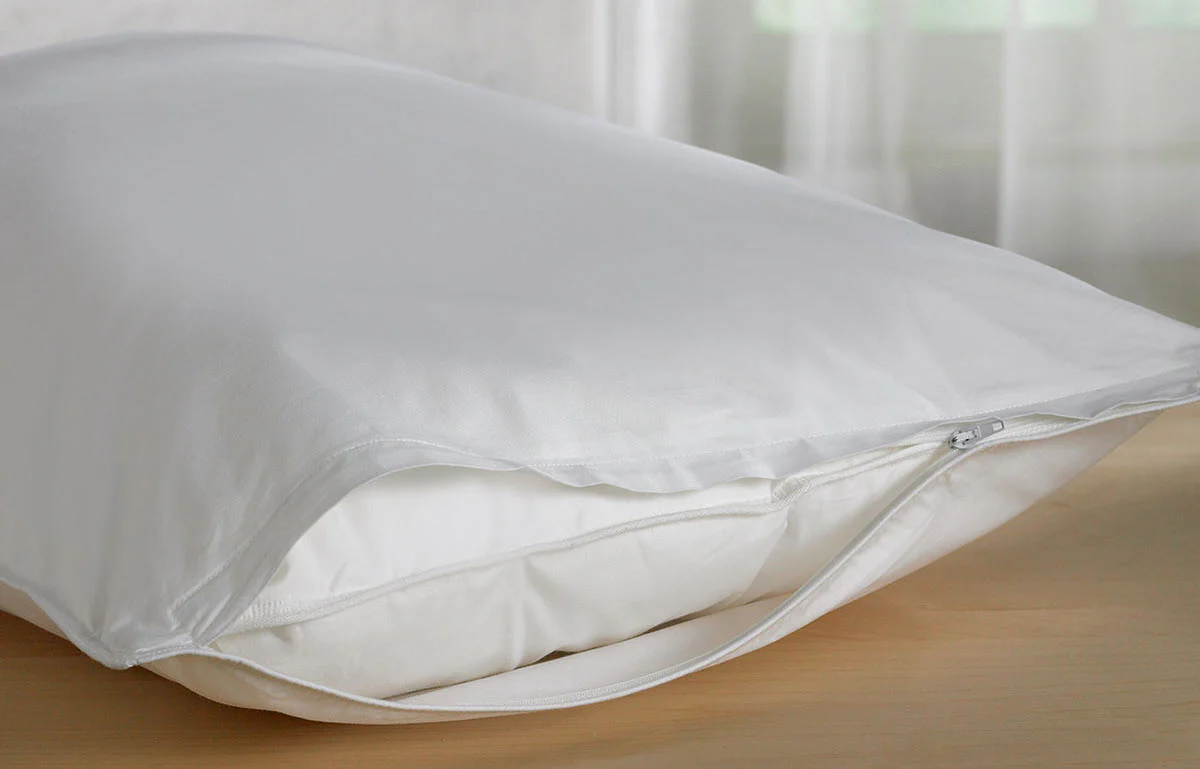
- Prepare a clean barrier. Wash the pillowcase and removable cover when their labels allow it, then consider a zippered protector before first use.
Should You Wash, Air Out, or Use the Pillow?
Usually use after basic setup.
Let it expand if compressed, add a clean pillowcase or protector, and follow any first-use instructions supplied by the brand.
Air it out before washing the insert.
Tempur-Pedic recommends allowing a new foam pillow to air out for several days and washing the removable cover before use. The company advises against washing or submerging its foam insert. See Tempur-Pedic’s new-pillow odor guidance.
Clean the compatible components before use.
Wash the whole pillow only if the complete insert is labeled washable. Otherwise wash the removable cover, vacuum or spot-clean the core, and consider replacement when contamination is deep or uncertain.
Do not experiment with a full wash.
Search the brand’s care page by model number. If instructions cannot be verified, use a conservative surface-cleaning approach and keep foam, latex, buckwheat, electronics, and unknown fill out of the washer.
First-Use Guide by Pillow Material
| Pillow type | Best first-use action | Wash the complete pillow? | Main caution |
|---|---|---|---|
| Polyester or down-alternative | SET UP FIRST Inspect, allow expansion, and use a clean case. Wash first only when desired and label-approved. | Often, when the label permits | Too much detergent, clumping, and incomplete drying |
| Down or feather | CHECK LABEL Air and fluff; wash only when the manufacturer allows it. | Sometimes | Damp clusters, odor, damaged quills, slow drying |
| Solid memory foam | AIR + WASH COVER Let the foam expand and ventilate. Wash the removable cover separately. | Usually no | Tearing, oversaturation, deformation, trapped moisture |
| Shredded memory foam | VERIFY MODEL Some covers are washable while the inner liner must remain dry. | Depends on the exact product | Confusing a washable cover with a washable insert |
| Latex foam | AIR + SURFACE CARE Wash the cover when allowed and avoid aggressive wet cleaning. | Usually no | Tearing, crumbling, and heat damage |
| Buckwheat | WASH EMPTY SHELL Remove dry hulls before washing the fabric cover. | No for the hulls | Wet hulls can be difficult to dry and may spoil |
| Gel, cooling, cervical, or hybrid | CHECK COMPONENTS Follow instructions for each layer and removable part. | Depends | Glued layers, coatings, gel surfaces, or rigid supports |
| Decorative or embellished | SPOT TEST Inspect trim, dye, embroidery, beads, and removable inserts. | Depends | Color bleeding, detached trim, or hidden structural pieces |
For a complete fill-by-fill washer guide, read Can You Machine Wash Pillows?. For solid foam, use our low-moisture process for cleaning a memory foam pillow without damaging it.
How to Prepare a New Pillow for the First Night
Contact the seller when the pillow remains badly misshapen, has damaged seams, shows contamination, or fails to reach the advertised dimensions after the stated setup time.
What Should You Do About a New-Pillow Smell?
A smell can come from sealed packaging, foam manufacturing, fabric treatments, storage, or moisture. The right response depends on the character and persistence of the odor—not simply whether it is noticeable.
Tempur-Pedic describes the odor from a new TEMPUR pillow as off-gassing that normally fades with time. Its recommendation is to air the pillow for several days, optionally roll and unroll it to move air through the material, and wash the removable cover—not the foam insert. Review the manufacturer’s instructions.

How to Wash a New Pillow When the Label Allows It
Use these steps only when the care label confirms that the entire pillow is washable. Whirlpool recommends checking the care tag, washing compatible pillows with a small amount of detergent, using a gentle cycle, selecting an extra rinse when available, and drying them fully. See Whirlpool’s pillow-washing guide.
- Remove the pillowcase and protector. Wash removable layers separately according to their labels.
- Inspect seams and construction. Repair a small opening before washing so fill does not escape.
- Load the washer without crowding. Two similarly sized pillows may help balance a suitable washer, but do not force bulky pillows into a small drum.
- Use a modest amount of mild detergent. Excess suds are difficult to rinse from thick fill.
- Select the label-approved water temperature and cycle. Do not substitute a more aggressive cycle just because the pillow is new.
- Add an extra rinse when needed. The pillow should not feel slippery, stiff, or heavily scented with detergent.
- Dry using the approved method. Use the label’s heat setting or air-dry instructions and continue until the center is fully dry.
If you are unsure whether the pillow can go in the washer, do not guess. Use the decision chart in our machine-washing guide.
What If the New Pillow Is Open-Box or Returned?
An open-box item needs a stricter inspection than a factory-sealed product. Look for missing labels, hair, fragrance, makeup, body-oil marks, moisture, insects, damaged seams, or a mismatched cover and insert.
- Washable complete pillow: Launder and dry it according to the care label before use.
- Washable cover, non-washable insert: Wash the cover, vacuum the insert when appropriate, and spot-clean only with the approved method.
- Unknown history or deep contamination: Return or replace it rather than trying to sanitize a porous core without verified instructions.
- Missing label or model information: Ask the seller for documentation before using or washing the product.
First-Use Setup for Allergy-Sensitive Households
Washing a brand-new pillow is not the only—or always the best—way to reduce exposure. A washable pillowcase and an allergen-barrier encasement can create a removable layer between the sleeper and the insert.
- Choose a pillow and cover whose cleaning instructions you can maintain consistently.
- Use a zippered allergen-barrier cover when dust-mite allergy management is part of your care plan.
- Wash pillowcases and compatible bedding regularly rather than repeatedly soaking a non-washable insert.
- Keep bedding dry and address leaks or humidity problems that support dust mites and mold.
- Speak with a healthcare professional when symptoms remain uncontrolled or when a specific material appears to trigger irritation.
The Asthma and Allergy Foundation of America recommends zippered allergen-barrier covers for pillows and regular washing of bedding as part of dust-mite management. See AAFA’s dust-mite allergy guidance.
Common First-Use Mistakes
- Washing every pillow automatically: A washer-safe polyester pillow and a solid foam pillow require different care.
- Reading the cover label as the insert label: Confirm which component the instructions describe.
- Using more detergent because the pillow is bulky: Excess detergent can remain trapped inside.
- Sleeping on a damp pillow: The shell may feel dry while the center remains cool and wet.
- Using high heat to speed expansion or odor removal: Heat can distort foam and damage specialty materials.
- Spraying perfume or essential oil on the sleeping surface: Fragrance can mask an unresolved odor and may irritate sensitive users.
- Discarding packaging immediately: Keep the label, return information, and packaging until the pillow has expanded and passed inspection.
When Is a New Pillow Ready to Use?
- It has reached the expected shape and dimensions or the manufacturer-stated expansion period has passed.
- The shell and seams are intact.
- There is no visible soil, moisture, or mold-like spotting.
- Any washed component is completely dry.
- The odor is mild enough for comfortable use and is continuing to decrease.
- A clean pillowcase or protector has been fitted.
- The pillow feels appropriate for your normal sleep position.
If a new pillow is already permanently misshapen, damaged, or unable to air out, replacement is more appropriate than repeated cleaning. For broader replacement criteria, see How Long Do Pillows Last?.
When choosing a new support pillow, compare the current Contour Relief Pillow and Ultra Contour Relief Pillow. Follow the exact first-use and care instructions supplied with the model you purchase.
Frequently Asked Questions
Do I have to wash a brand-new pillow?
No. Inspect it, read the care label, allow it to expand, and wash the removable cover or pillowcase when appropriate. Wash the entire insert only when the label permits it and there is a reason to do so.
Can I sleep on a new pillow the same night?
Usually, when it is clean, dry, intact, sufficiently expanded, and comfortable to smell. A compressed or strongly scented foam pillow may need more ventilation time according to the manufacturer.
Should I wash a new memory foam pillow?
Usually not. Wash the removable cover when permitted, let the foam expand and air out, and keep the core dry unless its manufacturer explicitly says the insert is washable.
Should I wash a new polyester pillow?
You may wash it when the complete pillow is labeled machine washable, but a first wash is not automatically required. A sealed, clean pillow can often be used after inspection, expansion, and fitting a clean case.
Does a new-pillow smell mean it is unsafe?
Not necessarily. Some foam and packaged products have an odor that fades with ventilation. Follow the brand’s instructions. Stop using the pillow and contact the seller when the odor is musty, damp, burning, persistent, or causes symptoms.
Can I put a new pillow in the dryer to fluff it?
Only when the care label permits tumble drying and provides a suitable heat setting. Foam and heat-sensitive pillows generally should not be tumble dried.
Should I wash the pillow protector before first use?
Follow its label. Many removable textile covers and protectors can be washed before use, creating a clean barrier without exposing the insert to unnecessary water.
What should I do if the pillow arrives damp or moldy?
Do not sleep on it. Photograph the condition, keep the packaging, and contact the seller for a return or replacement. Do not treat moisture or mold-like spotting as ordinary off-gassing.
Should I wash an open-box pillow before using it?
Clean all compatible components before use and inspect the insert carefully. Return it when its history is uncertain, contamination appears deep, or the core cannot be cleaned using verified manufacturer instructions.
Related Pillow Care Guides
Sources and Further Reading
Editorial note: This article provides general first-use and bedding-care information. The care label and manufacturer instructions for your exact pillow take priority.
