
This article targets the original keyword “how to wash throw pillows in washing machine” and its natural variant, “how to wash throw pillows in a washing machine.” Both phrases describe the same task and should be served by one complete page rather than two near-duplicate articles.
Clean by fabric and construction
Cotton or polyester may be machine washable, while velvet, wool, silk, leather panels, embroidery, and unknown fabrics may require gentler care.
DECISIONS
Clean by fill material
Fiberfill, down, feather, foam, latex, buckwheat, and specialty inserts do not share the same washing instructions.
Can Your Throw Pillow Go in the Washing Machine?
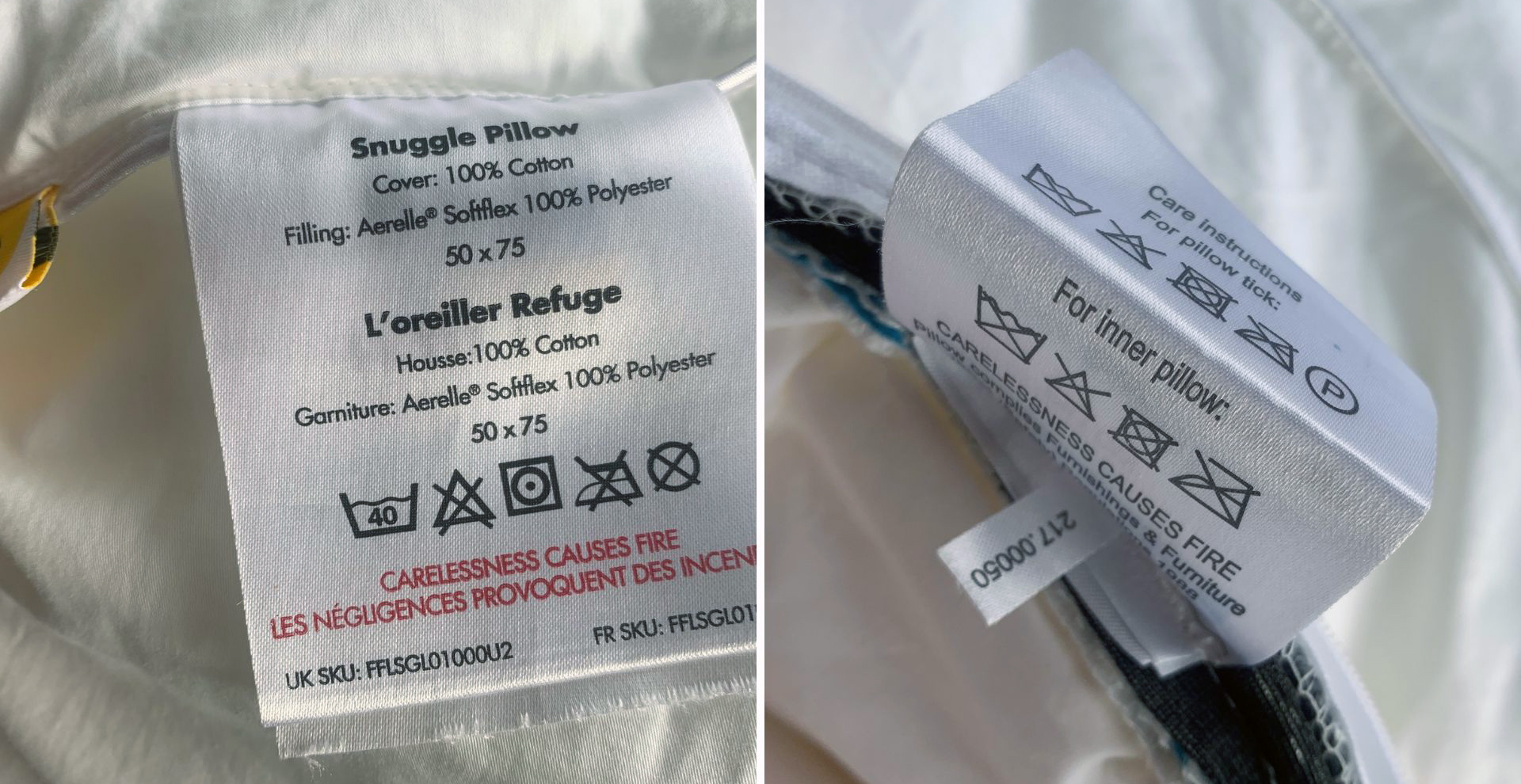
Use this chart as a screening tool. The sewn-in care label and manufacturer instructions for the exact item take priority.
| Throw pillow part or fill | Machine wash? | Safest general approach | Main risk |
|---|---|---|---|
| Plain cotton or polyester removable cover | OFTEN YES | Turn inside out, close the zipper, use the labeled temperature and gentle cycle | Shrinkage, fading, zipper damage |
| Polyester or down-alternative insert | OFTEN YES | Use mild detergent, gentle agitation, thorough rinsing, and complete drying | Clumping, detergent residue, damp center |
| Down or feather insert | CHECK LABEL | Wash only when permitted; use little detergent and dry until no damp clusters remain | Odor, damaged fill, slow drying |
| Shredded memory foam insert | MODEL-SPECIFIC | Some covers are washable while the inner liner must remain dry | Confusing cover instructions with insert instructions |
| Solid memory foam | USUALLY NO | Vacuum and spot-clean with minimal moisture | Tearing, deformation, oversaturation |
| Latex foam | USUALLY NO | Clean the cover and surface-clean the latex as directed | Crumbling, tearing, heat damage |
| Buckwheat hulls | NO | Remove the dry hulls and wash only the empty shell when permitted | Wet hulls may spoil and are difficult to dry |
| Velvet, wool, silk, leather, embellished cover | CHECK LABEL | Spot clean, hand wash, or use professional care as directed | Dye transfer, pile damage, shrinkage, detached trim |
| Electronic, heated, musical, or rigid insert | NO | Follow the product-specific cleaning instructions | Electrical damage and internal breakage |
“How to wash throw pillows in washing machine” and “how to wash throw pillows in a washing machine” express the same search intent. The stronger SEO solution is one canonical guide that naturally contains both phrasings, while the duplicate URL redirects to it.
The 60-Second Pre-Wash Check
- Read every available label. Check whether the instruction refers to the removable cover, inner liner, insert, or complete pillow.
- Identify the fill. Open the zipper if possible and confirm whether the insert is polyester, down, feather, foam, latex, buckwheat, or another material.
- Inspect the shell and seams. Repair small openings before washing so fill does not escape into the washer.
- Check decorative details. Tassels, fringe, buttons, beads, printing, glued trim, and metallic threads may not tolerate a normal machine cycle.
- Test dark or delicate fabric. Dampen a hidden area with the intended solution and press with a white cloth. Stop if dye transfers.
- Measure the washer capacity. The pillow must move freely. Do not force a bulky insert into a compact machine or wrap it tightly around an agitator.
- Confirm that you can dry it completely. Washing is not a good option when the insert is too dense, the dryer is too small, or the label requires a drying method you cannot provide.
The American Cleaning Institute recommends following care instructions, pretreating stains, and checking an item before dryer heat makes remaining soil harder to remove. See ACI’s laundry basics.
Best Washing Machine Settings for Throw Pillows
There is no universal setting for every throw pillow. Use this panel only after the care label confirms that the complete item is washable.
Whirlpool’s pillow-care guidance also emphasizes reading the tag, using a small amount of detergent, balancing the washer, and drying pillows fully. Review Whirlpool’s washing instructions.
How to Wash Throw Pillows in a Washing Machine
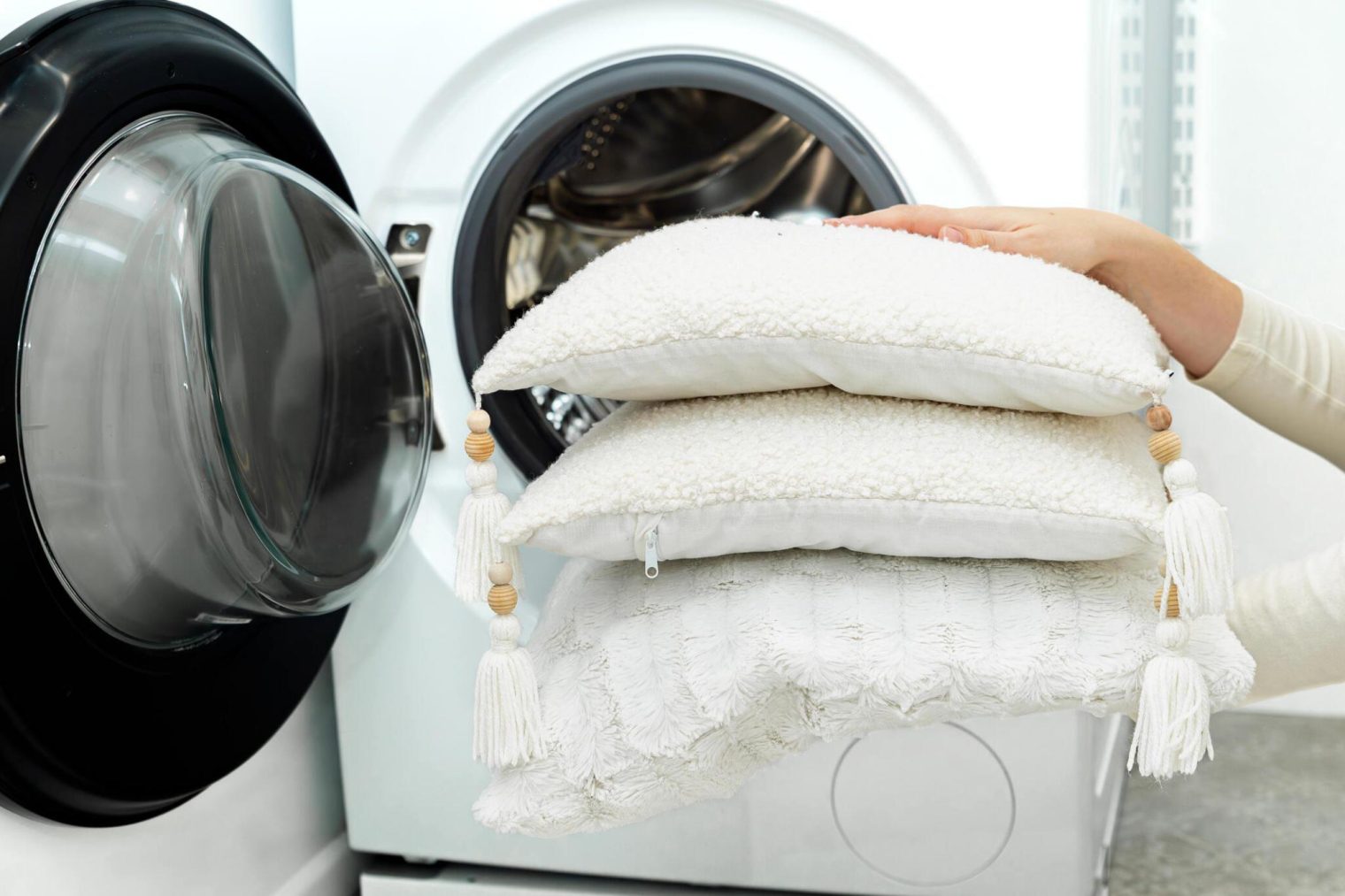
- Remove the cover when possible. Clean the cover and insert separately so each component receives the correct method.
- Pretreat visible stains. Apply a compatible laundry pretreatment or a small amount of liquid detergent to washable fabric. Blot delicate surfaces instead of scrubbing.
- Secure the construction. Close zippers, fasten removable closures, and place delicate washable covers in a mesh laundry bag.
- Load without crowding. The items need room for water, detergent, and rinsing. Do not compress a large pillow into a small drum.
- Add a modest amount of detergent. Follow the detergent concentration and washer instructions rather than pouring extra because the pillow looks bulky.
- Select the care-label cycle and temperature. A gentle cycle is common for washable decorative pillows, but product instructions take priority.
- Run an extra rinse when necessary. Thick fill can hold detergent. Do not mask residue with fabric softener or fragrance.
- Remove the pillow promptly. Reshape the shell, redistribute the fill, and begin the approved drying method immediately.
A zipper lets you remove the insert; it does not prove that the insert is washable. Replacement inserts may also differ from the fill originally supplied with the cover.
How to Wash the Cover and Insert Separately
- Read the cover’s label and identify the fabric, backing, dye, trim, and zipper construction.
- Turn a compatible cover inside out and close the zipper.
- Pretreat stains before washing.
- Use a mesh bag for delicate washable covers.
- Reshape the corners and zipper tape before drying.
- Do not put the cover back on until both pieces are fully dry.
Plain cotton and woven polyester are often easier to machine wash than velvet, wool, silk, chenille, embroidered, beaded, or leather-trimmed covers.
- Machine wash only when the insert’s own label permits it.
- Use little detergent so the center can rinse clean.
- Support weak seams before washing.
- Redistribute fill after the cycle.
- Dry until the thickest area is no longer cool, heavy, damp, or clumped.
- Replace deeply contaminated non-washable foam instead of repeatedly soaking it.
For a broader material comparison, see Can You Machine Wash Pillows?.
Solid memory foam needs a different low-moisture process. Use our guide to cleaning a memory foam pillow without damaging it. Tempur-Pedic similarly advises keeping its foam inserts out of water and washing removable covers separately. See Tempur-Pedic’s care guidance.
How to Dry Throw Pillows After Washing
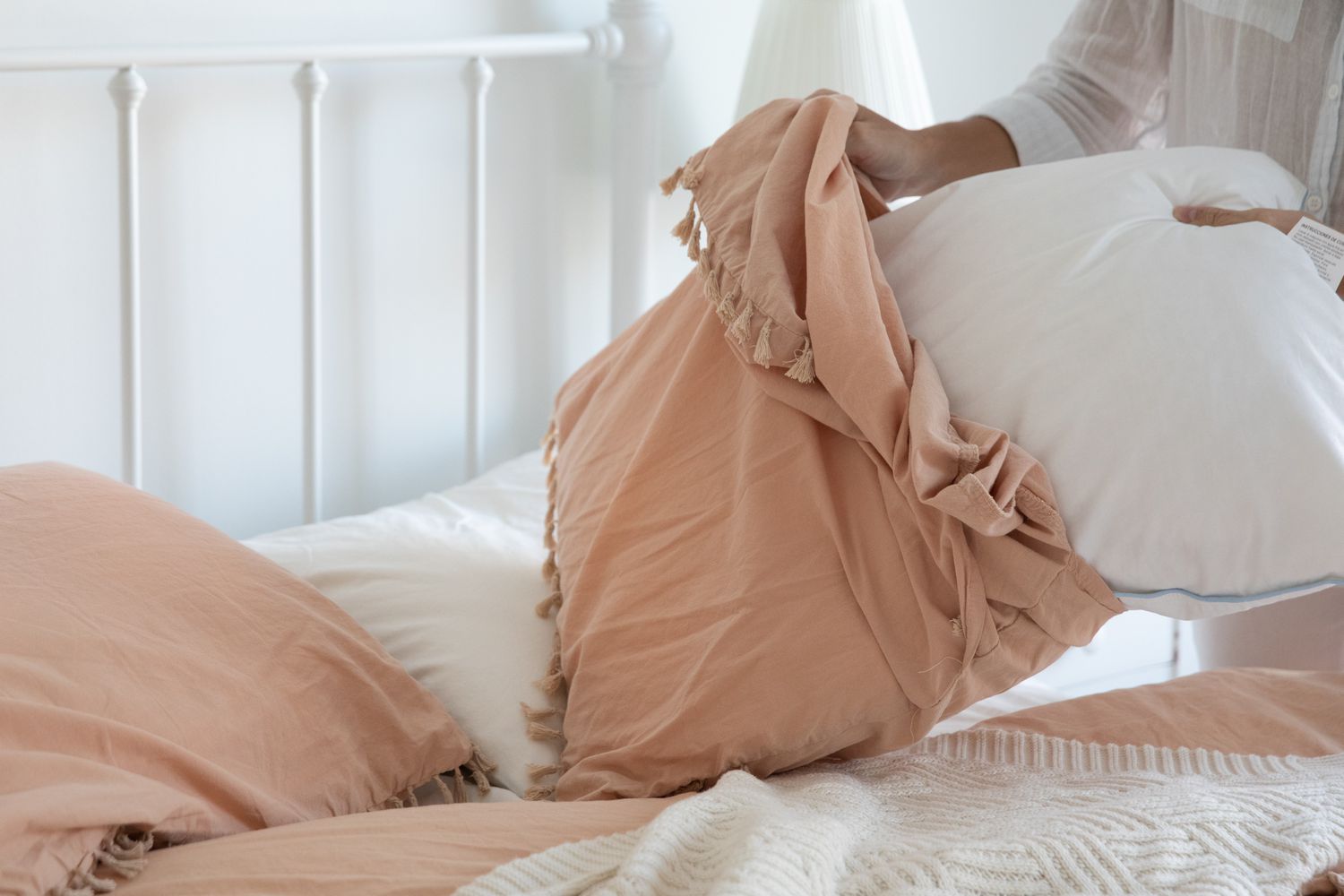
Drying is the most important part of the process. A pillow can feel dry on the surface while the center remains damp.
Dryer balls may help separate compatible polyester, down-alternative, down, or feather fill when tumble drying is allowed. Use the heat setting on the label; high heat can shrink covers, damage backing, flatten decorative textures, or distort synthetic and foam components.
A dry cover over a damp insert slows evaporation and can create odor, clumping, and conditions that support mold growth. The U.S. Environmental Protection Agency emphasizes controlling moisture and drying wet materials promptly. Read the EPA’s mold and moisture guidance.
Pretreat Throw Pillow Stains Before Washing
Lift solids, blot liquid, and use a fabric-compatible pretreatment. Avoid rubbing pigments and oils across textured fabric.
Use a small amount of liquid laundry detergent or an oil-stain product approved for the cover. Patch-test dark dyes and specialty finishes.
Blot immediately. Use an enzyme cleaner only when its label and the pillow care instructions permit it. Deep contamination in non-washable foam may require replacement.
Pretreat before laundering and inspect before drying. See how to remove yellow stains from pillows.
Do not spread it with excess water. Identify the ink type or use professional care for valuable and delicate covers.
Do not return a moldy insert to a clean cover. Porous fill that remains moldy or musty after treatment may need disposal.
The American Cleaning Institute recommends treating stains before laundering and checking the item before it enters the dryer. See ACI’s stain-removal guide.
Which Washing Machine Is Best?
Front-load washer
A roomy front-loader generally allows bulky washable pillows to tumble without a center agitator. The insert must still fit loosely enough for water and rinsing to circulate.
Top-load washer without a center agitator
Place compatible pillows evenly around the wash plate and avoid overfilling the tub. Follow the appliance manual for bulky items.
Top-load washer with a center agitator
Use extra caution. Do not wrap a pillow tightly around the agitator. When both labels permit washing, place two similarly sized pillows vertically on opposite sides to improve balance.
Compact washer
A pillow can be washable yet too large for a compact drum. Use a larger machine or laundromat only when the care instructions permit machine washing; a larger washer does not make a non-washable fill safe.
Troubleshooting After Machine Washing
Redistribute the fill by hand. Continue the approved drying cycle with dryer balls when allowed. Persistent hard lumps may indicate damage, detergent residue, or remaining moisture.
Run another rinse without detergent when the label permits. Do not add fabric softener to disguise residue.
The center may still be damp. Separate the cover and insert, increase airflow, and continue drying. Replace the insert if odor remains after complete drying.
Pause the machine, redistribute the load, and follow the appliance instructions. Do not continue a violent spin cycle.
Do not force it over the insert or strain the zipper. Heat, fiber type, and agitation can cause permanent shrinkage.
Stop the cycle if possible. Loose fill can clog the appliance. Repair the shell only when it can securely contain the insert.
Dry and redistribute it completely before judging. If it remains compressed or uneven, the internal structure may have failed.
When Not to Put a Throw Pillow in the Washing Machine
- The label says “spot clean only,” “do not wash,” or “professional clean.”
- The insert is solid memory foam, most latex, buckwheat hulls, or unknown fill without verified instructions.
- The pillow contains electronics, heating elements, speakers, batteries, rigid supports, or glued layers.
- The cover has fragile tassels, beads, sequins, embroidery, silk, leather, antique fabric, or unstable dye.
- The seams are weak enough that the fill may escape.
- The pillow is too large for the washer or dryer.
- You cannot dry the center completely.
- The insert has deep mold, floodwater exposure, or biological contamination that cannot be safely cleaned.
How Often Should Throw Pillows Be Washed?
There is no universal calendar for decorative pillows. Wash based on contact, placement, pets, children, allergies, spills, and what the care label allows.
- High-contact couch pillows: Vacuum regularly and clean visible soil promptly.
- Removable washable covers: Launder when visibly soiled or according to household needs.
- Low-contact decorative pillows: Dusting, vacuuming, and spot cleaning may be sufficient between deeper cleanings.
- Non-washable inserts: Use a washable cover or protector and minimize moisture reaching the core.
- After a spill: Treat it immediately rather than waiting for odor or staining to set.
Repeated washing can shorten the life of fabric, trim, seams, and fill. Clean as much as necessary, but not more aggressively than the product can tolerate.
Frequently Asked Questions
Can you wash an entire throw pillow in a washing machine?
Yes, when the care label for the complete pillow allows machine washing. Many polyester and down-alternative inserts are washable, while foam, latex, buckwheat, and specialty components often are not.
Should I remove the throw pillow cover first?
Yes, whenever possible. The cover and insert may require different cleaning methods, and separation improves stain access and drying.
What cycle should I use?
Use the cycle stated on the care label. A gentle or bedding cycle is common for washable decorative pillows, but the exact product instructions take priority.
Should I use cold or warm water?
Use the temperature on the care label. Cold water may reduce fading and shrinkage for many covers, while some washable inserts allow warm water.
How much detergent should I use?
Use a modest measured dose based on the detergent concentration and load. Too much detergent can remain trapped in the insert and require additional rinsing.
Can I wash throw pillows with towels?
Only when all items share compatible care instructions and the washer remains balanced. Towels can create friction and lint, so two similar washable pillows are often a better match.
Can memory foam throw pillows go in the washer?
Solid memory foam usually should not be machine washed or submerged. Wash the removable cover and spot-clean the foam with minimal moisture unless the manufacturer says otherwise.
Can I use bleach on white throw pillows?
Only when both the care label and bleach product permit it. Bleach can weaken fibers, affect synthetic fill, damage trim, and cause discoloration.
How do I know the pillow is completely dry?
Press the thickest areas and corners. The pillow should not feel cool, damp, unusually heavy, or clumped, and it should not have a musty odor.
What should I do if the care label is missing?
Search the brand and model online. When instructions cannot be verified, clean the removable cover conservatively and keep unknown foam, latex, specialty, or rigid inserts out of the washer.
Looking for a Pillow Designed for Nighttime Support?
Throw pillows are primarily decorative and are not designed to replace a dedicated sleep pillow. If you are cleaning couch cushions but also need a pillow for nighttime head and neck support, compare the two current Pallas Cozy options below. Review the care instructions on the exact product page before cleaning any insert.
Sleep support pillow
Contour Relief Pillow
View product details and current care information
Sleep support pillow
Ultra Contour Relief Pillow
View product details and current care information
Related Pillow Care Guides
Sources and Further Reading
Editorial note: This article provides general cleaning information. The care label and manufacturer instructions for the exact throw pillow, cover, insert, and washing machine take priority.
