
How often should you replace your mattress? Use seven years as a useful check-in, not an automatic expiration date. Replace sooner when the mattress has persistent sagging, broken or exposed components, unrecoverable contamination, recurring mold or odor, worsening comfort, or support that no longer suits the sleeper. A well-supported mattress that remains clean, structurally sound, comfortable, and appropriate may continue beyond a typical seven-to-ten-year planning range.
The calendar is only one signal. Mattress construction, materials, user needs, body impressions, foundation support, moisture history, care, and daily use all affect service life. Instead of discarding a mattress solely because of age, combine its purchase date with a structured condition and sleep-comfort review.
How Often Should You Replace Your Mattress in Practice?
The Better Sleep Council recommends checking a mattress regularly and uses the seven-year point as a practical time to evaluate whether it still provides comfortable support. Its replacement checklist focuses on how the bed feels and performs: waking with stiffness, visible wear, feeling more comfortable elsewhere, or no longer having enough room. Review the Better Sleep Council replacement guide.
Comfortable, intact, and appropriate
The surface is even, support remains consistent, the foundation is sound, there is no unresolved contamination, and the user sleeps comfortably without mattress-related complaints.
One signal but an uncertain cause
New aches, noise, motion, or poor sleep could come from the pillow, frame, foundation, room, health, schedule, or mattress. Test each part before buying.
Structural failure or unsafe contamination
Deep sagging, broken springs, split foam, failed seams, recurring mold, sewage or flood exposure, or unresolved saturation is not a topper problem.
A lightly used guest-room mattress and a nightly shared mattress may age very differently. A younger mattress can fail early, while an older one may remain serviceable. Inspect the actual bed.
Eight Signs It May Be Time to Replace Your Mattress
- Persistent sagging or body impressions. The surface no longer returns to its intended shape, creates a valley, or makes sleepers roll toward one area. Compare the condition with the warranty’s measurement method before filing a claim.
- Broken, exposed, or displaced components. Protruding coils, cracked foam, torn fire-barrier material, sharp edges, failed seams, collapsed quilting, and loose internal parts require prompt attention.
- Support feels different from side to side. One area bottoms out, sinks excessively, tilts, or feels substantially softer despite checking the foundation and rotating only when the manufacturer permits it.
- You are consistently more comfortable on another suitable bed. A hotel comparison is not perfect because pillows, temperature, schedule, and travel fatigue also change, but repeated improvement elsewhere is useful evidence.
- Morning discomfort repeatedly improves after getting up or sleeping elsewhere. Do not diagnose pain from the mattress alone. Compare pillows, sleep position, activity, injury, and health, and seek medical advice for persistent or severe symptoms.
- Motion or noise has increased. New squeaks, vibration, partner disturbance, or unstable edges may come from the mattress, foundation, frame, hardware, or floor. Isolate the source before replacing the wrong component.
- Your body or household needs changed. A change in mobility, pregnancy, injury, body size, sleep position, temperature preference, partner, or bed size can make an intact mattress unsuitable.
- The mattress cannot be cleaned or dried safely. Sewage, floodwater, deep urine saturation, recurring musty odor, or mold in porous layers may make replacement safer than repeated home treatment.
The Better Sleep Council also lists waking stiff or sore, visible wear, feeling better rested elsewhere, and changes in your body or lifestyle as reasons to reassess the bed. See its mattress check-in questions.
Mattress Type Affects Wear, but Not on a Fixed Clock
Published lifespan charts often assign exact years to innerspring, memory foam, hybrid, and latex mattresses. Those ranges can help with budgeting, but they are not reliable enough to make the replacement decision alone. Material quality, layer thickness, adhesives, coil design, load, foundation, climate, and care vary substantially within each category.
| Observation | Decision level | Check before replacing | Why age alone is insufficient |
|---|---|---|---|
| Seven years old, comfortable and even | CONTINUE TO MONITOR | Foundation, seams, underside, rotation instructions, and contamination history | Age initiates review but does not prove failure |
| Three years old with a deep valley | CHECK WARRANTY NOW | Approved base, defect measurements, photos, receipt, and care requirements | A young mattress can fail or be improperly supported |
| Old mattress with new squeaking | ISOLATE THE SOURCE | Frame bolts, slats, foundation, floor, and mattress components separately | Replacing the mattress will not fix a noisy frame |
| Comfort changed after injury or body change | REASSESS FIT | Pillow, position, clinician advice, firmness preference, and support needs | The mattress may be intact but no longer appropriate |
| Mold, sewage, or unrecoverable saturation | REPLACE OR GET PROFESSIONAL ADVICE | Insurance, contamination source, foundation, room moisture, and disposal route | Porous layers can hide contamination that surface cleaning cannot remove |
Check the Foundation Before Blaming the Mattress
- Read the exact support requirements in the mattress warranty and manual.
- Check required center legs and cross supports for queen and larger beds.
- Measure slat spacing instead of assuming every platform is compatible.
- Inspect the floor and frame for level, movement, and loose connections.
- Do not place a board under the mattress unless the manufacturer permits it; altered airflow and support may create other problems.
- Photograph the complete support system before moving parts when preparing a warranty claim.
Tempur-Pedic, for example, says its mattresses require a firm, solid-surface, non-spring base and warns that an inappropriate foundation may affect warranty coverage. That requirement applies to its products, not automatically to every mattress. See the current Tempur-Pedic foundation guidance.
Run a Seven-Night Comfort and Support Check
When there is no urgent damage or contamination, a short written comparison can help separate a mattress issue from a pillow, foundation, schedule, or health issue.
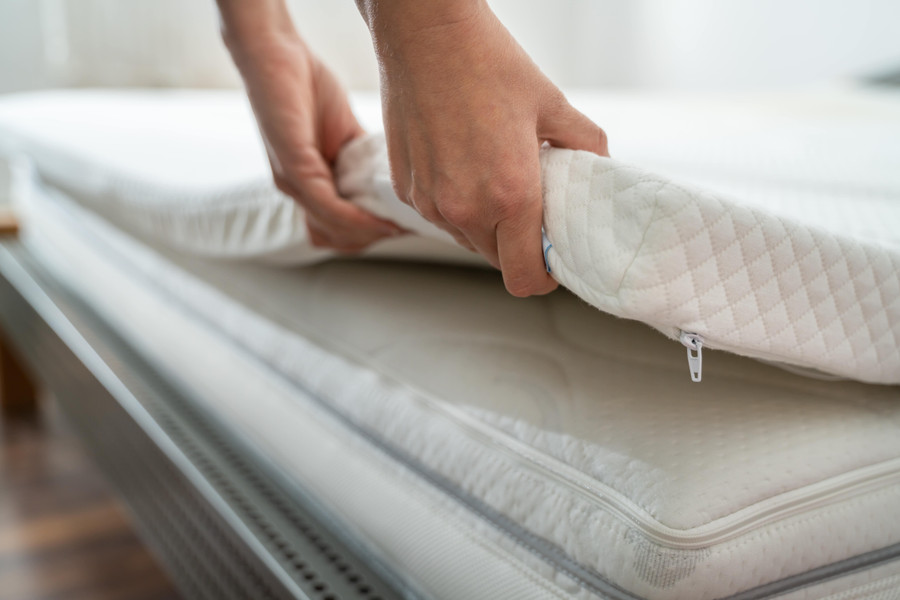
A topper can adjust surface feel on a sound mattress, but it cannot repair broken springs, a collapsed base, a deep valley, mold, or internal saturation. Adding softness over a failed support system may make movement and alignment less predictable.
When Health Symptoms Need More Than a New Mattress
A mattress may contribute to discomfort, but fatigue, pain, snoring, breathing pauses, insomnia, restless legs, numbness, reflux, and morning headaches have many possible causes. Replacing the bed is not a diagnosis or treatment.
- Seek urgent care for severe pain, weakness, loss of bladder or bowel control, breathing difficulty, chest pain, or another emergency symptom.
- Ask a clinician about persistent pain, major daytime sleepiness, loud snoring, witnessed breathing pauses, or worsening insomnia.
- Review pillow height and support when symptoms are concentrated in the neck and shoulders.
- Consider room temperature, medications, alcohol, caffeine, schedule, stress, and partner disturbance before assigning every sleep problem to the mattress.
Replace a Contaminated Mattress Instead of Extending Its Life
A mattress is a porous layered product. EPA explains that mold can enter spaces and crevices in porous materials and may be difficult or impossible to remove completely. Read EPA’s mold-cleanup guidance.
Floodwater, sewage, recurring visible mold, persistent musty odor, deep saturation, and contaminated internal foam are different from a removable surface stain. Fix the moisture source and inspect the foundation and room before installing a replacement.
For related decisions, see How to Dry a Wet Mattress, How to Clean a Mattress Safely, and How to Get Urine Smell Out of a Mattress.
How to Extend Mattress Service Life Safely
Do not assume every mattress should be flipped or rotated every three months. Tempur-Pedic says its current one-sided mattresses should not be flipped, rotated, or turned. Other manufacturers may give different instructions. Review an example of model-specific product care.
Warranty Length Is Not Mattress Lifespan
A warranty covers specified defects under stated conditions. It does not promise that the mattress will remain comfortable for the entire term, and it usually does not cover normal softening, preference changes, stains, misuse, or an unsupported foundation.
- Read the defect definition and required indentation measurement.
- Keep the receipt, law tag, order confirmation, and model information.
- Use the required support system and retain photographs.
- Protect the mattress from stains that may affect claim eligibility.
- Contact the manufacturer before disposing of a mattress that may have a covered defect.
- Do not assume a ten-year warranty means mandatory replacement at ten years.
Tempur-Pedic’s current ten-year limited warranty, for example, covers defined defects and lists conditions and exclusions; it is not a universal ten-year comfort guarantee for every mattress brand. See the warranty terms.
Complete the Sleep-Support Review
Before replacing the entire mattress for neck or shoulder discomfort, check whether the pillow still suits the sleeper and mattress firmness. The following Pallas Cozy products are pillow options, not substitutes for a failed mattress.
SLEEP PILLOW
Contour Relief Pillow
View the current construction, dimensions, and care information.
SLEEP PILLOW
Ultra Contour Relief Pillow
Compare the current model details and product care guidance.
Frequently Asked Questions
Do you have to replace a mattress every seven years?
No. Seven years is a useful review point, not an expiration date. Replace according to condition, comfort, support, contamination, changed needs, and manufacturer guidance.
Can a mattress last more than ten years?
Yes, some can remain serviceable longer, especially with appropriate support and lighter use. Age does not override sagging, damage, discomfort, mold, or contamination.
Should I replace a mattress that still looks fine?
Possibly, when support or comfort has changed despite a sound foundation. Also inspect the underside and internal-feeling areas because not every problem is visible from above.
Is sagging always caused by the mattress?
No. Broken slats, inadequate center support, a worn foundation, loose hardware, or an uneven floor can create similar symptoms. Check the whole support system.
Can a mattress topper delay replacement?
A topper may change the surface feel of a structurally sound mattress. It cannot repair a deep valley, broken spring, failed base, mold, or contaminated internal layers.
Does a ten-year warranty mean the mattress lasts ten years?
No. A warranty covers defined manufacturing defects under specific terms. Comfort life, normal wear, personal preference, and exclusions are separate.
Should I replace the foundation with the mattress?
Inspect it and follow the new mattress requirements. Replace a base that is sagging, broken, noisy, incompatible, or unable to meet support and warranty specifications.
Can an old mattress cause back pain?
A worn or unsuitable sleep surface may contribute to discomfort, but pain has many causes. Persistent, severe, or neurological symptoms need medical assessment.
Should a moldy mattress be replaced?
Often yes, especially when mold or musty odor may extend into porous internal layers. Fix the moisture source and seek qualified advice when the extent is uncertain.
What should I do with the old mattress?
Check retailer take-back, local recycling, municipal bulk collection, and contamination rules. Do not donate a mattress with pests, mold, major stains, structural failure, or recall restrictions.
Related Pallas Cozy Guides
Sources and Further Reading
Editorial note: This article provides general replacement and care guidance. The exact mattress manual, warranty, support requirements, contamination history, and qualified medical or restoration advice take priority.
