
How to get urine smell out of mattress: strip the bed, blot fresh liquid without rubbing, check the mattress and cover instructions, apply a small amount of a mattress-compatible urine or enzyme cleaner to a cloth, work from the stain edge inward, remove residue as directed, and dry the mattress completely with moving air. Do not soak foam, mix cleaners, scrub urine deeper, or keep repeating wet treatments when odor returns. Deep saturation, mold, persistent odor, or damaged internal layers may require professional assessment or mattress replacement.
Urine odor is difficult because liquid can travel below the visible stain into quilting, foam, fibers, seams, and the foundation. The cleaning product must be compatible with both the urine and the mattress construction. A recipe that works on washable bedding may introduce too much moisture or discolor a non-removable mattress cover.
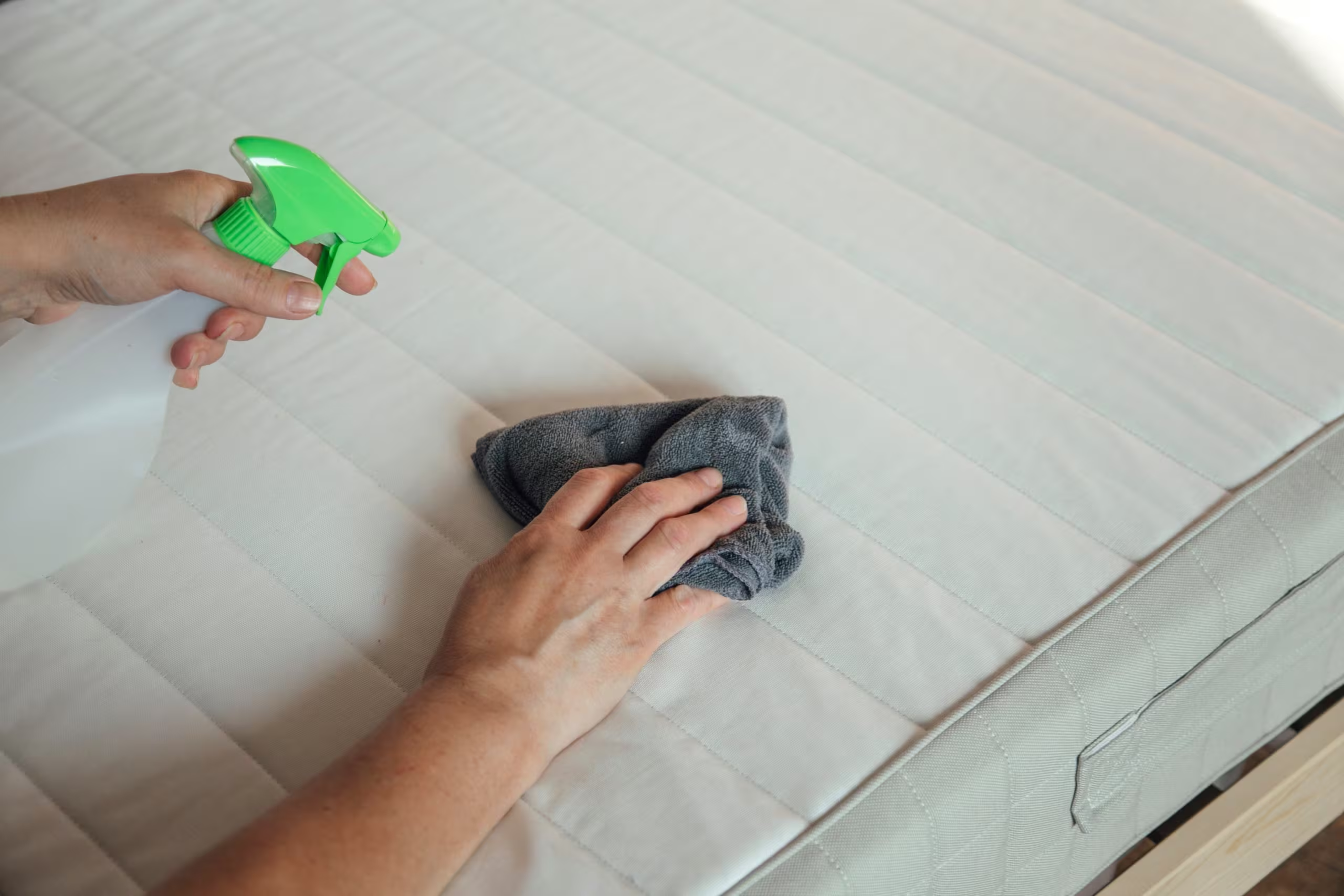
Choose the Right Urine-Odor Cleaning Route
Small, recent accident
The liquid source is known, the mattress is structurally intact, no mold is visible, and most moisture can be removed immediately.
Dry stain or returning odor
Use one compatible product at a time, allow full drying, and reassess before adding more liquid or chemicals.
Deep saturation, mold, or unresolved contamination
Repeated surface cleaning cannot reliably reach or inspect every porous internal layer.
Tempur-Pedic instructs owners to blot spills immediately without rubbing, spot-clean non-removable covers without saturating them, and air-dry completely. It also warns that TEMPUR material should not be soaked or washed. This is a useful low-moisture example, but the exact instructions for your mattress take priority. Review the manufacturer guidance.
A zipper may exist for manufacturing or service access rather than home laundering. Removing an unapproved cover can damage foam, expose a fire barrier, or affect warranty coverage.
Supplies for Low-Moisture Urine Cleanup
- Clean white absorbent towels
- Disposable gloves
- Fan and, when useful, a dehumidifier
- Mattress or upholstery-compatible urine cleaner
- Small amount of clean water only when the product requires rinsing
- Wet/dry vacuum approved for liquid extraction
- Enzymatic cleaner formulated for the specific mess
- Baking soda for dry surface odor when powders are permitted
- UV flashlight only as a locating aid, not proof of cleanliness
- Professional upholstery or water-restoration service
Do not combine vinegar, hydrogen peroxide, bleach, ammonia, detergent, enzyme cleaner, disinfectant, baking soda, or essential oils into a homemade mixture. Products can neutralize one another, release irritating gases, damage color or foam, leave residue, or add unnecessary moisture.
How to Get Urine Smell Out of Mattress After a Fresh Accident
- Remove bedding immediately. Strip sheets, blankets, pads, and the protector without dragging the wet area across the bed. Wash each item according to its own care label and stain-product instructions.
- Blot before adding cleaner. Press clean towels into the spot and replace them as they become wet. Do not scrub, twist the mattress, or stand on a concentrated area if that could damage the construction.
- Inspect the mattress and foundation. Check the top, seams, underside, base, nearby wall, and floor. A protector can redirect liquid toward an edge instead of stopping it completely.
- Choose one compatible product. Follow the mattress manual first, then the urine-cleaner label. Test a small hidden area for discoloration, coating damage, adhesive reaction, or texture change.
- Apply the minimum effective amount. Put the cleaner on a cloth or use a controlled spray only when permitted. Work from the outer edge toward the center and avoid trying to match the depth of urine by saturating the mattress.
- Allow the labeled contact time. Enzymatic and other urine products differ. Do not assume every cleaner works in ten or fifteen minutes.
- Blot or rinse only as directed. Remove loosened soil and product residue with clean towels. Use a second barely damp cloth only when the label requires a rinse step.
- Dry before evaluating odor. Keep bedding off, move air across the area, reduce room humidity, and check the underside and foundation before deciding whether another treatment is needed.
The American Cleaning Institute explains that enzymatic cleaners use biological enzymes to break apart organic stains such as urine and pet messes. It advises choosing a product formulated for the specific mess and following the product directions. Read ACI’s enzyme-cleaner guidance.
How to Treat Old or Set-In Urine Odor
| Situation | Recommended direction | Main risk | Stop when |
|---|---|---|---|
| Faint dry surface odor | LOW-MOISTURE RETREATMENT | Over-applying cleaner to chase a cosmetic stain | Color, texture, or moisture changes appear |
| Odor returns in humid weather | CHECK DEPTH AND MOISTURE | Residue or retained moisture may remain below the surface | The foundation or internal layers seem damp or musty |
| Multiple previous chemical recipes | PAUSE AND IDENTIFY RESIDUE | New products may react with old residue or increase wetting | The mattress feels sticky, stiff, discolored, or chemically odorous |
| Large repeated accidents | PROFESSIONAL REVIEW | Contamination may extend beyond reachable upholstery | Odor persists after one appropriate fully dried treatment |
| Mold or deep structural damage | REPLACE OR REMEDIATE | Porous layers cannot be inspected and cleaned completely | Do not continue home wet cleaning |
Mixing an acid and a base creates fizz but largely neutralizes both ingredients. The reaction can add liquid and residue without reliably treating urine inside a mattress. Use a purpose-labeled product instead.
Pet Urine Needs Both Cleaning and Cause-Finding
Cleaning the mattress does not solve pain, infection, urinary obstruction, kidney disease, diabetes, stress, or litter-box problems.
Cornell University says inappropriate urination can result from urinary-tract inflammation, kidney or thyroid disease, diabetes, mobility problems, or behavioral and litter-box factors. Cats that strain, cry, pass little or no urine, or show blood in the urine need prompt veterinary care; urethral obstruction is an emergency. Review Cornell’s feline urinary guidance.
- Choose an enzyme cleaner labeled for pet urine and compatible with upholstery or the specific mattress cover.
- Do not assume the cleaner must saturate as deeply as the urine; mattress instructions may prohibit that amount of liquid.
- Keep pets and children away until the label says the product is safe and the mattress is completely dry.
- Avoid essential-oil “deterrents.” Some fragrances can irritate animals, and adding scent does not remove the source.
- Do not punish a pet for an accident. Identify medical, access, stress, training, and environmental causes.
- For cats, keep litter boxes clean and accessible and consult a veterinarian when elimination changes suddenly.
The ASPCA advises ruling out medical problems when a cat urinates outside the litter box and notes that urinary infection, cystitis, stones, or obstruction may cause the behavior. See ASPCA litter-box guidance.
Cleaner Safety: What to Avoid
- Bleach: Do not use unless the mattress manufacturer explicitly approves a specific method. Bleach can discolor fabric, damage materials, leave residue, and react dangerously with other cleaners.
- Ammonia-based products: Avoid mixing with bleach under all circumstances. A strong chemical odor can also make it difficult to judge whether urine odor remains.
- Hydrogen peroxide recipes: Peroxide can bleach dyes and affect foam or finishes. Use only when the mattress and product instructions permit it.
- Steam cleaning: Steam adds heat and moisture. Do not use it unless the exact mattress manufacturer approves the process.
- Carpet extractors: Their spray volume may be excessive for foam and upholstered mattress layers.
- Essential oils and fragrance sprays: They mask odor, can stain, and may bother children, pets, or sensitive sleepers.
- Repeated product layering: Do not place enzyme cleaner over vinegar, disinfectant, detergent, or another unknown residue without label support.
Dry the Mattress Completely Before Reuse
For the full emergency drying process, read How to Dry a Wet Mattress.
When Urine Damage Means Replace the Mattress
EPA says moldy porous materials may need to be discarded because mold can grow inside empty spaces and crevices and may be difficult or impossible to remove completely. Read EPA’s mold-cleanup guidance.
See How Often Should You Replace Your Mattress? for the broader replacement decision.
Prevent Future Mattress Accidents
For children who wet the bed
NIDDK explains that bedwetting is common, children almost never do it on purpose, and support should replace blame or punishment. It advises medical evaluation when wetting begins again after six dry months or occurs with pain, burning, fever, blood, foul-smelling urine, urgency, weak stream, or other possible infection signs. Review NIDDK’s symptom guidance.
NIDDK also recommends rewarding a child’s participation in a management plan rather than rewarding dry nights, and says routine nighttime waking is not considered a useful long-term cure. Read the treatment and support guidance.
For adults with new or worsening leakage
Do not treat repeated accidents only as a mattress problem. New incontinence, painful urination, blood, fever, weakness, confusion, pregnancy-related symptoms, medication changes, or sudden loss of bladder control should be discussed with an appropriate health professional.
Complete the Sleep Setup
Keep pillows away from the wet or treated area until the mattress is dry. The following Pallas Cozy products are dedicated sleep pillows, not urine-cleaning or incontinence products.
SLEEP PILLOW
Contour Relief Pillow
View the current construction, dimensions, and care information.
SLEEP PILLOW
Ultra Contour Relief Pillow
Compare the current model details and product care guidance.
Frequently Asked Questions
Does baking soda remove urine smell from a mattress?
It may absorb some dry surface odor, but it cannot remove deep urine, disinfect the mattress, or prove the foam is dry. Use it only when the cover permits powders and vacuum it fully.
Can vinegar remove urine odor?
Vinegar is not universally approved for mattresses. It can add moisture and may affect materials or enzyme-cleaner performance. Follow the mattress and cleaner labels instead of a generic ratio.
Can I mix vinegar and baking soda?
Do not rely on the fizz as cleaning power. The ingredients largely neutralize each other and can leave extra liquid and residue in the mattress.
Are enzyme cleaners good for urine?
Products formulated for urine can break down organic stain components. Choose one compatible with upholstery and the mattress cover and follow its contact, removal, drying, and safety directions.
How long does urine smell stay in a mattress?
There is no fixed duration. Untreated residue or deep contamination can smell again when humidity rises. Successful removal depends on depth, materials, treatment compatibility, and complete drying.
Can I use a steam cleaner?
Not unless the mattress manufacturer specifically approves steam. Heat and moisture can damage foam, upholstery, adhesives, fire barriers, or internal components.
How do I remove old pet urine?
Use a pet-urine enzyme product approved for the mattress surface, avoid saturation, dry fully, and consult a veterinarian if the pet’s elimination behavior is new or recurring.
Can I sleep on the mattress the same night?
Only when all treated areas, seams, the underside, and the foundation are completely dry and no urine, musty, or chemical odor remains.
When should a urine-damaged mattress be replaced?
Consider replacement for recurring odor after proper treatment, deep repeated saturation, mold, damaged foam, contaminated smart-bed components, or a foundation that cannot be cleaned and dried.
Should a child be punished for bedwetting?
No. Bedwetting is usually not intentional. Use calm cleanup, washable protection, encouragement, and medical guidance when symptoms or age patterns warrant it.
Related Pallas Cozy Guides
Sources and Further Reading
- Tempur-Pedic: Cleaning a Mattress Spill
- American Cleaning Institute: Enzymes in Cleaners
- American Cleaning Institute: Pets and a Clean Home
- U.S. EPA: Basic Mold Cleanup Steps
- NIDDK: Bedwetting Symptoms and Causes
- NIDDK: Bedwetting Treatment and Support
- Cornell: Feline Lower Urinary Tract Disease
- ASPCA: Litter Box Problems
Editorial note: This guide provides general household cleaning information. Mattress and cleaner labels, veterinary or medical guidance, mold assessment, and professional restoration advice take priority.
