
How to wash bed sheets: read the care label, sort by color, fabric, and soil level, treat stains with a compatible product, load sheets loosely, measure detergent for the washer and load, choose the label-approved cycle and water temperature, then dry completely using the approved method. A two-week wash interval is a practical general baseline, but wash sooner for visible soil, heavy sweating, pets, illness, body-fluid contamination, allergy management, or another household-specific need.
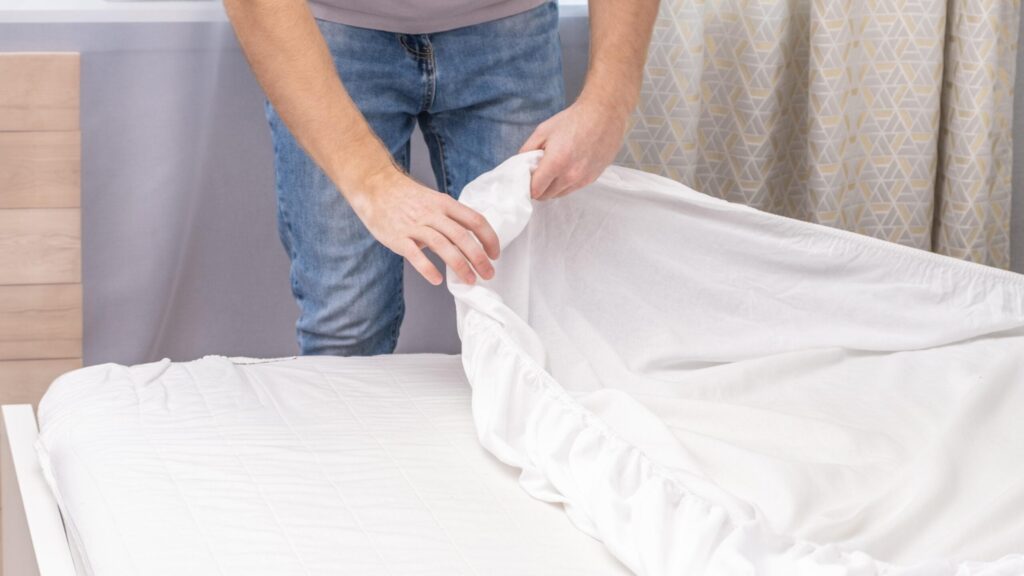
Sheets look simple, but fitted-sheet elastic, printed dyes, wrinkle-resistant finishes, silk fibers, linen yarns, flannel surfaces, and rayon or polyester blends can react differently to heat, bleach, detergent, and tumble drying. The most reliable method is not “cold and gentle for everything” or “hot water kills everything.” It is label-first laundering with the correct soil treatment and enough room for washing and rinsing.
The washer is only one stageMost laundry problems begin before the cycle starts: incompatible items are mixed, stains are missed, the drum is packed too tightly, or an unlabeled homemade additive is used. A controlled load protects both cleanliness and fabric condition.
How Often Should You Wash Bed Sheets?
About every two weeks
The American Cleaning Institute recommends washing bed sheets at least every two weeks, with more frequent laundering when a person sweats heavily at night.
Condition and exposure override the calendar
Visible soil, odor, spills, pets, night sweating, eating in bed, skin products, incontinence, and illness can justify a shorter interval.
Allergies, infection, or infestation
Dust-mite allergy, scabies, norovirus, C. difficile, and other diagnosed conditions have more specific temperature, handling, and drying guidance.
ACI’s current consumer guidance lists bed sheets at least every two weeks and more often with heavy night sweating. It also emphasizes that fabric, use, weather, and visible soil affect the decision. Review ACI’s wash-frequency guidance.
For people managing dust-mite-triggered asthma or allergy, EPA recommends washing bedding weekly in hot water and drying it completely. Use that approach only when the sheet label permits the required temperature; otherwise discuss compatible allergen-control options such as encasements with an appropriate healthcare professional. See EPA dust-mite guidance.
A lightly used guest bed and a shared bed with pets, sweating, skin products, or medical needs should not follow the same calendar. Wash when exposure or condition warrants it.
How to Wash Bed Sheets in Seven Label-Safe Steps
- Read every label in the set. Check the fitted sheet, flat sheet, pillowcases, duvet cover, decorative trim, and mattress pad separately. Look for machine or hand washing, water temperature, bleach restrictions, drying method, iron settings, and warnings such as wash separately.
- Sort by color, fabric, and soil. Keep new dark or strongly dyed sheets away from whites until color transfer is no longer a concern. Separate heavy lint producers, rough towels, denim, zippers, hooks, pet bedding, and heavily contaminated laundry when their care needs differ.
- Treat stains before the main wash. Remove solids, blot fresh liquid, identify the stain, and use a product labeled for that stain and fabric. Test colorfastness in a hidden area. Do not mix bleach, ammonia, vinegar, peroxide, detergent boosters, or other chemicals.
- Untangle and load loosely. Shake sheets open rather than placing a tight bundle in the drum. Do not wrap them around an agitator or pack the washer to an arbitrary three-quarter line; use the appliance’s capacity and load guidance. Large king sheets or multiple sets may require separate loads.
- Measure detergent correctly. Follow the detergent label for machine type, load size, soil level, concentration, and water conditions. More detergent does not automatically produce cleaner sheets, and automatically using half the listed amount may under-clean a large or heavily soiled load.
- Select the label-approved cycle and temperature. Match the cycle to the fabric and soil. Use the warmest appropriate setting when hygiene guidance calls for it, but do not exceed the care label. Choose only the bleach type the label permits.
- Dry fully and remove promptly. Tumble, line, or flat dry according to the label. Separate tangled sheets when safe, clean the lint screen, and confirm hems, fitted corners, and folded layers are dry before storing or remaking the bed.
ACI’s updated Laundry Basics guide recommends sorting by color and fabric instructions, treating stains, using the appropriate washer setting, measuring detergent, and drying according to the care label. Read ACI Laundry Basics.
FTC care-label guidance explains that washing instructions address method, temperature, drying, bleach, ironing, and warnings. A label such as “tumble dry low” should not be replaced with a universal medium- or high-heat rule. Review FTC care-label guidance.
Bed Sheet Washing Guide by Fabric and Construction
| Label or condition | Meaning for the load | Safe decision | Avoid |
|---|---|---|---|
| Machine wash warm, tumble dry low | FOLLOW BOTH LIMITS | Use warm wash and low dryer heat unless a stricter warning also appears | Assuming high heat is acceptable because the fabric is cotton |
| Wash separately or with like colors | CONTROL DYE TRANSFER | Keep the item alone or with similar color intensity as instructed | Adding white pillowcases to “fill the load” |
| Only non-chlorine bleach when needed | LIMIT BLEACH TYPE | Use a compatible non-chlorine product according to its label | Substituting chlorine bleach or a homemade chemical mixture |
| Hand wash or dry clean only | DO NOT DEFAULT TO GENTLE | Use the specified method or professional service | Treating the washer’s delicate cycle as the same as hand washing |
| Care label missing | IDENTIFY BEFORE WASHING | Check the brand, fiber content, set packaging, and seller instructions; test conservatively | Assuming cold wash and low heat cannot cause harm |
Pre-Treat Sheet Stains Without Building a Chemical Recipe
ACI’s stain-removal guidance emphasizes identifying the stain, treating promptly, checking colorfastness, and following the stain-product and textile instructions. Use the ACI stain-removal guide.
Washing Sheets During Illness, Body-Fluid Exposure, or Infestation
General CDC home-cleaning guidance says to launder linens with detergent at the recommended water temperature and dry them completely; dirty laundry from a sick person can be washed with other people’s items. Review CDC household laundry guidance.
Do not use a generic “wash every three to four days” rule for bedbugs, scabies, norovirus, C. difficile, ringworm, lice, or another diagnosed problem. Follow current medical, public-health, pest-control, textile, and appliance guidance for that condition.
Dry Bed Sheets Without Shrinking, Tangling, or Trapping Moisture
- Use the drying method and heat level on the care label.
- Do not assume every sheet must be dried on low or removed while damp.
- Untangle large sheets when the dryer is stopped and it is safe to do so.
- Clean the lint screen before or after the load according to the dryer manual.
- Line-dry colored or delicate sheets in conditions appropriate for the fiber; sunlight, heat, pollen, and weather can affect the result.
- Do not fold or store sheets until thick hems, elastic corners, and layered folds are fully dry.
- When drying takes unusually long, inspect the load size, lint screen, venting, washer spin performance, and appliance condition.
Drying times cannot be standardized to 30–60 minutes or two to four hours. They depend on sheet size, fiber, washer extraction, load tangling, dryer design, heat setting, airflow, outdoor humidity, and weather.
Fold and Store Sheets After They Are Fully Dry
Store each set together if that makes rotation easier, but no household needs a mandatory three-set minimum. Replace sheets according to condition: thinning fabric, failed elastic, torn seams, holes, severe pilling, or stains and odors that cannot be safely resolved.
Common Bed Sheet Laundry Mistakes
- Using one cycle, temperature, or dryer setting for every fabric.
- Automatically using half the detergent dose or adding extra detergent “for hygiene.”
- Replacing fabric softener with vinegar without checking the appliance and textile instructions.
- Mixing sheets with lint-heavy towels, pet bedding, zippers, or abrasive garments.
- Packing multiple large sheet sets into a washer that cannot move and rinse them properly.
- Drying a stain before confirming it has been removed.
- Using chlorine bleach on colors or fibers that permit only non-chlorine bleach.
- Leaving wet sheets in a washer, hamper, or folded stack.
- Trying to fix a musty washer with a universal vinegar-and-baking-soda cycle instead of following the appliance-cleaning manual.
Complete the Sleep Setup
Clean sheets support a comfortable bed, but they do not replace appropriate pillow support. These Pallas Cozy products are sleep pillows, not laundry products.
SLEEP PILLOW
Contour Relief Pillow
View current construction, dimensions, and care information.
SLEEP PILLOW
Ultra Contour Relief Pillow
Compare current model details and product care guidance.
Frequently Asked Questions
Should bed sheets be washed in hot or cold water?
Use the care-label temperature and the needs of the load. Hot water may be appropriate for certain allergy or infection-control situations when the textile permits it; cold water is not automatically correct for every stain or fabric.
How often should I wash my sheets?
ACI recommends at least every two weeks, more often with heavy night sweating. Wash sooner for visible soil, odor, pets, spills, illness, body fluids, or allergy-management needs.
Can sheets and towels be washed together?
Sometimes their labels and colors are compatible, but towels can add lint, weight, and friction. Separate them when the sheet fabric is delicate, the towels shed heavily, or the load becomes too large.
How much detergent should I use for sheets?
Use the detergent label for the washer type, concentration, load size, soil level, and water conditions. There is no universal one- or two-tablespoon dose.
Should I add vinegar to every sheet wash?
No. Vinegar is not a universal fabric softener or odor remover and may be unsuitable for some textiles or appliance components. Never mix vinegar with chlorine bleach.
Can I use fabric softener on sheets?
Only when the sheet and product labels permit it and the finish suits your preference. Some fabrics or performance properties may be affected by coating-type products.
Should new sheets be washed before use?
Check the brand instructions. A first wash can remove loose dye, lint, packaging dust, or finishes and allows you to inspect colorfastness, but use the exact care method rather than a universal cold cycle.
Why do sheets smell musty after washing?
Possible causes include leaving them wet, incomplete drying, an overloaded load, detergent residue, a dirty hamper, washer maintenance issues, or damp storage. Rewash correctly, dry fully, and clean the appliance according to its manual.
How do I keep white sheets white?
Sort them from colors, treat stains promptly, use the correct detergent dose, and use only the bleach type permitted by the label. Do not combine chlorine bleach with vinegar, ammonia, or other cleaners.
When should bed sheets be replaced?
Use condition rather than a fixed two- or three-year deadline. Replace sheets with thinning fabric, failed elastic, widening holes, torn seams, severe pilling, or persistent contamination that cannot be safely removed.
Related Pallas Cozy Guides
Sources and Further Reading
- American Cleaning Institute: Laundry Basics
- American Cleaning Institute: How Often to Wash Household Textiles
- Federal Trade Commission: Care Labeling Guidance
- CDC: Household Laundry and Cleaning
- CDC: Norovirus Laundry Guidance
- CDC: C. difficile Laundry Guidance
- CDC: Scabies Treatment and Bedding
- U.S. EPA: Dust Mite and Bedding Guidance
Editorial note: This guide provides general household laundry information. The sheet care label, detergent and appliance instructions, and current medical or public-health guidance take priority.
