
How long do heated blankets last? There is no universal expiration date shared by every brand or model. Age matters, but condition, recall status, heating consistency, cord and controller damage, washing history, and manufacturer instructions matter more. Electrical Safety First advises considering replacement when an electric blanket is more than 10 years old. Replace it immediately at any age if it is recalled, scorched, frayed, wet-damaged, unusually hot, intermittently powered, or no longer operating as designed.
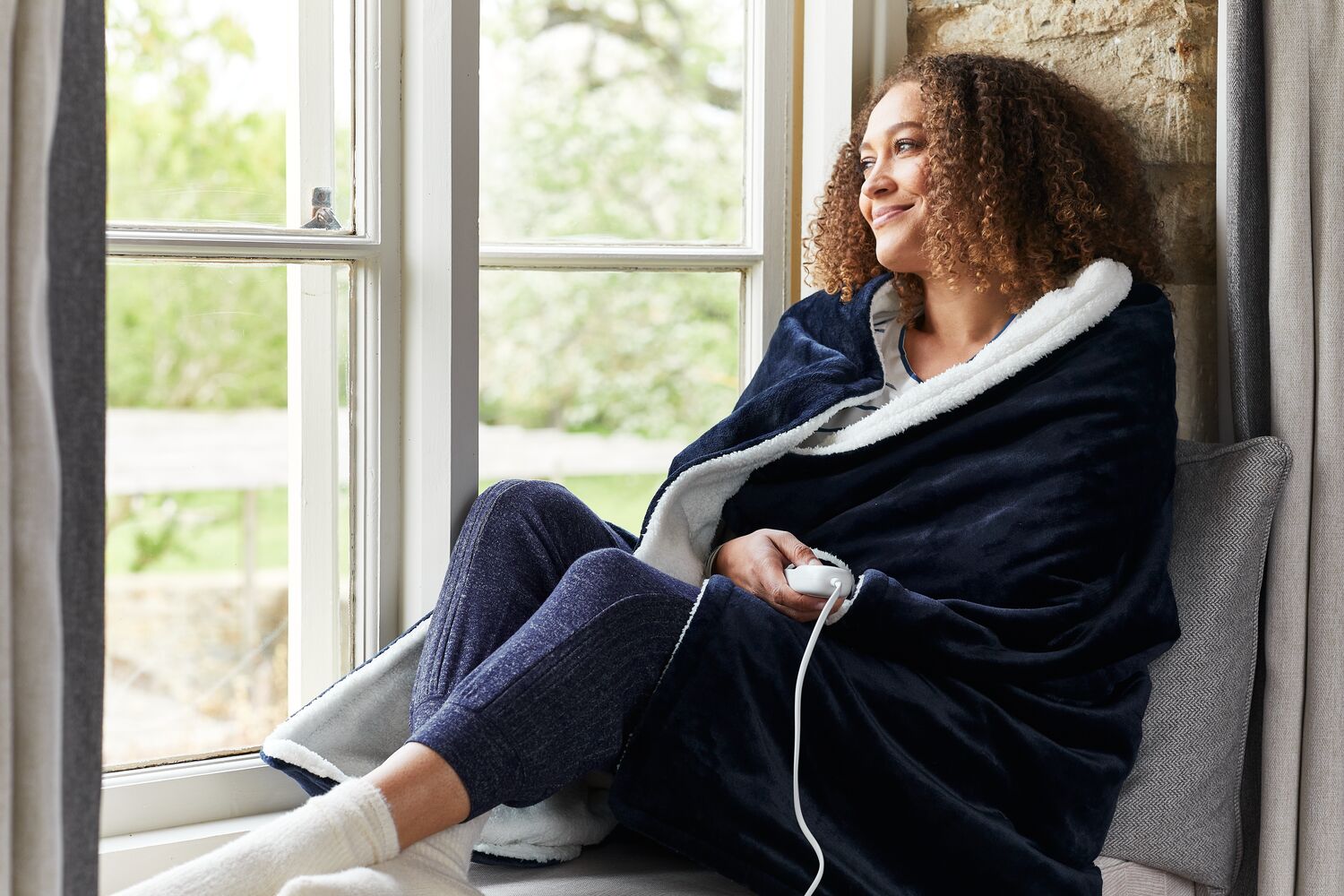
A heated blanket is electrical bedding, not an ordinary textile. The fabric may still look usable while internal wires, connectors, sensors, or the controller have been stressed by folding, bunching, washing, pets, storage pressure, or repeated heating cycles. That is why a calendar estimate should never overrule a safety inspection.
How Long Do Heated Blankets Last in Real Use?
No U.S. regulator assigns one mandatory replacement age to every heated blanket. Different products use different heating elements, sensors, controllers, auto-off systems, fabrics, voltages, and washing instructions. The blanket’s label and manual therefore remain the first source for model-specific use, inspection, warranty, and replacement guidance.
Electrical Safety First advises consumers to consider replacement when an electric blanket is more than 10 years old and to replace it sooner for wear or damage. This is a conservative safety checkpoint, not proof that every blanket is safe through year nine or unsafe only on its tenth birthday. Review its current electric-blanket safety advice.
No damage, no recall, normal operation
The blanket lies flat, heats evenly, the cord and controller are intact, the connection is secure, and all functions behave exactly as the manual describes.
Age or history creates uncertainty
The blanket is approaching or beyond 10 years, was bought secondhand, lacks a readable label, has unknown wash history, or has been tightly folded or compressed for long periods.
Damage, recall, or malfunction
Unplug it for scorching, burning odor, sparks, melted areas, exposed wires, frayed cords, cracked controls, abnormal heat, repeated shutoffs, or recalled model information.
A one-, three-, or five-year warranty describes the manufacturer’s repair or replacement obligations. It does not prove the blanket will remain safe until the last warranty day or become unsafe immediately afterward.
Perform a Heated Blanket Inspection Before Every Season
- Find the label and model information. Record the brand, model, item number, date code, voltage, controller model, and care instructions. Stop if the label is unreadable and the exact product cannot be verified.
- Search for recalls and safety warnings. Use the CPSC database and the manufacturer’s recall page before reconnecting a blanket that has been stored for months.
- Inspect the fabric in bright light. Look for scorch marks, discoloration, melted fibers, holes, thinning, tears, unusual stiffness, or places where internal components can be seen or felt sharply.
- Follow the internal wire paths gently. Do not bend or squeeze the wires. Look for bunching, hard folds, repeated ridges, missing heat zones, or an area that no longer lies flat.
- Check the plug, cord, connector, and controller. Look for fraying, cuts, flattened sections, loose pins, corrosion, heat discoloration, cracks, exposed conductors, damaged strain relief, or a connection that does not seat securely.
- Review the storage history. Rodent exposure, moisture, attic heat, basement dampness, compression under boxes, and tight folding all justify closer scrutiny or replacement.
- Set it up exactly as the manual directs. Do not test it folded, bunched, trapped under furniture, or with the cord pinched by the bed frame.
- Monitor the first test while awake. Start at the manufacturer’s recommended setting and stop for odors, noises, sparks, controller errors, uneven heat, extreme hot spots, tripped breakers, or repeated power interruptions.
UL Solutions advises checking recall status, protecting cords from pinching and damage, using products evaluated by a nationally recognized testing organization, and storing electric blankets carefully rather than sharply folding them. Read UL Solutions’ safety overview.
Replace a Heated Blanket Immediately for These Warning Signs
Tape, splicing, sewing over a wire, replacing a plug, swapping an unapproved controller, or opening the control unit can defeat safety systems and create a fire or electric-shock hazard. Contact the manufacturer about an authorized controller or warranty remedy; otherwise replace the product.
Condition Matters More Than a Precise Year Count
| Blanket condition | Recommended action | Why | Do not do this |
|---|---|---|---|
| Relatively new, intact, verified model | INSPECT AND USE AS DIRECTED | No recall, normal heat, intact components, known care history, and full compliance with the manual | Assume “new” means inspection is unnecessary |
| Older than 10 years but appears normal | CONSIDER REPLACEMENT | Aging may affect internal components that cannot be fully evaluated from the surface | Treat 10 years as a guaranteed safe service life |
| Secondhand or unknown history | REPLACE OR VERIFY COMPLETELY | Storage, washing, damage, model, controller compatibility, and recalls may be unknown | Buy without the original controller, label, and instructions |
| Cold section but no visible damage | STOP AND CONTACT MAKER | Uneven or missing heat can indicate internal failure | Fold the warm section over the cold section or use a higher setting |
| Scorch mark, frayed cord, melted area, or sparks | STOP IMMEDIATELY | Direct evidence of overheating or electrical damage | Repair with tape, continue testing, donate, or resell |
| Recalled model | FOLLOW RECALL REMEDY | The defect may exist even when the blanket looks and feels normal | Keep using it because your unit has not failed yet |
What Shortens a Heated Blanket’s Useful Life?
- Frequent tight folding: Repeated creases stress the same wire paths.
- Using it folded or bunched: Heat can concentrate instead of dispersing normally.
- Heavy objects on top: Compression may damage wires and connectors during storage.
- Unapproved washing: A machine-washable label on one model does not apply to another.
- High dryer heat: Use only the drying method specified by the manufacturer.
- Pinched power cables: Bed frames, mattress foundations, furniture, and walls can damage insulation.
- Pet claws or chewing: Even small punctures can reach internal wiring.
- Wrong controller: Use only the exact controller approved for the model.
- Continued use after an error: Repeated resets do not repair the underlying fault.
Can Washing Reduce a Heated Blanket’s Lifespan?
Correct cleaning should follow the exact product manual. Some heated blankets are machine washable after the controller is detached; others have different limits. “Machine washable” does not mean every cycle, detergent, dryer temperature, or frequency is acceptable.
- Disconnect every removable controller and cable exactly as directed.
- Inspect the blanket before washing; do not wash a unit with damaged wiring, connectors, or fabric.
- Use only the cycle, water temperature, detergent, and drying method listed for the model.
- Never dry clean unless the manufacturer specifically permits it; solvents can damage heating-element insulation.
- Do not wring, twist, iron, or reconnect the controls while any component is damp.
- After drying, inspect the fabric, wire paths, connector, plug, and controller before power is restored.
For the broader distinction between ordinary and electrical bedding, see How Often Should You Wash Blankets?. The heated blanket’s own manual always overrides a general textile schedule.
Store a Heated Blanket Without Damaging the Wiring
Store the blanket in a clean, dry, temperature-stable area protected from pests, water leaks, direct sunlight, and crushing. Inspect it again after storage rather than assuming it remained unchanged.
Check Heated Blanket Recalls Every Season
CPSC issued a July 16, 2026 warning concerning Melinora electric heated blankets.
CPSC reported that internal heating elements could overheat and melt through the polyester fabric, creating burn and fire hazards. The agency cited five reports of smoking, melting, or burning and one burn injury, and told consumers to stop using and dispose of the affected blankets.
Earlier CPSC actions have included Sunbeam queen-size heated blankets that could overheat and other electric blankets with overheating, fire, or burn hazards. Recall status can change after purchase, so search the exact brand and model rather than relying on memory or marketplace listings. Search the CPSC recall database.
Follow the official recall or disposal instructions. Removing the controller or writing “broken” on the packaging is not necessarily an adequate remedy unless the regulator or manufacturer directs it.
Repair, Replace, or Contact the Manufacturer?
- Contact the manufacturer: For warranty service, an approved replacement controller, error-code interpretation, model-specific inspection, or an official recall remedy.
- Replace the blanket: For damaged internal wiring, scorch marks, melted areas, cord damage, repeated overheating, unreliable controls, missing identity labels, or an unsafe unknown history.
- Contact an electrician: When the outlet is loose, discolored, hot, sparking, repeatedly trips a breaker, or has other independent electrical problems.
- Do not improvise: Avoid generic controllers, cord splices, taped repairs, internal sewing, bypassed auto-off functions, or unapproved electrical testing.
Complete Your Non-Electric Sleep Setup
A heated blanket supplies warmth; a sleep pillow supports the head and neck. For a non-electric comfort component, compare Pallas Cozy’s current pillow options and review their individual construction and care instructions.
SLEEP SUPPORT
Contour Relief Pillow
View current product details, dimensions, and care information.
SLEEP SUPPORT
Ultra Contour Relief Pillow
Compare the current model details and product care guidance.
Frequently Asked Questions
How many years does a heated blanket last?
There is no universal lifespan for every model. Electrical Safety First advises considering replacement after 10 years, while damage, recalls, or malfunction require earlier replacement.
Should I automatically replace an electric blanket after five years?
Not based on a universal five-year rule. Follow the manufacturer, inspect it regularly, check recalls, and replace immediately for damage or abnormal operation.
Is a 10-year-old electric blanket safe?
Age alone cannot prove safety. A blanket over 10 years old deserves replacement consideration even when it appears normal, and any missing history, damage, or malfunction strengthens that case.
What are the signs an electric blanket is wearing out?
Scorch marks, frayed cords, exposed wires, stiff or bunched areas, loose connectors, hot spots, cold sections, burning odor, error codes, sparks, intermittent power, and failed auto-off are warning signs.
Can I use a heated blanket with a cold spot?
Stop using it and contact the manufacturer. A cold section may indicate an internal wire or connection failure; folding the warm portion or increasing heat is unsafe.
Can an old controller be replaced?
Only use a replacement specifically approved by the blanket manufacturer for the exact model. A controller that fits physically may have incompatible electrical characteristics.
Does washing damage heated blankets?
Improper washing can. Use only the care instructions for that model, remove controllers as directed, and never reconnect the blanket before every component is completely dry.
Should a heated blanket be folded for storage?
Follow its manual. Many safety guides recommend rolling or storing loosely to avoid sharp creases, and no heavy items should compress the internal wiring.
Can I buy a used heated blanket?
Used electrical bedding has an uncertain care, damage, recall, and controller history. UL Solutions advises buying new rather than from a secondhand shop or garage sale.
What should I do if a heated blanket smells like it is burning?
Turn it off and unplug it safely, stop using it, and follow the manufacturer or recall instructions. Call emergency services if there is smoke, fire, injury, or immediate danger.
Related Pallas Cozy Guides
Sources and Further Reading
Editorial note: This article provides general electrical-bedding safety information. The exact heated blanket manual, current recall notices, manufacturer instructions, and qualified electrical advice take priority.
