
How to clean outdoor pillows safely: remove loose dirt first, check the care label, separate removable covers from inserts, and use the least aggressive method that matches the fabric and fill. Machine-wash only parts specifically labeled washable. For non-removable pillows, spot-clean or gently wash the surface without saturating the core. Rinse away detergent, then dry every layer completely with strong airflow before returning the pillows outdoors or placing them in storage.
Outdoor pillows collect pollen, dust, sunscreen, food, bird droppings, rainwater, and organic debris. Weather-resistant fabric is not automatically waterproof or machine washable, so the first step is identifying the cover, coating, backing, insert, and manufacturer’s instructions.
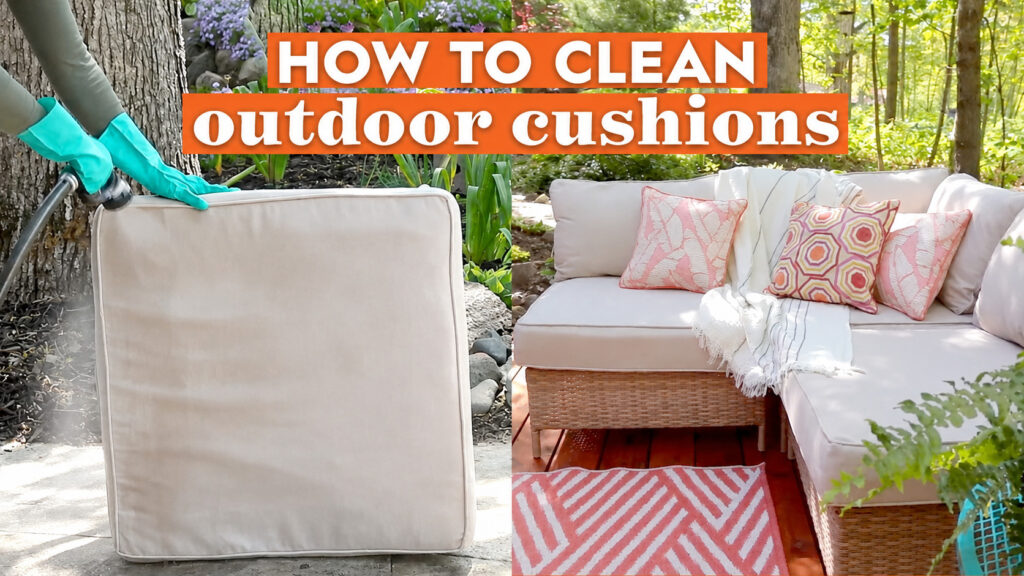
How to Clean Outdoor Pillows: Choose the Right Method
Vacuum, brush, or spot-clean
Use for pollen, dry soil, a small fresh spill, or pillows whose labels restrict immersion.
Wash the approved component
Remove and launder a cover, or wash the complete pillow only when the label explicitly allows it.
Replace or seek specialist help
Use caution with deep mold, flood contamination, damaged coatings, unknown inserts, or persistent odor inside porous fill.
Sunbrella advises consulting the furniture manufacturer before removing a cushion casing because construction varies. Its general upholstery process begins with brushing off loose dirt, then applying a mild soap-and-water solution, cleaning with a soft brush or sponge, rinsing thoroughly, and air-drying. Review Sunbrella’s upholstery instructions.
Acrylic upholstery, coated polyester, printed canvas, solution-dyed fabric, natural-fiber blends, quick-dry foam, and standard polyester fill can all appear outdoors. The care label for the finished product takes priority over general fiber advice.
Outdoor Pillow Cleaning Guide by Material
| Cover or insert type | Typical cleaning route | Water exposure | Drying | Main caution |
|---|---|---|---|---|
| Solution-dyed acrylic outdoor fabric | BRAND-SPECIFIC Brush, mild soap solution, rinse; removable covers may have additional instructions | Often tolerates thorough rinsing when manufacturer-approved | Air-dry with full airflow | Do not assume every outdoor acrylic has Sunbrella’s bleach tolerance |
| Polyester outdoor cover | OFTEN WASHABLE Machine or hand wash only as labeled | Cold or warm according to care label | Low heat or air-dry as instructed | Backing, printing, coatings, and dye may limit washing |
| Olefin or polypropylene fabric | CHECK LABEL Surface clean or wash as specified | Avoid unnecessary heat | Air-dry or approved low heat | High heat can damage synthetic fibers |
| Cotton, linen, or canvas blend | GENTLE CARE Remove cover and wash only when approved | Use labeled temperature; test colorfastness | Reshape and air-dry when shrinkage is a concern | Fading, shrinkage, water marks, mildew if slow to dry |
| Water-resistant coated fabric | SURFACE FIRST Wipe or spot-clean unless the brand allows washing | Do not scrub or soak aggressively | Air-dry away from direct heat | Cleaning can damage water-repellent coating or backing |
| Polyester fiberfill insert | MAY BE WASHABLE Wash only when the insert’s own label allows it | Gentle cycle and modest detergent | Dry the center completely | Clumping, detergent residue, hidden moisture |
| Quick-dry or reticulated foam | MODEL-SPECIFIC Flush or surface-clean according to furniture instructions | Designed for drainage, but construction still varies | Stand or rotate for drainage and airflow | Enclosed seams can still trap water |
| Solid memory foam or latex | KEEP OUT OF WASHER Vacuum and spot-clean with minimal moisture | Avoid soaking and machine agitation | Air-dry flat and completely | Tearing, deformation, trapped moisture |
| Unknown or mixed-material insert | DO NOT GUESS Find the brand instructions or use conservative surface care | Minimal until verified | Strong airflow | Hidden foam, batting, glue, cardboard, or rigid components |
When a removable cover is suitable for machine washing, use the care-label settings and treat stains first. The American Cleaning Institute recommends sorting by fabric and care instructions and checking stained fabric before dryer heat sets a remaining mark. See ACI’s laundry basics.
Prepare a Safe Outdoor Cleaning Station
- Work in a shaded, well-ventilated area with access to clean water.
- Keep cleaning runoff away from ponds, storm drains, pets, and sensitive plants.
- Patch-test the intended solution on a hidden area.
- Photograph the care label before cleaning.
- Do not combine bleach, ammonia, vinegar, acids, or unknown cleaners.
- Plan enough drying time before rain, evening humidity, or storage.
Step-by-Step Outdoor Pillow Cleaning Process
- Remove the pillows from the furniture. Clean the chair, bench, or sofa surface separately so dirt is not transferred back.
- Brush and vacuum while dry. Work along piping, buttons, zipper tape, and seams where pollen and debris collect.
- Separate removable components. Remove the cover only when the construction and manufacturer allow it. Identify the insert before adding water.
- Test color and finish. Apply the intended diluted cleaner to a hidden area and blot with a white cloth. Stop if color transfers or the coating changes.
- Pretreat the specific stain. Use a product compatible with the fabric and stain type. Avoid scrubbing a wide area unnecessarily.
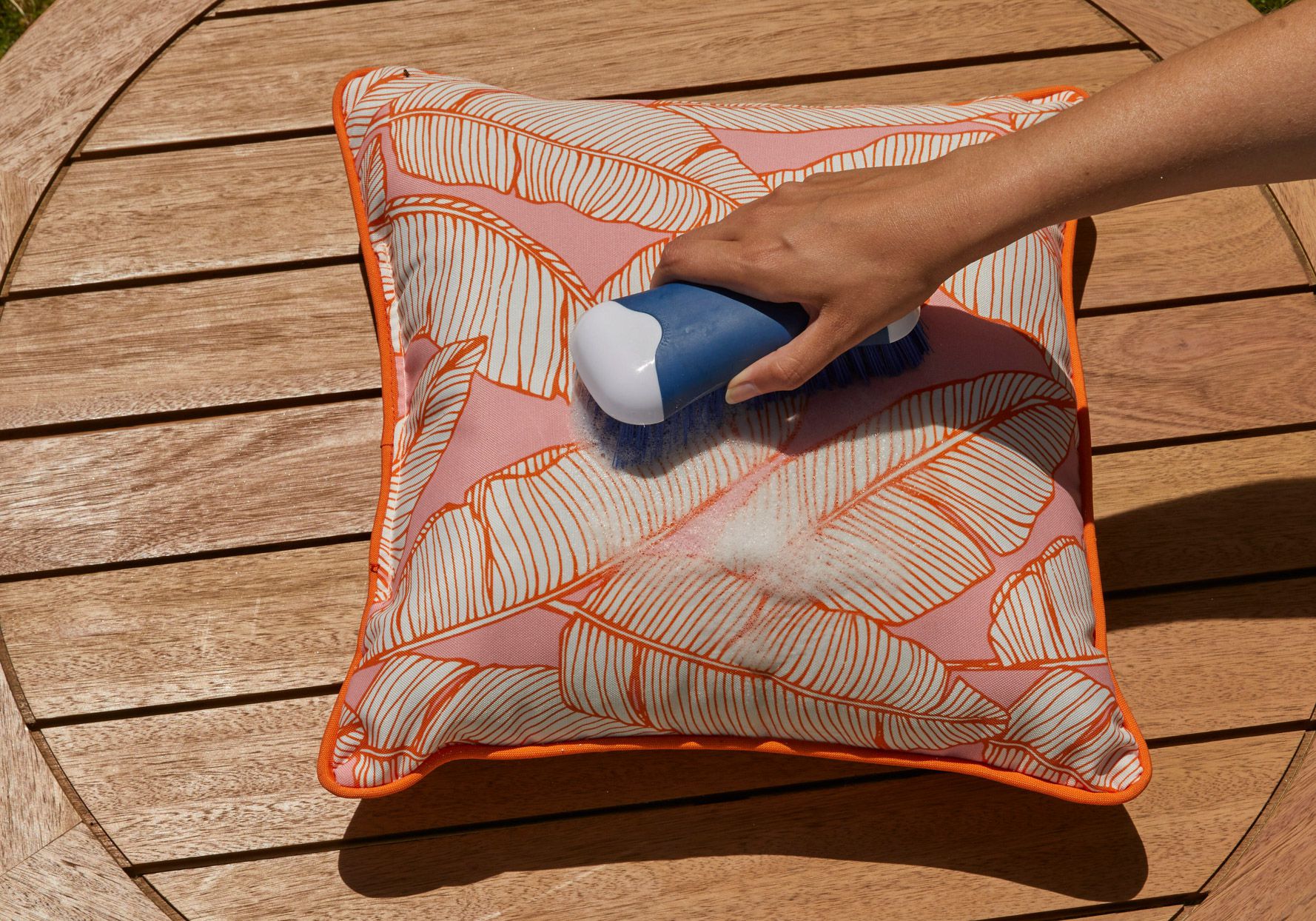
- Clean using the approved route. Machine-wash the cover, hand-wash the approved component, or apply a mild soap solution to the surface.
- Rinse thoroughly. Soap left in outdoor fabric can feel stiff and attract more soil. Follow manufacturer guidance for rinsing coated materials.
- Press out water without twisting. Use towels for compatible covers and inserts. Do not wring foam, glued layers, or decorative construction.
- Dry every layer completely. Rotate and separate the pieces, move air around all sides, and check seams and the center before reassembly.
High-pressure water can force moisture into seams, damage coatings, distort fill, and drive soil deeper into the construction.
Treat Common Outdoor Pillow Stains
Vacuum or brush before wet cleaning. Water can spread fine pollen and leave a larger mark.
Lift solids and blot liquids promptly. Pretreat washable fabric with a compatible stain remover or liquid detergent.
Blot excess oil and use a fabric-safe degreasing pretreatment. Test dark, printed, or coated fabric first.
Let wet residue become easier to lift or carefully remove solids without grinding them into the weave. Clean the remaining mark according to the label.
Do not spread it through the fabric. Use the furniture manufacturer’s recommended solvent or seek professional cleaning for delicate coatings.
Avoid chlorine bleach, which can worsen some rust stains. Use a product labeled for rust on the exact fabric or consult a specialist.
ACI’s stain guide emphasizes identifying the stain, pretreating with a compatible product, checking the care label, and repeating treatment before drying when needed. Review ACI’s stain-removal guide.
How to Handle Mold or Mildew on Outdoor Pillows
Mold control begins with moisture control. The U.S. Environmental Protection Agency advises cleaning mold promptly and correcting the source of moisture; simply killing mold is not enough because dead mold may still trigger reactions. EPA also does not recommend routine use of biocides such as chlorine bleach for every mold-cleanup situation. Read the EPA mold and moisture guide.
Sunbrella publishes a bleach-containing method for severe mold or mildew on its own upholstery fabric. Do not transfer that recipe to an unidentified outdoor pillow. Bleach can damage dyes, coatings, natural fibers, thread, foam, and nearby surfaces.
Dry Outdoor Pillows Completely
- Choose a low-humidity drying window when possible.
- Rotate thick pillows and stand drainable cushions on edge.
- Use direct sunlight only when the manufacturer permits it; intense sun may fade or heat-damage some materials.
- Do not return a damp pillow to a covered storage box.
- Do not place a clean cover over a damp insert.
EPA’s core moisture-control principle is simple: mold cannot grow without moisture, so stopping water intrusion and drying wet materials are central to prevention. See the EPA moisture-control overview.
Seasonal Cleaning and Storage Plan
- Do not seal damp pillows inside plastic.
- Do not store visibly dirty fabric for months; body oil and food residue can become harder to remove.
- Use breathable bags or clean shelving when appropriate for the local humidity.
- Inspect the storage area after storms or major temperature changes.
- Keep product labels and care instructions with the set.
When to Replace an Outdoor Pillow
- The insert remains musty after complete drying.
- Mold growth is deep, extensive, or repeatedly returns.
- Coatings are peeling, sticky, cracked, or no longer functioning.
- Seams and zipper tape cannot safely contain the insert.
- The fill stays flattened, hard, misshapen, or waterlogged.
- The item was exposed to contaminated floodwater.
- The care instructions are missing and the mixed construction cannot be cleaned safely.
For general replacement criteria, see How Long Do Pillows Last?.
Troubleshooting Outdoor Pillow Cleaning
Rinse again when the label permits it. Use less detergent next time and avoid fabric softener unless specifically approved.
The finish may be worn or contaminated. Do not apply a protector until the fabric is clean, dry, and the manufacturer confirms compatibility.
Do not force it over the insert or strain the zipper. Heat, agitation, and natural-fiber content may cause permanent shrinkage.
Separate layers, increase airflow, rotate frequently, and stop using the pillow if moisture remains trapped or odor develops.
Stop wet cleaning, rinse conservatively if appropriate, and avoid heat. Seek professional help for valuable or multi-material covers.
Identify the moisture source: rain exposure, storage condensation, slow-draining fill, a leaking furniture cover, or reassembly before full drying.
Need a Pillow for Indoor Sleep?
Outdoor decorative pillows are built for patio styling and casual support, not necessarily for overnight head and neck positioning. For indoor nighttime use, compare Pallas Cozy’s current sleep-support options and follow the exact care instructions on the product page.
INDOOR SLEEP SUPPORT
Contour Relief Pillow
View the current product construction and care information.
INDOOR SLEEP SUPPORT
Ultra Contour Relief Pillow
Compare the current model details and care guidance.
Frequently Asked Questions
Can outdoor pillows go in the washing machine?
Only when the care label approves machine washing for the exact cover or complete pillow. Remove the insert when possible and verify its instructions separately.
Can I hose down outdoor pillows?
Some performance-fabric cushions can be rinsed, but not every outdoor pillow is designed for full saturation. Check the furniture or fabric manufacturer’s instructions first.
What soap should I use?
Use the mild soap or detergent specified by the care label. Avoid concentrated cleaners, fabric softener, bleach, solvents, and disinfectants unless the manufacturer explicitly allows them.
How do I remove pollen from outdoor pillows?
Brush or vacuum it while dry before applying water. Wet pollen can spread and form a larger stain.
How do I clean mildew from outdoor pillows?
Use the exact fabric manufacturer’s mildew method, rinse thoroughly, and dry the item completely. Inspect or replace the insert if odor or growth has reached the core.
Can I use bleach on outdoor fabric?
Only when the manufacturer for that exact finished product permits it. Some solution-dyed acrylic fabrics publish bleach instructions, but many dyes, coatings, threads, natural fibers, and inserts can be damaged.
How long do outdoor pillows take to dry?
Drying time depends on weather, airflow, thickness, fill, and how much water entered the core. Use condition-based checks rather than a fixed number of hours.
Should I dry outdoor pillows in direct sun?
Follow the label. Sun and warmth may speed surface drying, but intense UV and heat can fade or damage some fabrics, foam, coatings, and adhesives.
How often should outdoor pillows be cleaned?
Brush and spot-clean as needed, treat spills immediately, and deep-clean only when soil level and care instructions justify it. Climate, pollen, pets, food, and storage conditions matter more than a fixed schedule.
Can moldy outdoor pillow inserts be saved?
Light surface contamination on a washable cover may be treatable. Deep mold, recurring odor, flood exposure, or contamination inside porous fill often makes replacement the safer practical choice.
Related Pallas Cozy Guides
Sources and Further Reading
Editorial note: This article provides general cleaning information. The care label and manufacturer instructions for the exact outdoor pillow, fabric, coating, insert, furniture frame, and cleaning product take priority.
